
Lemon Meringue Pie Cannoli: A Brilliant Dessert Fusion
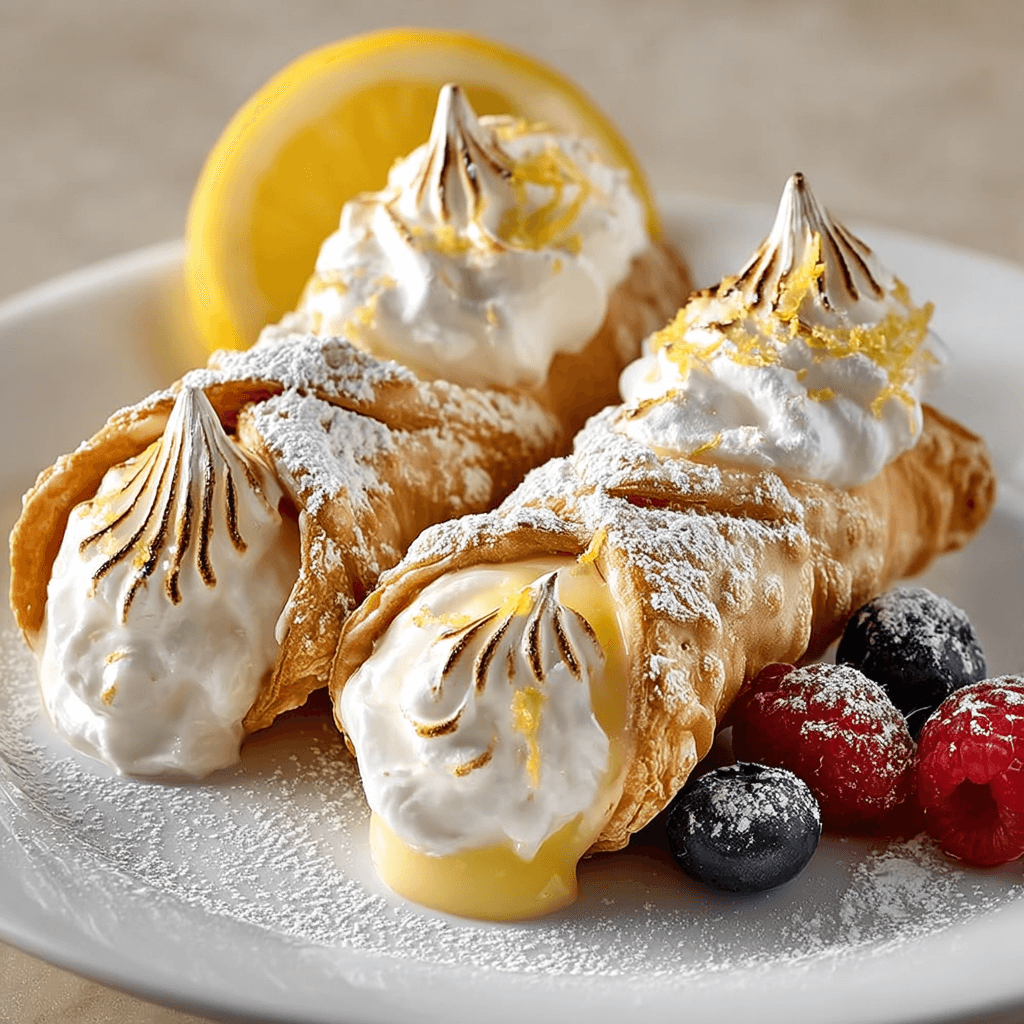
This recipe transforms the classic cannoli into a zesty, cloud-like dessert. We’re combining shatteringly crisp pastry shells with a bright lemon-ricotta cream and a toasted meringue topping. If you’re a fan of show-stopping citrus treats like my lemon meringue layer cake, this creative fusion is your next baking adventure.
Why This Recipe Is a Game-Changer
This isn’t just a cannoli with lemon; it’s a complete deconstruction and reassembly of two iconic desserts. The result is a perfect balance of textures and flavors.
- Texture Heaven: You get the crunch of the shell, the creamy smoothness of the lemon filling, and the light, airy chew of the toasted meringue.
- Flavor Balance: The tart lemon curd cuts through the richness of the ricotta and mascarpone, while the sweet meringue rounds everything out.
- Visual Wow-Factor: The torched, golden-brown meringue peaks make these look like they came from a high-end patisserie. They are guaranteed to impress.
Essential Tools for Perfect Cannoli
Having the right gear makes this process smooth and professional. You don’t need everything, but these items are key for the best results.
- Cannoli Forms (Tubes): Absolutely essential for shaping the shells during frying or baking. Stainless steel is best.
- Piping Bag & Tips: A large star tip is perfect for filling the cannoli neatly and a smaller round or star tip works well for the meringue.
- Kitchen Torch: The best way to get that signature toasted meringue finish. An oven broiler can work in a pinch, but requires extreme care.
- Stand Mixer (or Hand Mixer): Crucial for whipping the egg whites into a stable meringue and for beating the filling until smooth.
- Deep, Heavy-Bottomed Pot: For safe and even frying. A deep-fry thermometer is highly recommended.
Step-by-Step Instructions
Follow this process methodically. The key is preparing your components before you begin assembly.
Part 1: The Cannoli Shells
- Combine Dry Ingredients: In a large bowl, whisk together the flour, sugar, and salt.
- Cut in the Fat: Add the cold, cubed butter. Use a pastry cutter or your fingertips to work the butter into the flour until it resembles coarse crumbs.
- Add Wet Ingredients: Create a well in the center. Add the egg yolk, white wine (or vinegar), and lemon zest. Mix with a fork until a shaggy dough forms.
- Knead: Turn the dough onto a lightly floured surface and knead for 5-7 minutes, until it becomes smooth and elastic. Do not overwork it.
- Rest the Dough: Wrap the dough tightly in plastic wrap and let it rest in the refrigerator for at least 1 hour. This is a critical step for a tender, blistered shell.
- Roll and Cut: Divide the rested dough in half. On a lightly floured surface, roll one half as thinly as possible (about 1/16-inch thick). Use a 3.5 to 4-inch round cutter to cut out circles.
- Shape the Shells: Lightly grease your cannoli forms. Wrap a dough circle around each form, dabbing a bit of egg white on the overlapping edge to seal it tightly.
- Fry to Golden: Heat your oil to 360°F (182°C). Carefully lower 2-3 cannoli forms into the oil at a time. Fry for 2-3 minutes, turning occasionally, until golden brown and blistered.
- Drain and Cool: Using tongs, carefully remove the forms from the oil and place them on a wire rack lined with paper towels. Once they are cool enough to handle (but still warm), gently slide the shells off the forms. Let the shells cool completely.
Part 2: The Lemon Cream Filling
- Prepare the Ricotta: Strain the ricotta cheese through a fine-mesh sieve lined with cheesecloth for at least 30 minutes (or overnight in the fridge) to remove excess whey. This prevents a watery filling.
- Mix the Base: In a stand mixer bowl with the paddle attachment, beat the strained ricotta and mascarpone cheese until completely smooth.
- Add Flavor: Sift in the powdered sugar and mix on low until combined. Add the lemon curd and vanilla extract, and mix until just incorporated. Do not overmix.
- Chill: Transfer the filling to a piping bag fitted with a large star tip. Refrigerate for at least 30 minutes to firm up before filling the shells.
Part 3: The Swiss Meringue
- Heat Egg Whites and Sugar: In the clean, dry bowl of a stand mixer, whisk together the egg whites and granulated sugar. Place the bowl over a saucepan of simmering water (bain-marie), ensuring the bottom of the bowl doesn’t touch the water.
- Dissolve the Sugar: Whisk constantly until the sugar has completely dissolved and the mixture is hot to the touch (around 160°F / 71°C on an instant-read thermometer).
- Whip to Stiff Peaks: Transfer the bowl to your stand mixer fitted with the whisk attachment. Start on low speed and gradually increase to high. Whip for 8-10 minutes, until the meringue is thick, glossy, and forms stiff, upright peaks. The outside of the bowl should be cool to the touch.
- Prepare for Piping: Transfer the meringue to a piping bag fitted with your desired tip (a star tip works well).
Part 4: Assembly
- Fill the Shells: Pipe the lemon cream filling from the center of each cannoli shell outwards to one end, then repeat from the other side to ensure it’s completely full.
- Pipe the Meringue: Pipe a generous rosette or swirl of meringue onto one or both ends of the filled cannoli.
- Toast the Meringue: Using a kitchen torch, hold the flame a few inches from the meringue and move it continuously until you achieve golden-brown, toasted peaks.
- Garnish and Serve: Dust with powdered sugar and garnish with fresh lemon zest. Serve immediately for the best texture.
Component Deep Dive: Shell, Filling, Meringue
Success lies in perfecting each part before it comes together.
- The Shell: The goal is a shell that is thin, crisp, and bubbly. The secret is resting the dough and rolling it paper-thin. The acid in the white wine (or vinegar) tenderizes the gluten, preventing a tough shell.
- The Filling: The filling must be creamy, not grainy or watery. Straining the ricotta is non-negotiable. Using part mascarpone adds a luxurious smoothness that ricotta alone can’t achieve.
- The Meringue: We use a Swiss Meringue because it’s exceptionally stable and safe to eat (as the egg whites are cooked). It holds its shape perfectly for piping and toasting, a quality you also need for delicate desserts like mini lemon soufflés.
The Art of Assembly: Timing is Everything
A soggy cannoli is a tragedy. Follow this rule: Fill cannoli immediately before serving.
- Prep Ahead: You can make all the components in advance.
- Shells: Store in an airtight container at room temperature for up to 3 days.
- Filling: Keep in a piping bag in the refrigerator for up to 2 days.
- Meringue: Best made fresh, but can be made a few hours ahead and kept at room temperature.
- Final Assembly (15 minutes before serving): This is your final step. Fill the shells, pipe the meringue, toast it, and serve. The contrast between the cold filling and the crisp shell is what makes it spectacular. For a different but equally comforting treat that’s great to have on hand, these soft-baked salted caramel pecan cookies are a fantastic option.
COMMON MISTAKES TO AVOID
Mistake: Watery, grainy filling.
Fix: You must strain the ricotta cheese. This step removes excess whey, which is the primary cause of a runny filling. Also, ensure you beat the cheeses until smooth before adding the sugar and curd.
Mistake: Soft, chewy, or greasy shells.
Fix: Your oil temperature is likely too low. Use a thermometer to maintain 360°F (182°C). Oil that isn’t hot enough will soak into the dough instead of flash-frying it to a crisp.
Mistake: Meringue that “weeps” or deflates.
Fix: Ensure the sugar is fully dissolved in the egg whites over the bain-marie before you start whipping. Any undissolved sugar crystals will attract moisture and cause weeping. Also, use a completely clean, grease-free bowl and whisk.
FAQ
Q: Can I use store-bought cannoli shells?
A: Absolutely. If you’re short on time, using high-quality store-bought shells is a great shortcut. The homemade filling and meringue will still make this dessert feel special.
Q: How do I toast the meringue without a kitchen torch?
A: You can use your oven’s broiler. Place the assembled cannoli on a baking sheet and put them on a rack 6-8 inches from the broiler element. Watch them constantly as they will toast in 30-60 seconds. This method is much riskier, so a torch is highly recommended.
Q: Can I make a non-alcoholic version of the shells?
A: Yes, you can substitute the white wine with an equal amount of white wine vinegar or apple cider vinegar mixed with a teaspoon of water. The acid is the key ingredient for a tender shell. Once you master this recipe, you might enjoy trying other unique breakfast pastries like these easy blackberry sweet rolls with cream cheese.
| Nutrient | Amount per Serving |
|---|---|
| Calories | 380 kcal |
| Protein | 9g |
| Fat | 22g |
| Net Carbs | 35g |
| Fiber | 1g |
| Sugar | 24g |
Lemon Meringue Pie Cannoli: A Brilliant Dessert Fusion
Ingredients
- 2 cups all-purpose flour
- 2 tbsp granulated sugar
- 1/4 tsp salt
- 3 tbsp cold unsalted butter, cubed
- 1 large egg yolk
- 1/4 cup dry white wine (or white wine vinegar)
- 1 tsp lemon zest
- 1 egg white, lightly beaten (for sealing)
- Vegetable oil, for frying
- 15 oz whole milk ricotta cheese, strained
- 8 oz mascarpone cheese, room temperature
- 1 cup powdered sugar, sifted
- 3/4 cup high-quality lemon curd
- 1 tsp vanilla extract
- 3 large egg whites
- 3/4 cup granulated sugar
- Pinch of cream of tartar (optional, for stability)