
Spicy Braised Pork Ribs
“`json
{
“title”: “Spicy Braised Pork Ribs That Fall Off the Bone”,
“html_content”: “
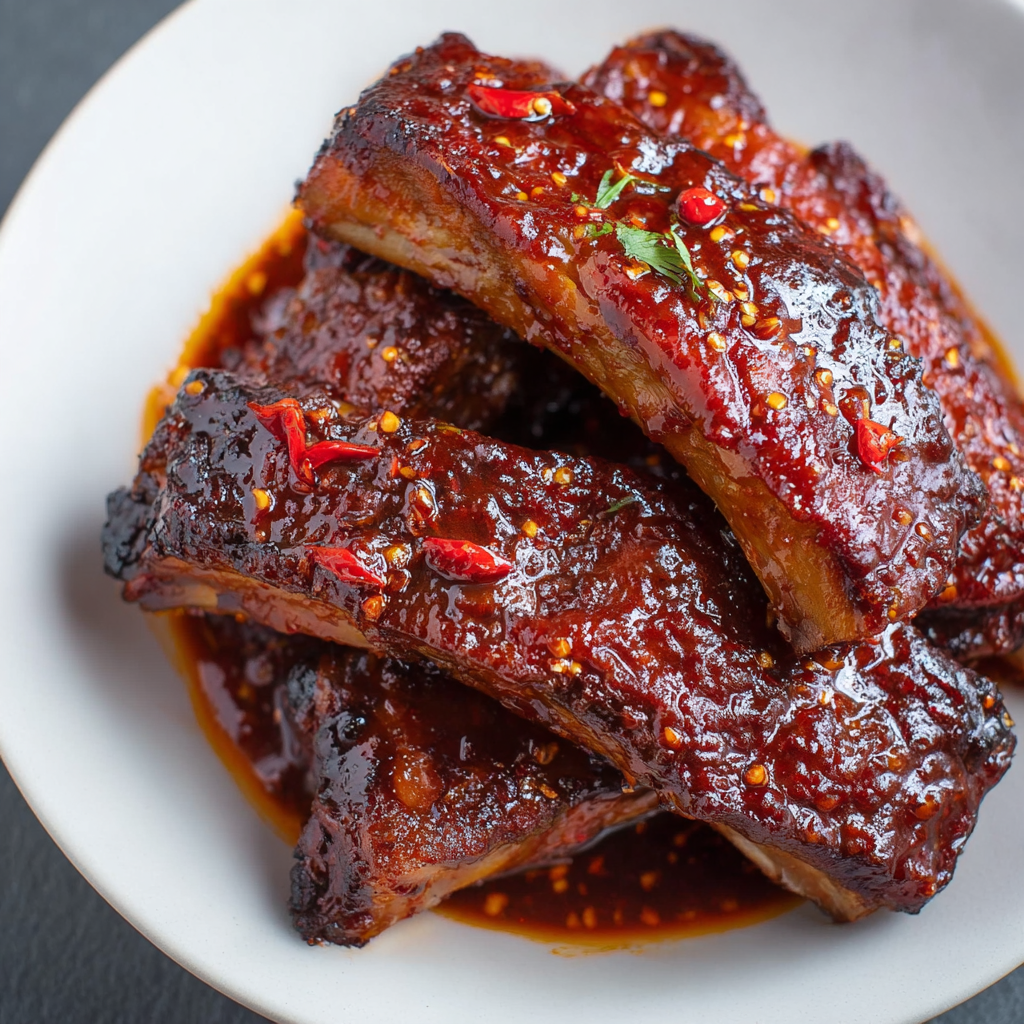
These spicy braised pork ribs deliver incredibly tender, melt-in-your-mouth meat coated in a sticky, savory-sweet glaze. The low-and-slow braising method does all the work, creating a deeply flavorful sauce that penetrates every bite. If you’re a fan of rich, one-pan dinners like my Sausage and Sweet Potatoes with Honey Garlic Sauce, this will be your new favorite.
\n
Why This Braising Method Is Superior
\n
Braising is a two-step cooking process that guarantees tender results with tougher cuts of meat like pork ribs. It’s the secret to restaurant-quality texture at home.
\n
- Step 1: The Sear. We start by searing the ribs in a very hot Dutch oven. This isn’t for sealing in juices (that’s a myth), but for the Maillard reaction. This chemical process creates a deep brown crust and hundreds of complex flavor compounds that form the foundation of our sauce.
- \n
- Step 2: The Slow Braise. After searing, we add liquid (broth, soy sauce, aromatics) and cover the pot. Cooked low and slow in the oven, the connective tissue (collagen) in the ribs melts into silky gelatin. This is what makes the meat unbelievably moist and fall-off-the-bone tender.
- \n
\n
The Anatomy of the Spice & Glaze
\n
This isn’t just a random mix of ingredients; each component plays a critical role in building a balanced, addictive flavor profile.
\n
- Gochujang (Korean Chili Paste): The star player. It provides a funky, fermented, spicy heat with a subtle sweetness. It’s complex and can’t be easily substituted.
- \n
- Soy Sauce: Adds the essential salty, umami backbone to the sauce.
- \n
- Mirin (or Rice Vinegar): Provides a bright acidity that cuts through the richness of the pork fat, preventing the dish from feeling heavy.
- \n
- Brown Sugar: Balances the salt and spice while helping the final glaze caramelize and become sticky.
- \n
- Garlic & Ginger: These fresh aromatics provide a pungent, zesty kick that brightens the entire dish.
- \n
- Sesame Oil: Added at the end for its nutty, fragrant aroma. Heating it too long can diminish its flavor.
- \n
\n
Choosing Your Cut: A Rib Rundown
\n
While this recipe is forgiving, the cut of pork rib you choose will affect cooking time and final texture.
\n
- St. Louis-Style Ribs (Recommended): My top choice. These are spare ribs with the hard breastbone and cartilage removed, creating a uniform, rectangular rack that’s easy to brown and cooks evenly. They have a great meat-to-fat ratio.
- \n
- Baby Back Ribs: Leaner and more tender than spare ribs, they will cook faster. Reduce braising time by about 30-45 minutes.
- \n
- Spare Ribs: A larger cut from the belly side. They are fatty and flavorful but may require trimming of the breastbone flap for easier handling.
- \n
\n
Step-by-Step Instructions
\n
Prep Time: 15 mins
\n
Cook Time: 2.5 – 3 hours
\n
Yields: 4-6 servings
\n
- Prepare the Ribs: Pat the pork ribs completely dry with paper towels. This is crucial for getting a good sear. Season all sides generously with salt and black pepper.
- \n
- Sear for Flavor: Place a large Dutch oven or heavy-bottomed pot over medium-high heat. Add the avocado oil. Once shimmering, add the ribs, meat-side down. Sear in batches to avoid overcrowding, about 3-4 minutes per side, until deeply golden brown. Transfer the seared ribs to a plate.
- \n
- Build the Sauce Base: Lower the heat to medium. Add the minced garlic and grated ginger to the pot, sautéing in the rendered pork fat for 30-60 seconds until fragrant. Be careful not to burn the garlic.
- \n
- Deglaze and Combine: Pour in the beef broth to deglaze the pot, scraping up all the browned bits from the bottom with a wooden spoon. Whisk in the soy sauce, gochujang, mirin, and brown sugar until the sugar is dissolved.
- \n
- Braise to Perfection: Return the seared ribs to the pot, arranging them in a single layer if possible. The liquid should come about halfway up the ribs. Bring the mixture to a simmer, then cover the pot with a tight-fitting lid. Transfer to a preheated 325°F (160°C) oven. Braise for 2.5 to 3 hours, or until the meat is fork-tender and pulling away from the bone.
- \n
- Create the Glaze: Carefully remove the tender ribs from the pot and set them aside on a platter. Place the Dutch oven back on the stovetop over medium-high heat. Bring the remaining liquid to a boil and let it reduce for 10-15 minutes, or until it has thickened into a syrupy glaze that coats the back of a spoon. Stir in the toasted sesame oil.
- \n
- Final Toss & Garnish: Brush the glaze generously over the ribs, or simply return them to the pot and toss to coat. Garnish with sliced green onions and toasted sesame seeds before serving. These are perfect served over a bed of steamed rice or with a side of my Cheesy Carnivore Bread to mop up every last drop of the incredible sauce. For a stunning dessert to follow this rich meal, a decadent Triple Chocolate Mousse Cake is a guaranteed showstopper.
- \n
\n
COMMON MISTAKES TO AVOID
\n
- Mistake: A weak sear. Not getting the ribs properly browned means you’re leaving a massive amount of flavor behind.
Fix: Ensure your pot is hot and your ribs are dry. Don’t move them for at least 3 minutes per side to allow a deep crust to form. - \n
- Mistake: Not reducing the sauce. The braising liquid will be thin and watery straight from the oven.
Fix: Don’t skip the final step of simmering the liquid on the stovetop. This concentrates the flavor and creates the sticky glaze that makes the dish. - \n
- Mistake: Braising at too high a temperature. Boiling the ribs will make the meat tough and stringy, not tender.
Fix: Keep your oven at a low-and-slow 325°F (160°C). A gentle, steady simmer is the goal. - \n
\n
FAQ
\n
Can I make this recipe in a slow cooker?
\n
Yes. Sear the ribs and build the sauce on the stovetop first, then transfer everything to a slow cooker. Cook on low for 6-8 hours or on high for 3-4 hours. You will still need to reduce the sauce on the stovetop at the end.
\n
What’s a good substitute for Gochujang?
\n
There is no perfect substitute due to its unique fermented flavor. In a pinch, you can mix Sriracha or another chili paste with a small amount of miso paste to mimic the umami and heat, but the result will be different.
\n
How do I store and reheat leftovers?
\n
Store the ribs and extra glaze in an airtight container in the refrigerator for up to 4 days. Reheat gently in a covered skillet over low heat with a splash of water or broth to prevent them from drying out.
\n
To complete your meal, consider ending on a sweet note. While chocolate is a great pairing, something lighter like delicate Coconut Cream Tartlets can provide a wonderful contrast to the spicy ribs.
\n
NUTRITIONAL SNAPSHOT
\n \n
\n
\n
\n
\n
\n
\n\n
\n
\n
\n
\n\n
\n
\n
\n\n
\n
\n
\n\n
\n
\n
\n\n
\n
\n
\n\n
\n
\n
\n
\n
| Nutrient | Amount per Serving |
|---|---|
| Calories | 680 |
| Protein | 45g |
| Fat | 48g |
| Net Carbs | 15g |
| Fiber | 1g |
| Sugar | 12g |
“
}
“`
Spicy Braised Pork Ribs That Fall Off the Bone
Ingredients
- 4 lbs pork ribs (St. Louis-style recommended)
- 2 tbsp avocado oil
- 1 tbsp kosher salt
- 1 tsp black pepper
- 8 cloves garlic (minced)
- 1-inch piece ginger (grated)
- 1 cup beef broth (low sodium)
- 1/2 cup soy sauce (low sodium)
- 1/3 cup gochujang
- 1/4 cup mirin
- 2 tbsp brown sugar
- 1 tsp toasted sesame oil
- 2 green onions (sliced)
- 1 tbsp toasted sesame seeds