
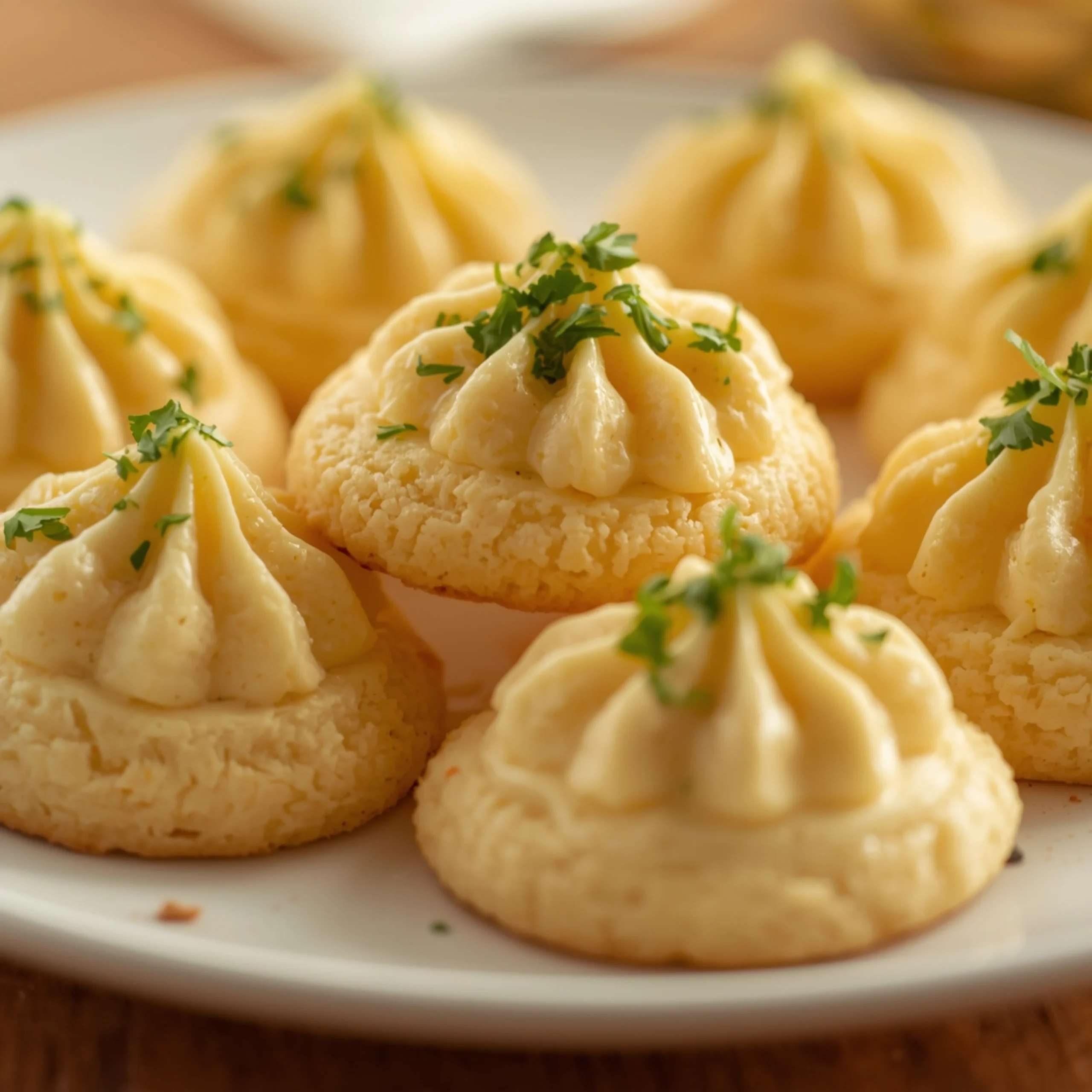
Melt-in-Your-Mouth Whipped Shortbread Cookies
These whipped shortbread cookies are impossibly light, dissolving on your tongue with a rich, buttery flavor. The secret is in the technique—whipping the butter to create an airy, delicate crumb that bakes into pure perfection. This is one of the simplest, most rewarding delicious dessert recipes you can make.
The Science of ‘Whipped’: Why This Method Works
Traditional shortbread is dense and crumbly. Whipped shortbread is different. The “whipped” method isn’t just a name; it’s a technique that fundamentally changes the cookie’s structure.
- Aeration is Key: By beating the softened butter and powdered sugar for an extended time (5-7 minutes), you are forcing thousands of microscopic air bubbles into the fat. This makes the dough incredibly light and airy.
- Cornstarch for Tenderness: Cornstarch is a pure starch that doesn’t contain gluten. It interferes with the flour’s gluten formation, resulting in a cookie that is exceptionally tender and “melty” rather than chewy or tough.
- Powdered Sugar’s Role: Using powdered sugar (which contains cornstarch) instead of granulated sugar ensures a smooth, non-gritty texture and contributes to that signature melt-in-your-mouth quality.
Ingredient Deep Dive & Smart Swaps
Simplicity is the hallmark of shortbread, making ingredient quality paramount. Using high-quality, simple ingredients is a theme you’ll find across all my best recipes.
- Butter: Use high-quality, unsalted butter. Since it’s the primary flavor, a European-style butter with a higher fat content (like Plugrà or Kerrygold) will yield a richer taste. It must be at room temperature—soft to the touch but not greasy or melted.
- Flour: All-purpose flour is perfect. Do not substitute with bread flour, which has too much protein and will create a tough cookie.
- Cornstarch: Do not skip this. It is essential for the texture. Potato starch can work in a pinch, but cornstarch is ideal.
- Sugar-Free Option: For a lower-sugar version, you can substitute the powdered sugar with a powdered erythritol or monk fruit blend. Note that this may slightly alter the final texture.
STEP-BY-STEP INSTRUCTIONS
Prep Time: 15 minutes
Bake Time: 12-15 minutes
Yields: Approx. 3 dozen cookies
- Preheat & Prep: Preheat your oven to 350°F (175°C). Line two baking sheets with parchment paper.
- Whip Butter & Sugar: In a large bowl with an electric mixer (stand or hand), beat the softened butter on medium-high speed for 2 minutes until it’s light and creamy.
- Add Sugar & Vanilla: Add the powdered sugar, vanilla extract, and salt. Continue to beat on medium-high for another 5 full minutes. The mixture should be very pale, light, and fluffy, almost like a thick whipped cream. Do not rush this step.
- Sift Dry Ingredients: In a separate bowl, whisk together the all-purpose flour and cornstarch. Sifting is highly recommended to ensure a lump-free, airy texture.
- Combine Gently: Add the dry ingredients to the whipped butter mixture. Mix on the lowest possible speed just until the flour is incorporated. Overmixing at this stage will develop gluten and ruin the delicate texture.
- Pipe the Cookies: Transfer the dough to a piping bag fitted with a large star tip (like a Wilton 1M). Pipe 1.5-inch rosettes onto the prepared baking sheets, leaving about 2 inches between each cookie. If the dough is too soft to pipe, chill it for 10-15 minutes.
- Bake: Bake for 12-15 minutes, or until the edges are just beginning to turn a very light golden brown. The centers should still look pale. Do not overbake.
- Cool: Let the cookies cool on the baking sheet for 5 minutes before carefully transferring them to a wire rack to cool completely. They are very delicate when warm.
Flavor Variations: Beyond the Basics
This simple dough is a perfect canvas for customization.
- Citrus Zest: Add 1 tablespoon of finely grated lemon or orange zest along with the vanilla.
- Almond or Peppermint: Replace half of the vanilla extract with almond extract for a nutty flavor or peppermint extract for a holiday twist.
- Spiced: Add ½ teaspoon of ground cinnamon or cardamom to the dry ingredients.
- Chocolate Dipped: Melt high-quality semi-sweet or dark chocolate and dip half of each cooled cookie. Place on parchment paper to set.
- Holiday Pairing: For a truly decadent holiday spread, serve these delicate cookies alongside rich, dark Chocolate Peppermint Mousse Cups for a fantastic texture and flavor contrast.
COMMON MISTAKES TO AVOID
-
Mistake: Using cold or overly melted butter.
Fix: Your butter must be at “room temperature”—around 65-68°F (18-20°C). It should give slightly when pressed but still hold its shape. Cold butter won’t whip properly, and melted butter will cause the cookies to spread into flat discs.
-
Mistake: Overmixing the dough after adding flour.
Fix: Mix on the lowest speed only until the flour disappears. Overmixing develops gluten, which makes cookies tough and dense, destroying the “melt-in-your-mouth” quality you’re aiming for.
-
Mistake: Overbaking the cookies.
Fix: Pull them from the oven when the edges are just barely light golden. The tops should remain pale. They will continue to set on the hot baking sheet. Overbaking makes them dry and crunchy, not tender.
FAQ
Q: Can I use granulated sugar instead of powdered sugar?
A: No, this is not recommended for this specific recipe. Powdered sugar dissolves instantly into the butter, creating a smooth, non-gritty texture that is essential for whipped shortbread. It also contains cornstarch, which aids in the tenderness.
Q: My dough was too soft to pipe. What did I do wrong?
A: Your kitchen might be warm, or your butter may have been too soft to begin with. Simply chill the dough in the piping bag for 15-20 minutes in the refrigerator. This will firm up the butter and make it much easier to pipe beautiful, defined shapes.
Q: How should I store these cookies?
A: Store the completely cooled cookies in an airtight container at room temperature for up to one week. They are delicate, so handle them gently.
Further Baking Inspiration
Once you’ve mastered these cookies, you might enjoy exploring other unique baked goods. For a sweet and savory twist, these Chocolate Chip Soft Pretzels are a fantastic project. And for a change of pace from desserts entirely, try these incredible Spinach Cheese Stuffed Portobello Mushrooms.
NUTRITIONAL SNAPSHOT
| Nutrient | Amount per Serving |
|---|---|
| Calories | 110 kcal |
| Protein | 1g |
| Fat | 7g |
| Net Carbs | 10g |
| Fiber | 0g |
| Sugar | 4g |
(Estimated for 2 cookies)

Melt-in-Your-Mouth Whipped Shortbread Cookies
These whipped shortbread cookies are impossibly light, dissolving on your tongue with a rich, buttery flavor. The secret is in the technique—whipping the butter to create an airy, delicate crumb that bakes into pure perfection. This is one of the simplest, most rewarding delicious dessert recipes you can make.
Ingredients
- 1 cup (227g) unsalted butter, softened
- ⅔ cup (80g) powdered sugar
- 1 teaspoon vanilla extract
- ¼ teaspoon salt
- 1 ½ cups (180g) all-purpose flour
- ½ cup (60g) cornstarch
Instructions
- Preheat your oven to 350°F (175°C). Line two baking sheets with parchment paper.
- In a large bowl with an electric mixer (stand or hand), beat the softened butter on medium-high speed for 2 minutes until it's light and creamy.
- Add the powdered sugar, vanilla extract, and salt. Continue to beat on medium-high for another 5 full minutes. The mixture should be very pale, light, and fluffy, almost like a thick whipped cream. Do not rush this step.
- In a separate bowl, whisk together the all-purpose flour and cornstarch. Sifting is highly recommended to ensure a lump-free, airy texture.
- Add the dry ingredients to the whipped butter mixture. Mix on the lowest possible speed just until the flour is incorporated. Overmixing at this stage will develop gluten and ruin the delicate texture.
- Transfer the dough to a piping bag fitted with a large star tip (like a Wilton 1M). Pipe 1.5-inch rosettes onto the prepared baking sheets, leaving about 2 inches between each cookie. If the dough is too soft to pipe, chill it for 10-15 minutes.
- Bake for 12-15 minutes, or until the edges are *just* beginning to turn a very light golden brown. The centers should still look pale. Do not overbake.
- Let the cookies cool on the baking sheet for 5 minutes before carefully transferring them to a wire rack to cool completely. They are very delicate when warm.