
How to Make Perfect Cheesecake Every Time
A truly great cheesecake—dense, creamy, and velvety smooth—is a kitchen masterpiece. At Bites by Lila, we believe a perfect cheesecake is achievable for any home cook by mastering a few core principles. This guide demystifies the process, giving you the blueprint for a flawless dessert that will become one of your go-to desserts.
The Master Classic Cheesecake Recipe
This is your foundation. Master this, and you can adapt it to any flavor profile. It’s designed for a 9-inch springform pan.
STEP-BY-STEP INSTRUCTIONS
- Prep the Station: Preheat your oven to 350°F (175°C). Wrap the outside of a 9-inch springform pan with two layers of heavy-duty aluminum foil. This is your insurance against water bath leaks. Set a kettle of water to boil.
- Build the Crust: In a medium bowl, mix graham cracker crumbs, melted butter, and sugar until the texture resembles wet sand. Press this mixture firmly and evenly into the bottom and slightly up the sides of your prepared pan. Bake for 10 minutes. Let it cool completely on a wire rack.
- Reduce Oven Temperature: Once the crust is out, reduce the oven temperature to 325°F (160°C).
- Mix the Filling (Low & Slow): In a large bowl, using a stand mixer or hand mixer on low speed, beat the room temperature cream cheese until completely smooth and free of lumps. This is the most critical step for a creamy texture.
- Incorporate Sugars & Flavor: Scrape down the bowl. Gradually add the granulated sugar and continue mixing on low until just combined. Add the vanilla and salt.
- Add Eggs One by One: Add the eggs one at a time, mixing on low speed until the yolk of each is just blended into the batter. Do not overmix. Overmixing incorporates air, which leads to cracks.
- Finish with Cream & Sour Cream: Gently mix in the sour cream and heavy cream until the batter is smooth and homogenous. Again, mix only until combined.
- Assemble & Bake: Pour the filling over your cooled crust. Place the springform pan into a larger roasting pan. Carefully pour the boiling water from your kettle into the roasting pan until it comes halfway up the sides of the springform pan. This is your water bath.
- Bake: Carefully transfer to the oven. Bake for 60-70 minutes. The cheesecake is done when the edges are set, but the center 2-3 inches still has a slight jiggle (like Jell-O).
- The Critical Cool-Down: Turn off the oven, but leave the cheesecake inside with the oven door cracked open for 1 hour. This gradual temperature drop is key to preventing cracks.
- Chill: Remove the cheesecake from the water bath and the roasting pan. Let it cool completely on the counter. Once at room temperature, cover loosely with plastic wrap and refrigerate for at least 6 hours, but preferably overnight.
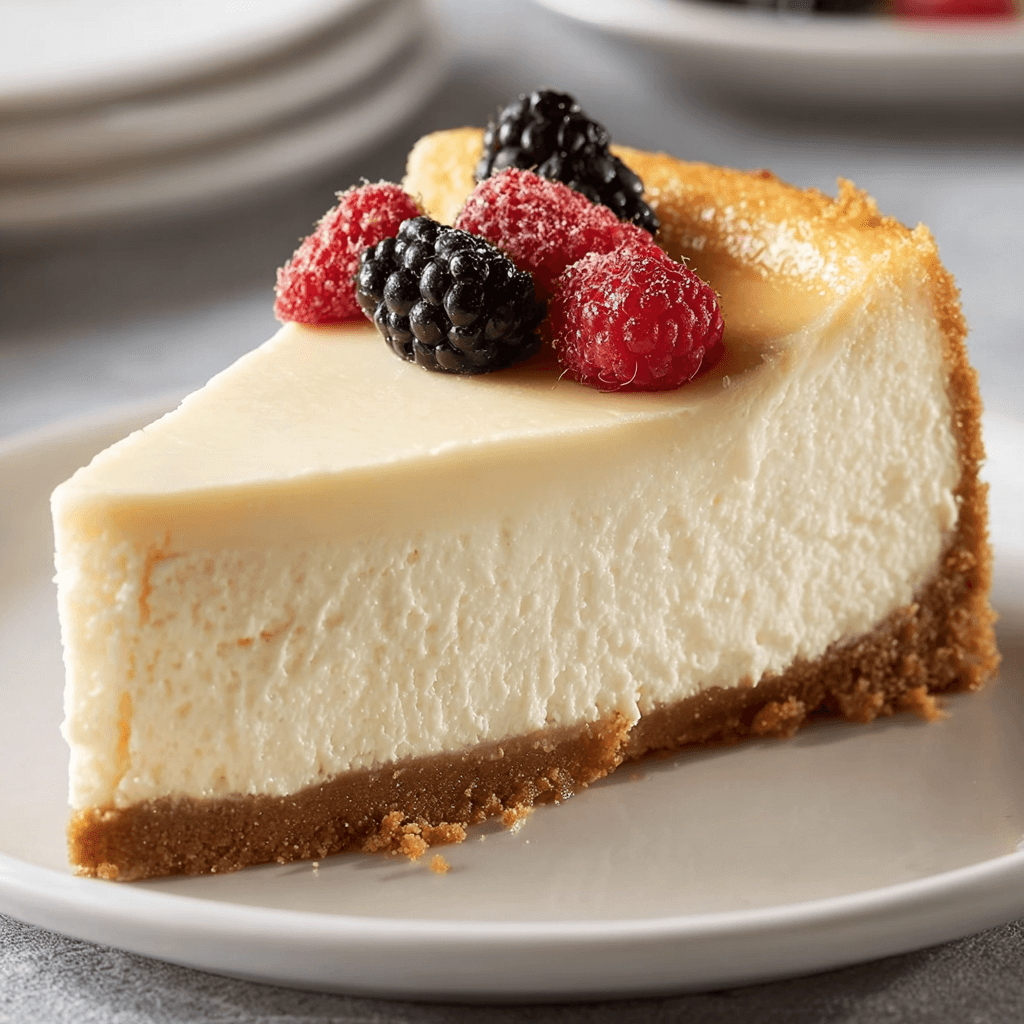
The Cheesecake Architect: Key Components Deconstructed
The Crust:
The graham cracker base provides a crunchy, buttery counterpoint to the creamy filling. Its primary job is structural and textural contrast.
The Cream Cheese:
Use full-fat, block-style cream cheese, and ensure it is at room temperature. Cold cream cheese creates a lumpy batter, and low-fat versions contain more water, leading to a poor texture.
The Eggs:
Eggs are the primary binder. Adding them one by one and mixing gently on low speed prevents the incorporation of excess air, which expands during baking and causes cracks as it cools.
The Water Bath (Bain-Marie):
This is non-negotiable for a classic New York-style cheesecake. It creates a humid, steamy environment in the oven, ensuring the cheesecake bakes gently and evenly. This gentle, indirect heat is your best defense against cracks and a rubbery texture.
Troubleshooting the Top: The Science of a Crack-Free Surface
Cracks are the number one fear of cheesecake bakers. Here’s how to prevent them.
Cause: Over-mixing. Beating the batter on high speed or for too long incorporates air bubbles. These bubbles rise, expand, and pop during baking, causing fissures.
Solution: Mix on low speed at every stage after creaming the initial cheese. Scrape the bowl often.
Cause: Temperature Shock. A rapid change in temperature from a hot oven to a cool kitchen causes the cheesecake to contract too quickly, leading to cracks.
Solution: The 1-hour cool-down in the turned-off oven with the door ajar is essential. It allows for a gradual, gentle temperature transition.
Cause: Over-baking. An over-baked cheesecake is dry and curdled, making it prone to cracking.
Solution: Pull the cheesecake when the center still has a distinct wobble. It will continue to cook and set from residual heat as it cools.
Flavor Variations & Toppings
Once you’ve mastered the base, the possibilities are endless. This is where you can explore our full collection of recipes and get creative.
- Chocolate Swirl: Melt 4 oz of semisweet chocolate. After pouring the batter into the crust, dollop the melted chocolate on top and use a skewer to gently swirl it into the batter.
- Lemon Zest: Add the zest of 2 lemons to the batter along with the sugar for a bright, citrusy lift.
- Fruit Topping: A simple fruit compote (simmering berries with a little sugar and lemon juice) is a classic. Spoon over the chilled cheesecake before serving.
- Caramel or Dulce de Leche: Drizzle generously over the top and sprinkle with flaky sea salt.
The No-Bake Alternative: A Quick & Creamy Option
For a faster, oven-free dessert, the no-bake cheesecake is an excellent choice. The method is different, relying on chilling to set the filling rather than baking.
The Base:
Use the same graham cracker crust, but instead of baking, simply chill it in the freezer for 20-30 minutes to firm up.
The Filling:
A typical no-bake filling uses cream cheese, powdered sugar (which dissolves without heat), heavy cream (whipped to stiff peaks to provide structure), and a stabilizer like lemon juice.
The Method:
Beat cream cheese with powdered sugar. Separately, whip heavy cream to stiff peaks. Gently fold the whipped cream into the cream cheese mixture. Pour into the chilled crust and refrigerate for at least 6-8 hours to set completely. This style of dessert is much lighter and has a mousse-like texture, making it a wonderful alternative for different occasions. For those who enjoy exploring other types of baked goods, this vegan gingerbread cake recipe offers a spicy, festive alternative that also comes together beautifully.
COMMON MISTAKES TO AVOID
Mistake: Using cold ingredients.
Fix: Let your cream cheese, eggs, and sour cream sit on the counter for at least 1-2 hours before you begin. Room temperature ingredients combine smoothly and prevent lumps.
Mistake: Skipping the water bath.
Fix: Always use a water bath. It’s the single most important technique for ensuring a creamy, evenly cooked, and crack-free cheesecake. Double-wrap your pan in foil to be safe.
Mistake: Slicing it while it’s still warm.
Fix: Be patient. Cheesecake needs to chill completely—ideally overnight—to fully set. Slicing it early results in a messy, soft texture.
FAQ
Q: Can I use low-fat or whipped cream cheese?
A: It’s not recommended. Full-fat block cream cheese provides the essential fat content and structure for a classic, dense cheesecake. Whipped versions have too much air, and low-fat versions have too much water.
Q: How do I know for sure when my cheesecake is done?
A: The “jiggle test” is the best indicator. Gently nudge the pan. The outer 2-3 inches should be set and firm, while the very center should still have a noticeable wobble, similar to set pudding. It will firm up as it cools.
Q: How should I store leftover cheesecake?
A: Store it covered in the refrigerator for up to 5 days. Cheesecake also freezes exceptionally well. Wrap individual slices tightly in plastic wrap and then foil; they will last for up to 2 months in the freezer.
If you’re planning a full holiday menu, consider complementing your cheesecake with other delightful creations. An elegant eggnog panna cotta with nutmeg whipped cream makes for a stunning festive dessert, while a savory side like cranberry-glazed roasted butternut squash and brussels sprouts can round out the main course beautifully.
NUTRITIONAL SNAPSHOT
| Nutrient | Amount per Serving |
|---|---|
| Calories | 450 kcal |
| Protein | 8g |
| Fat | 32g |
| Net Carbs | 30g |
| Fiber | 1g |
| Sugar | 25g |
How to Make Perfect Cheesecake Every Time
Ingredients
- 1.5 cups (150g) graham cracker crumbs
- 2 tablespoons (25g) granulated sugar
- 6 tablespoons (85g) unsalted butter, melted
- 32 oz (four 8-oz blocks) full-fat block cream cheese, room temperature
- 1.5 cups (300g) granulated sugar
- 1 teaspoon vanilla extract
- pinch of salt
- 4 large eggs, room temperature
- 1/2 cup (120g) sour cream, room temperature
- 1/2 cup (120ml) heavy cream, room temperature