
The New York Style Cheesecake Recipe for a Flawless Finish
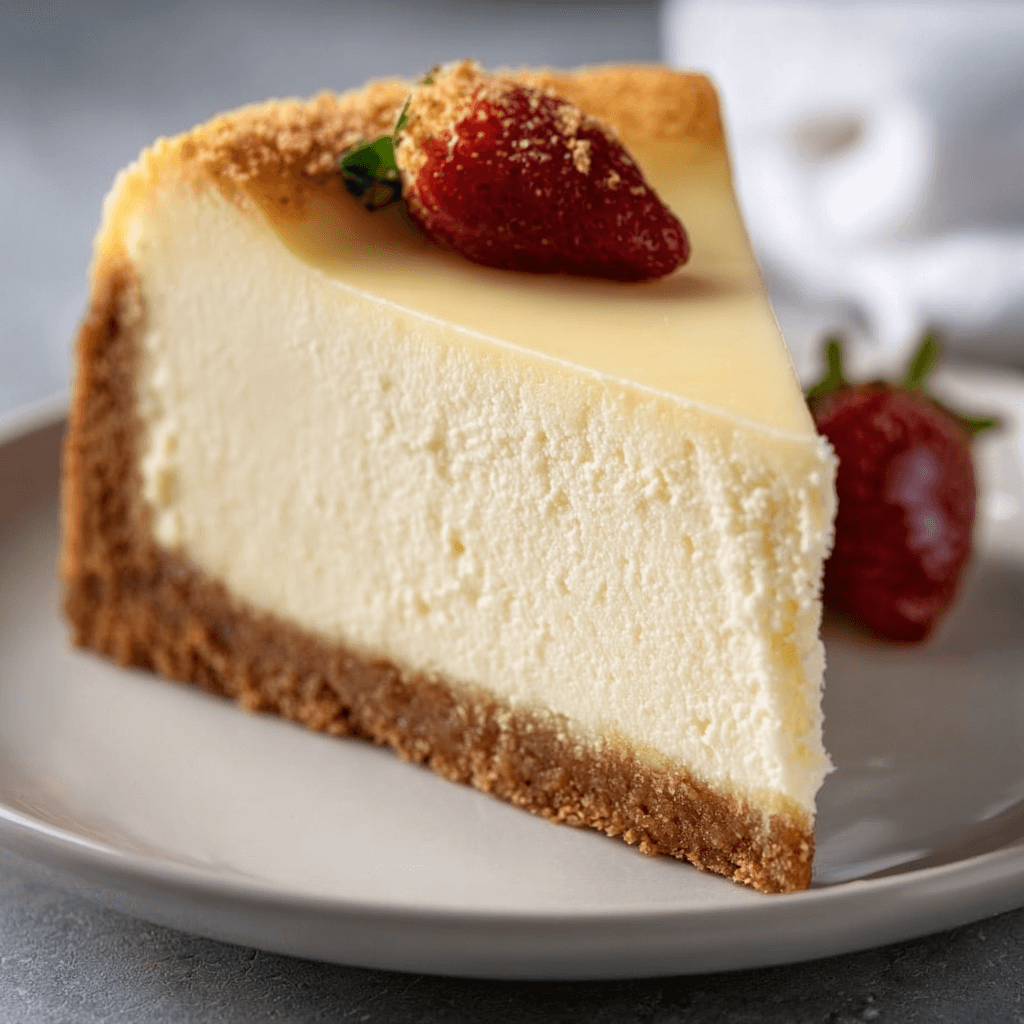
This is the definitive blueprint for a dense, creamy, and crack-free New York Style Cheesecake. We’re skipping the fluff and focusing on the technique that delivers that signature rich texture and tangy flavor you crave. It’s one of the most rewarding bakes in our entire desserts collection.
The Anatomy of a Perfect Cheesecake
A true New York cheesecake is an engineering marvel of texture and flavor. Understanding its core components is key to success.
- The Crust: This isn’t just a base; it’s the foundation. It must be sturdy, buttery, and slightly sandy. We use graham crackers for that classic, nostalgic flavor that perfectly complements the tangy filling.
- The Filling: This is the star. Unlike lighter, fluffier cheesecakes, the New York style is defined by its density.
- Full-Fat Cream Cheese: The primary structural and flavor component. No substitutes.
- Sour Cream: Adds essential moisture and a bright, tangy flavor that cuts through the richness.
- Eggs: Act as the binder, setting the filling into a smooth, sliceable custard.
- Sugar & Vanilla: Provide sweetness and aromatic depth without overpowering the cream cheese.
The Non-Negotiable Rule: Room Temperature Ingredients
If you ignore every other tip, follow this one. Using cold ingredients is the #1 cause of a lumpy, uneven cheesecake.
- Why it works: Cold cream cheese doesn’t blend smoothly. You’ll overmix the batter trying to eliminate lumps, which incorporates too much air and leads to cracks.
- What needs to be softened:
- Cream Cheese: Take it out of the fridge at least 4 hours before you begin.
- Eggs: Place them in a bowl of warm water for 10 minutes.
- Sour Cream: Measure it out and let it sit on the counter for at least 1 hour.
STEP-BY-STEP INSTRUCTIONS
Yields: 12 servings
Prep time: 30 minutes
Bake time: 90 minutes
Chill time: 8 hours (or overnight)
Part 1: The Graham Cracker Crust
- Prep the Pan: Preheat your oven to 350°F (175°C). Wrap the outside of a 9-inch springform pan with a double layer of heavy-duty aluminum foil, ensuring the bottom and sides are completely sealed. This is for the water bath later.
- Make the Crumbs: In a food processor, pulse the graham crackers into fine crumbs. Alternatively, place them in a zip-top bag and crush with a rolling pin.
- Combine Ingredients: In a medium bowl, mix the graham cracker crumbs, melted butter, and sugar until the mixture resembles wet sand.
- Press into Pan: Firmly press the crumb mixture into the bottom and slightly up the sides of the prepared springform pan. Use the flat bottom of a glass to pack it tightly.
- Pre-Bake: Bake the crust for 10 minutes. Remove and let it cool on a wire rack while you prepare the filling.
Part 2: The Cheesecake Filling
- Reduce Oven Temp: Lower the oven temperature to 325°F (160°C).
- Beat Cream Cheese: In the bowl of a stand mixer fitted with the paddle attachment (or using a hand mixer), beat the room-temperature cream cheese on low speed until it is completely smooth and creamy. Scrape down the sides and bottom of the bowl often.
- Add Sugars and Flavor: Add the granulated sugar, cornstarch, and salt. Mix on low speed until just combined. Add the sour cream and vanilla extract, mixing until smooth.
- Incorporate Eggs: Add the eggs one at a time, mixing on low speed after each addition until the yolk just disappears. DO NOT OVERMIX. This is critical to prevent cracks.
- Assemble for Baking: Pour the filling over the cooled crust. Tap the pan gently on the counter a few times to release any large air bubbles.
Part 3: The Water Bath & Baking
- Prepare Water Bath: Place the foil-wrapped springform pan into a larger roasting pan. Bring a kettle of water to a boil.
- Add Water: Carefully place the roasting pan on the oven rack. Pour the boiling water into the roasting pan until it comes about halfway up the sides of the springform pan.
- Bake: Bake for 75-90 minutes. The cheesecake is done when the edges are set, but the center 2-3 inches still has a slight jiggle (like Jell-O).
- Cool Slowly: Turn off the oven and crack the door open. Let the cheesecake cool in the oven for 1 hour. This gradual temperature change is another key to preventing cracks.
- Chill: Remove the cheesecake from the water bath and the foil. Let it cool completely on a wire rack. Once at room temperature, cover with plastic wrap and refrigerate for at least 8 hours, preferably overnight.
Water Bath 101: The Secret to a Crack-Free Top
A water bath, or bain-marie, sounds intimidating, but it’s a simple technique that guarantees a perfect cheesecake.
- What it does: The steam from the hot water creates a humid environment in the oven. This ensures the cheesecake bakes gently and evenly, preventing the top from drying out and cracking.
- How to wrap your pan (The right way):
- Use two large sheets of heavy-duty aluminum foil. Regular foil can tear easily.
- Place one sheet under the pan and carefully fold the sides up.
- Repeat with the second sheet in the opposite direction to cover any seams.
- Press the foil tightly against the pan sides. The goal is to create a watertight seal.
Serving and Topping Suggestions
This cheesecake is a showstopper on its own, but toppings can elevate it. After putting together a fantastic meal from our dinner collection, a perfect slice of this cheesecake is the ideal finish.
- Classic Fruit Compote: A simple raspberry or strawberry sauce cooked down with a little sugar and lemon juice.
- Chocolate Ganache: For a truly decadent finish. The method for a simple ganache is often found in tart recipes, much like this elegant chocolate strawberry tart recipe.
- Fresh Berries: A handful of fresh, seasonal berries adds a bright, fresh contrast.
- Salted Caramel Sauce: The sweet and salty combination is a perfect match for the tangy filling.
COMMON MISTAKES TO AVOID
- Mistake: A lumpy filling.
- Fix: Ensure your cream cheese, eggs, and sour cream are all at true room temperature. Scrape the bowl frequently and mix on low speed.
- Mistake: The cheesecake cracks during baking or cooling.
- Fix: Do not overmix the eggs. Use a water bath. Cool the cheesecake slowly in the turned-off oven with the door ajar.
- Mistake: Slicing into a warm cheesecake.
- Fix: Be patient. The cheesecake needs to chill completely (at least 8 hours) to fully set. Slicing it early results in a soft, messy texture.
FAQ
Q: Why did my cheesecake crack even though I used a water bath?
A: Overmixing is the most likely culprit. Beating too much air into the batter, especially after adding the eggs, creates bubbles that rise and pop, causing cracks. The other cause is a sudden temperature change—never take the cheesecake directly from a hot oven to the cool counter.
Q: How do I get clean, perfect slices?
A: Use a long, thin knife. Dip the knife in hot water and wipe it clean before each cut. This prevents the filling from sticking and dragging.
Q: Can I use low-fat or “Neufchâtel” cream cheese?
A: It is not recommended. The fat content is crucial for the dense, creamy texture and rich flavor of a New York Style Cheesecake. Using a lower-fat alternative will result in a watery, less stable filling.
For another simple yet impressive dessert that doesn’t even require an oven, consider this no-bake chocolate tart recipe for your next project.
NUTRITIONAL SNAPSHOT
| Nutrient | Amount per Serving |
|---|---|
| Calories | 520 kcal |
| Protein | 9g |
| Fat | 40g |
| Net Carbs | 32g |
| Fiber | 1g |
| Sugar | 28g |
Estimates are for one slice (1/12th of the cake) without toppings.
The New York Style Cheesecake Recipe for a Flawless Finish
Ingredients
- 1 1/2 cups (150g) graham cracker crumbs (from about 10-12 full sheets)
- 2 tablespoons (25g) granulated sugar
- 6 tablespoons (85g) unsalted butter, melted
- 32 ounces (904g) full-fat block cream cheese, at room temperature
- 1 1/2 cups (300g) granulated sugar
- 3 tablespoons (24g) cornstarch
- 1/4 teaspoon salt
- 1 cup (240g) full-fat sour cream, at room temperature
- 2 teaspoons pure vanilla extract
- 4 large eggs, at room temperature