
Rich & Tender Slow-Cooked Beef Ragu
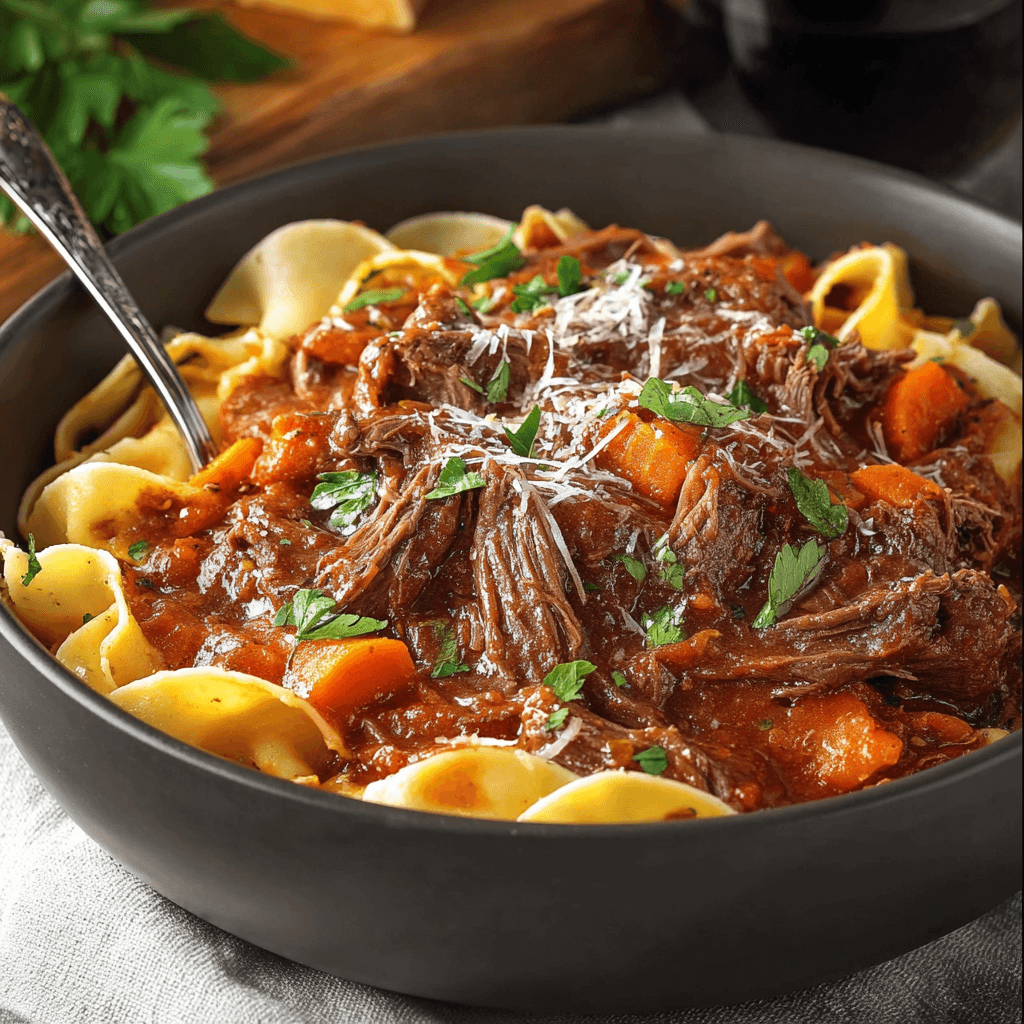
This Slow-Cooked Beef Ragu is a masterclass in low-effort, high-reward cooking. We transform a humble cut of beef into a rich, deeply savory sauce that clings perfectly to pasta. It’s one of those foundational dinner recipes that every home cook should have.
The Ragu Blueprint: Key Component Breakdown
A great ragu isn’t just a recipe; it’s a balance of core components. Understanding their roles is key to consistent results.
- The Meat: 3 lbs chuck roast is the ideal choice. It’s rich in connective tissue (collagen) that breaks down during the long, slow cook into gelatin, creating a luxuriously tender texture and full-bodied sauce.
- The Aromatic Base (Soffritto): A finely diced mix of onion, carrots, and celery. This trio builds the foundational savory-sweet flavor layer. Don’t rush this step; sweating them until soft is crucial.
- The Umami Boosters: Tomato paste and garlic are essential. Toasting the tomato paste deepens its flavor, removing its raw taste and adding a concentrated richness.
- The Deglazing Liquid: Dry red wine (like a Cabernet Sauvignon or Merlot) lifts all the flavorful browned bits (the fond) from the bottom of the pot. This is a non-negotiable step for complex flavor.
- The Braising Liquid: A combination of crushed tomatoes and beef broth provides the moisture for the long simmer. This liquid slowly reduces, concentrating the sauce.
- The Finishing Touches: A splash of heavy cream or a knob of butter at the end rounds out the acidity and adds a final layer of richness. Fresh parsley provides a burst of freshness.
Building Deep Flavor: Essential Techniques
Follow the steps, but master the techniques. This is what separates a good ragu from a great one.
- The Sear is Law: Searing the beef chunks in a hot pot until deeply browned is critical. This process, the Maillard reaction, creates hundreds of new flavor compounds that are impossible to achieve otherwise. Do not crowd the pan. Work in batches to ensure a hard sear, not a gray steam.
- Sweat, Don’t Sauté: Cook the soffritto (onion, carrot, celery) over medium-low heat until it’s very soft and translucent, about 8-10 minutes. This coaxes out their sweetness and builds a gentle, aromatic base.
- Bloom the Paste: Add the tomato paste directly to the pot after the vegetables are soft and cook it for 1-2 minutes, stirring constantly. It will darken in color. This “blooming” process unlocks its deepest umami potential.
- Deglaze Thoroughly: When you add the wine, use a wooden spoon to scrape every single browned bit from the bottom of the pot. This is concentrated flavor that you absolutely want in your final sauce. Let the wine reduce by about half to cook off the raw alcohol taste.
- Low and Slow is the Tempo: Once everything is combined, the magic happens. A bare simmer, with a bubble breaking the surface only every few seconds, is the correct temperature. This gentle heat allows the collagen in the beef to break down slowly, ensuring it becomes fork-tender, not tough and dry.
Step-by-Step Instructions
- Prep the Beef: Pat the chuck roast dry with paper towels and cut it into 2-inch chunks. Season generously on all sides with salt and pepper.
- Sear in Batches: Heat olive oil in a large Dutch oven or heavy-bottomed pot over medium-high heat. Add the beef in a single layer (work in batches) and sear until deeply browned on all sides, about 3-4 minutes per side. Transfer the seared beef to a plate and set aside.
- Build the Base: Reduce heat to medium. Add the diced onion, carrot, and celery to the pot. Cook, stirring occasionally, until softened, about 8-10 minutes. Add the minced garlic and cook for another minute until fragrant.
- Deepen Flavor: Stir in the tomato paste and cook for 2 minutes, until it darkens slightly.
- Deglaze the Pan: Pour in the red wine, scraping up any browned bits from the bottom of the pot. Let it simmer and reduce by about half, about 3-5 minutes.
- Combine & Simmer: Return the seared beef and any accumulated juices to the pot. Add the crushed tomatoes, beef broth, bay leaf, and dried thyme or rosemary. Stir to combine and bring to a simmer.
- The Long Cook: Once simmering, reduce the heat to low, cover the pot, and let it cook for at least 3 hours, or until the beef is completely tender and shreds easily with a fork. Stir occasionally to prevent sticking.
- Finish the Sauce: Remove the pot from the heat. Discard the bay leaf. Use two forks to shred the beef directly in the pot, incorporating it into the sauce.
- Refine & Serve: Stir in the heavy cream (if using) and fresh parsley. Taste and adjust seasoning with more salt and pepper as needed. Serve hot over your favorite pasta, polenta, or gnocchi. For more inspiration, check out our full collection of recipes.
Serving & Storage: Maximize Your Ragu
- Serving Vessels: While pappardelle is classic, this ragu is brilliant with rigatoni, polenta, or creamy mashed potatoes. For a different but equally comforting experience, you could try a dish like this creamy sun-dried tomato gnocchi.
- Toppings: A generous grating of Parmigiano-Reggiano, a drizzle of good quality olive oil, and fresh basil or parsley elevates the final dish.
- Make-Ahead: Ragu tastes even better the next day. The flavors meld and deepen overnight. Store in an airtight container in the refrigerator for up to 4 days.
- Freezing: This sauce freezes beautifully. Let it cool completely, then transfer to freezer-safe bags or containers. It will keep for up to 3 months. Thaw overnight in the refrigerator before reheating gently on the stovetop.
COMMON MISTAKES TO AVOID
- Mistake: Rushing the sear. Overcrowding the pan steams the meat instead of browning it, resulting in a less flavorful sauce.
- Fix: Sear the beef in batches, ensuring there is space between each piece. Be patient and wait for a deep brown crust to form.
- Mistake: Simmering too aggressively. A rapid boil will make the meat tough and can cause the sauce to burn on the bottom.
- Fix: Maintain a “bare simmer,” where a bubble breaks the surface only every few seconds. If cooking in the oven, 275-300°F (135-150°C) is the perfect temperature range.
- Mistake: Not tasting and adjusting at the end. The sauce’s flavor profile changes during the long cook.
- Fix: Always taste before serving. It may need a final pinch of salt to brighten the flavors, a tiny bit of sugar to balance tomato acidity, or a knob of butter to enrich the texture.
FAQ
Q: What’s the best cut of beef for ragu?
A: Chuck roast is the top choice due to its ideal fat content and abundant connective tissue, which melts into gelatin for a rich, tender result. Beef brisket or short ribs are also excellent alternatives. Avoid lean cuts like sirloin.
Q: Can I make this in a slow cooker or Instant Pot?
A: Yes. For a slow cooker, perform steps 1-5 on the stovetop, then transfer everything to the slow cooker and cook on low for 8-10 hours. For an Instant Pot, use the “Sauté” function for steps 1-5, then pressure cook on high for 45-50 minutes with a natural release.
Q: Does the ragu freeze well for meal prep?
A: Absolutely. It’s one of the best freezer meals. Let it cool completely, then portion it into freezer-safe containers or bags. It’s a fantastic base for future meals; if you enjoy having versatile sauces on hand, you might also like knowing that a pureed soup like a creamy roasted cauliflower soup also freezes exceptionally well.
For a perfect end to this rich and savory meal, consider a simple yet elegant dessert. A slice of this brown sugar peach cake would be a wonderful contrast.
NUTRITIONAL SNAPSHOT
| Nutrient | Amount per Serving |
|---|---|
| Calories | 580 kcal |
| Protein | 45g |
| Fat | 35g |
| Net Carbs | 12g |
| Fiber | 3g |
| Sugar | 7g |
Rich & Tender Slow-Cooked Beef Ragu
Ingredients
- 3 lbs beef chuck roast, cut into 2-inch cubes
- 2 tbsp olive oil
- 1 large yellow onion, finely diced
- 2 medium carrots, finely diced
- 2 celery stalks, finely diced
- 4 cloves garlic, minced
- 1/4 cup tomato paste
- 1 cup dry red wine (e.g., Cabernet Sauvignon)
- 28 oz can crushed tomatoes
- 2 cups beef broth
- 1 bay leaf
- 1 tsp dried thyme or 2 sprigs fresh
- Kosher salt, to taste
- Black pepper, to taste
- 1/4 cup heavy cream (optional)
- 1/4 cup fresh parsley, chopped