
Perfectly Smooth Crème Brûlée: A Step-by-Step Guide
This classic French Crème Brûlée recipe delivers a perfectly smooth, vanilla-rich custard under a shatteringly crisp caramelized sugar crust. This guide removes the guesswork, ensuring a flawless result every time. It’s one of those essential desserts that defines simple elegance.
The Custard Code: 3 Keys to Silky Smoothness
The texture of your custard is everything. It should be rich, creamy, and completely free of lumps. Achieving this is a matter of technique, not luck.
- Temperature Control is Non-Negotiable. The #1 cause of grainy or scrambled custard is heat shock. When you combine the hot cream with the egg yolks, you must do it gradually. This process, called tempering, gently raises the temperature of the yolks so they don’t curdle.
- Low and Slow Baking. The custard sets via gentle coagulation of egg proteins. Baking it in a water bath (bain-marie) ensures the ramekins are heated evenly and indirectly, preventing the edges from overcooking while the center remains raw. A low oven temperature (325°F / 163°C) is critical.
- Strain for Insurance. No matter how careful you are, tiny bits of cooked egg or chalazae (the cord anchoring the yolk) can mar the final texture. Pouring the finished custard base through a fine-mesh sieve before baking is a mandatory step for a guaranteed silky-smooth finish.
Mastering the Burnt Sugar Shell
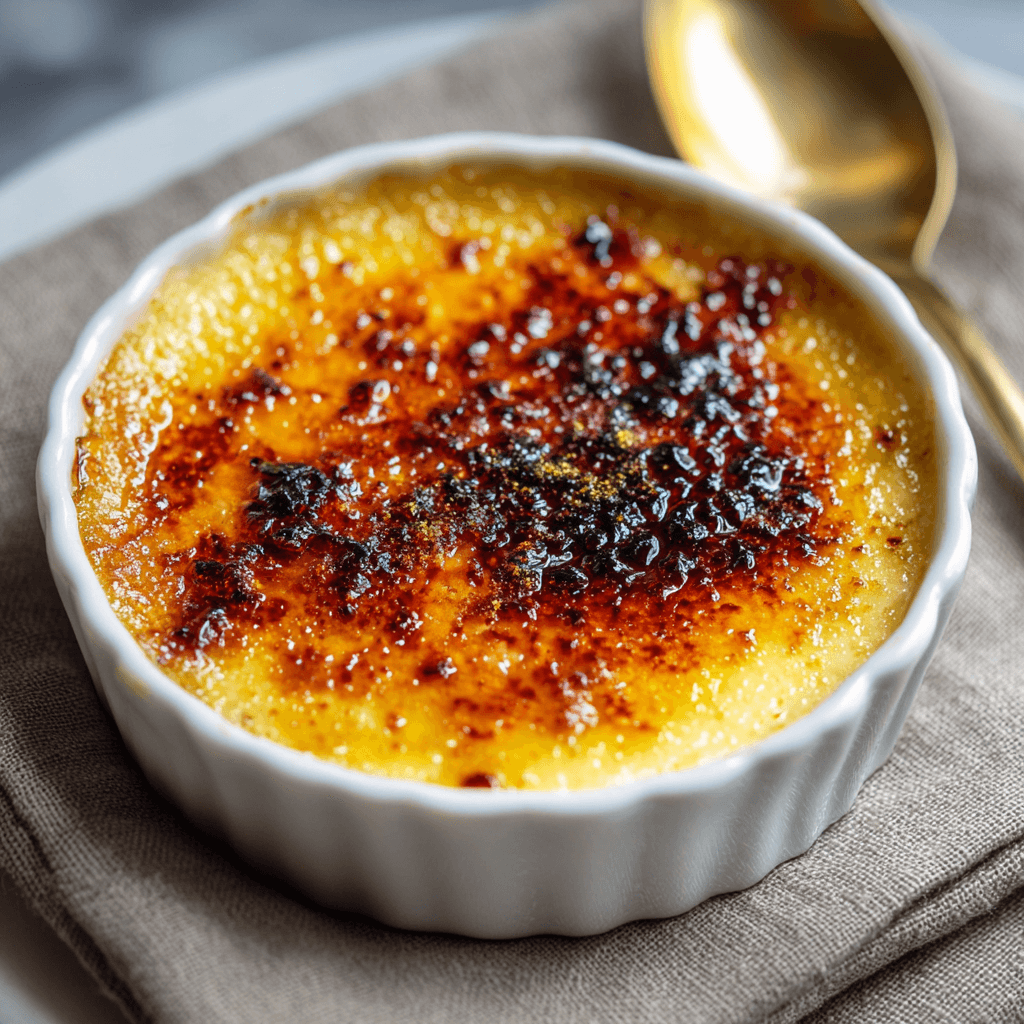
The “crack” is the most satisfying part of crème brûlée. A perfect shell is thin, glassy, and shatters easily under a spoon.
- Torch vs. Broiler: A small kitchen torch is the superior tool. It provides direct, intense heat, allowing you to caramelize the sugar quickly without reheating the custard underneath. A broiler can work, but it’s risky—it heats the entire custard and can easily burn the sugar. If using a broiler, watch it like a hawk for the 1-2 minutes it takes.
- The Right Sugar: Use a fine-grained sugar. Superfine (caster) sugar or regular granulated sugar works best as it melts evenly and quickly. Avoid coarse sugars like demerara until you’ve mastered the technique, as they can be harder to melt without burning.
- Technique is Key: Apply a thin, perfectly even layer of sugar across the entire surface of the chilled custard. Too much sugar creates a thick, hard-to-crack slab. Hold the torch 3-4 inches away and keep it moving continuously to melt and caramelize the sugar until it’s a deep amber color.
Flavor Infusions & Variations
While classic vanilla bean is untouchable, crème brûlée is an excellent canvas for other flavors. Infuse the heavy cream during the initial heating step (Step 2), then strain before tempering.
- Espresso: Add 2 tablespoons of whole espresso beans.
- Citrus: Add the zest of one large orange or two limes.
- Lavender: Add 1 teaspoon of dried culinary lavender.
- Spiced: Add one cinnamon stick and a star anise pod.
While these classic infusions are fantastic, you can also draw inspiration from more modern layered desserts, like these beautiful Espresso Brownie Parfaits, to see how coffee and cream play together. This is a dessert that stands proudly on its own, but if you’re building a menu, check out our dinner recipes for main course inspiration.
Step-by-Step Instructions
Yields: 6 servings
Prep time: 15 minutes
Cook time: 30-35 minutes
Chill time: 4 hours (minimum)
- Prep Oven and Ramekins: Preheat oven to 325°F (163°C). Arrange six 4-to-6-ounce ramekins in a 9×13 inch baking pan or roasting pan.
- Heat Cream: In a medium saucepan, combine the heavy cream, vanilla bean seeds and pod (or vanilla extract), and salt. Heat over medium heat until it just begins to simmer around the edges. Do not let it boil. Remove from heat and let it steep for 10-15 minutes for the vanilla flavor to infuse. Remove the vanilla pod.
- Whisk Yolks and Sugar: In a separate medium bowl, whisk the egg yolks and ½ cup of granulated sugar together until the mixture is pale yellow and has thickened slightly. Do not over-whip; you just want to combine them well.
- Temper the Eggs: This is a critical step. While whisking the egg yolks constantly, very slowly pour the hot cream mixture in a thin stream into the yolks. This gradual process prevents the eggs from scrambling.
- Strain the Custard: Place a fine-mesh sieve over a large measuring cup or another bowl and pour the custard mixture through it. This guarantees a perfectly smooth texture. Skim off any foam from the surface.
- Fill Ramekins: Carefully divide the custard mixture evenly among the prepared ramekins.
- Create Water Bath: Place the pan with the ramekins on the oven rack. Carefully pour hot water into the pan until it reaches halfway up the sides of the ramekins. Be careful not to splash water into the custard.
- Bake: Bake for 30-35 minutes. The custards are done when the edges are set, but the center still has a slight jiggle (like Jell-O). They will firm up completely as they cool.
- Chill Completely: Carefully remove the pan from the oven. Let the ramekins cool in the water bath for about 30 minutes, then remove them, cover with plastic wrap, and refrigerate for at least 4 hours, or preferably overnight. The custard must be completely cold before torching.
- Caramelize the Top: Just before serving, uncover the chilled custards. Blot any condensation from the surface with a paper towel. Sprinkle about 1-2 teaspoons of granulated sugar evenly over the top of each custard.
- Torch: Using a kitchen torch, hold the flame 3-4 inches from the sugar and move it back and forth until the sugar melts and caramelizes to a deep amber-brown.
- Serve Immediately: Let the sugar shell harden for a minute or two, then serve immediately for the best contrast between the warm, crackly top and the cool, creamy custard.
COMMON MISTAKES TO AVOID
- Mistake: Scrambled, lumpy custard.
Fix: You added the hot cream to the eggs too quickly. Temper properly by pouring the cream in a very thin, slow stream while whisking the yolks constantly. - Mistake: The custard is watery and never set.
Fix: It was underbaked. The center should jiggle slightly but not be soupy. If you’re unsure, bake for another 5 minutes and check again. A low oven temperature and a proper water bath are essential for even cooking. - Mistake: A thick, burnt, or uneven sugar crust.
Fix: You used too much sugar or held the torch in one spot for too long. Use a thin, even layer of fine sugar and keep the torch moving constantly for a glassy, perfect finish.
FAQ
Q: I don’t have a kitchen torch. Can I use my oven’s broiler?
A: Yes, but with extreme caution. Place the chilled, sugared custards on a baking sheet and put them on the highest oven rack. Broil for 1-3 minutes, watching constantly. The broiler heats the entire dessert, so you risk warming the custard and can easily burn the sugar. A torch is highly recommended for control.
Q: Can I make crème brûlée ahead of time?
A: Absolutely. The baked and chilled custards (before the sugar topping) can be stored, covered, in the refrigerator for up to 3 days. This makes it an ideal dessert for dinner parties, freeing you up to focus on appetizers like these simple Caprese Stuffed Avocado Halves. Just torch the tops right before serving.
Q: What kind of ramekins are best?
A: Wide, shallow ramekins are traditional and ideal. They provide the maximum surface area for the caramelized sugar crust, which is the best part! A 4-to-6 ounce capacity is perfect.
NUTRITIONAL SNAPSHOT
| Nutrient | Amount per Serving |
|---|---|
| Calories | 420 kcal |
| Protein | 6g |
| Fat | 35g |
| Net Carbs | 21g |
| Fiber | 0g |
| Sugar | 21g |
For those who enjoy mastering classic recipes with a savory twist, consider exploring this recipe for Garlic Parmesan Chicken Roll-Ups.
Perfectly Smooth Crème Brûlée: A Step-by-Step Guide
Ingredients
- 2 cups heavy cream
- 1 vanilla bean (split and scraped) OR 1.5 tsp vanilla extract
- 1/8 tsp salt
- 6 large egg yolks
- 1/2 cup granulated sugar (for custard)
- 1/4 cup granulated sugar (for topping)