
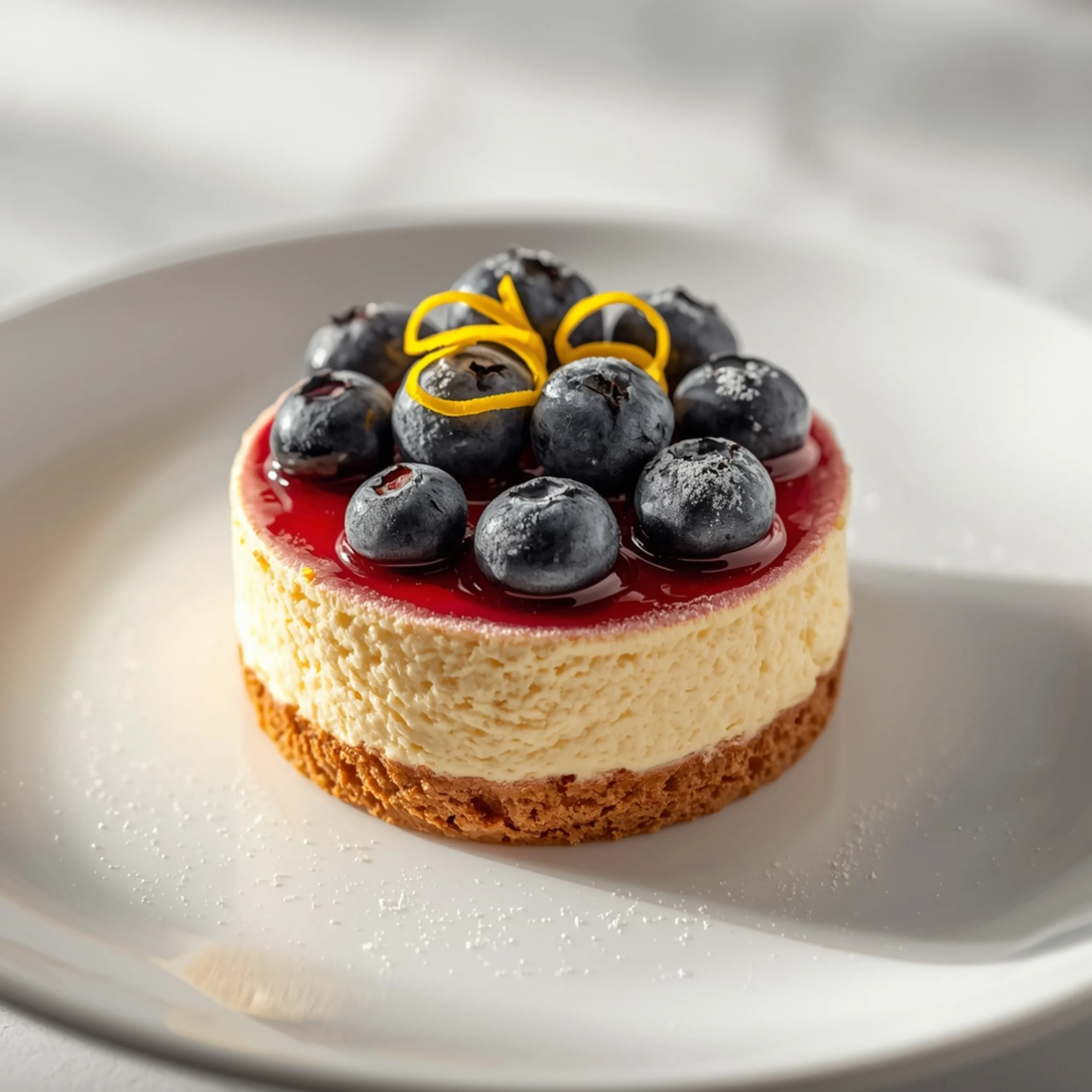
Mini Lemon Blueberry Cheesecakes: A No-Fail Recipe for Creamy, Tangy Bites
These perfectly portioned mini cheesecakes deliver a burst of bright lemon and juicy blueberry in a creamy, decadent filling. This recipe is engineered for simplicity and flawless results, making it one of the best perfect dessert recipes you can make for any occasion. Skip the fussy water bath and get straight to a delicious, crack-free finish.
The Engineering Behind Perfect Mini Cheesecakes
The secret to great cheesecake isn’t luck; it’s process control. Miniaturizing the recipe allows us to bypass common issues like large cracks and long cooling times.
- No Water Bath Needed: The small thermal mass of each mini cheesecake cooks evenly in a standard muffin tin, eliminating the need for a messy, risky water bath.
- Forced Slow Cool: Leaving the cheesecakes in the cooling oven with the door ajar prevents the surface from contracting too quickly, which is the primary cause of cracks.
- Room Temperature Homogenization: Bringing cream cheese, sour cream, and eggs to room temperature is non-negotiable. Cold ingredients resist emulsification, resulting in a lumpy batter and a grainy final texture.
Ingredient Deep-Dive: Getting the Flavor Right
Your final product is only as good as its inputs. Here’s what to focus on.
- Cream Cheese: Use full-fat, block-style cream cheese only. Whipped or low-fat versions contain excess air and stabilizers that will ruin the texture.
- Lemon: Use both fresh zest and fresh juice. The zest provides aromatic oils and bright, floral notes, while the juice delivers the signature tartness.
- Blueberries: Fresh blueberries are ideal. If you must use frozen, do not thaw them. Toss them in 1 teaspoon of flour before folding them into the batter to prevent them from sinking and bleeding color excessively.
Essential Equipment for Flawless Results
Having the right tools streamlines the process and guarantees consistency.
- Standard 12-Cup Muffin Tin: The vessel for our mini cheesecakes.
- Paper Liners: Absolutely essential for easy removal and serving.
- Electric Mixer (Stand or Hand): Necessary for achieving a lump-free, silky-smooth batter without incorporating too much air.
- Rubber Spatula: For scraping the bowl to ensure all ingredients are fully incorporated.
Step-by-Step Instructions
Prep Time: 20 minutes
Cook Time: 22-25 minutes
Chill Time: 4 hours (minimum)
Yields: 12 mini cheesecakes
Phase 1: Construct the Graham Cracker Crust
- Preheat & Prep: Adjust your oven rack to the middle position and preheat to 325°F (163°C). Line a 12-cup muffin tin with paper liners.
- Combine Crust Ingredients: In a small bowl, mix the graham cracker crumbs, melted butter, and granulated sugar until the texture resembles wet sand.
- Form the Base: Distribute about 1.5 tablespoons of the mixture into each liner. Use the bottom of a small glass or a spice jar to press the crumbs down firmly and evenly.
- Par-Bake: Bake the crusts for 5-7 minutes, just until set and fragrant. Remove from the oven and set aside.
Phase 2: Engineer the Cheesecake Filling
- Beat Cream Cheese: In a large bowl using an electric mixer on low-medium speed, beat the room-temperature cream cheese until completely smooth and free of lumps, about 2 minutes. Scrape down the sides and bottom of the bowl.
- Add Sugars & Flavor: Add the granulated sugar and continue beating on low speed until combined. Add the lemon zest, lemon juice, and vanilla extract, mixing just until incorporated.
- Incorporate Eggs: Add the eggs one at a time, mixing on low speed after each addition just until the yolk disappears. Do not over-mix. Over-mixing whips air into the batter, which causes puffing and cracking.
- Fold in Sour Cream: Add the sour cream and gently mix on the lowest speed until just combined. The batter should be smooth, thick, and silky.
- Add Blueberries: Gently fold the fresh blueberries into the batter with a rubber spatula.
Phase 3: Bake, Cool, and Chill
- Fill Liners: Divide the batter evenly among the 12 muffin cups, filling each one almost to the top.
- Bake: Bake for 22-25 minutes. The cheesecakes are done when the edges are set and the centers have a slight wobble (they should not be liquid). They will look slightly puffed.
- Slow Cool: Turn the oven OFF. Prop the oven door open with a wooden spoon and leave the cheesecakes inside for 1 hour. This gradual cooling process is the key to preventing cracks.
- Chill Completely: Remove the cheesecakes from the oven and let them cool on a wire rack for another hour at room temperature. Then, cover the muffin tin with plastic wrap and transfer to the refrigerator to chill for at least 4 hours, or preferably overnight. Chilling is crucial for the flavor to develop and the texture to set.
Make-Ahead & Storage Blueprint
These cheesecakes are ideal for making in advance, which is perfect for stress-free entertaining after you’ve made one of these satisfying dinner recipes. While the graham cracker crust is a classic, you can get creative with other bases; for instance, the techniques used in these irresistible salted caramel cheesecake cookies recipe show how a cookie-like base can elevate a dessert.
- Refrigerator: Store in an airtight container in the fridge for up to 5 days. The flavor actually improves after the first 24 hours.
- Freezer: For longer storage, place the fully chilled cheesecakes on a baking sheet and freeze until solid, about 1-2 hours. Wrap each one individually in plastic wrap, then place them in a freezer-safe bag or container. They can be frozen for up to 3 months.
- Thawing: Thaw frozen cheesecakes in the refrigerator overnight. Do not thaw at room temperature.
COMMON MISTAKES TO AVOID
- Mistake: Using cold ingredients.
Fix: Let your cream cheese, eggs, and sour cream sit on the counter for at least 1-2 hours before you begin. This is the single most important step for a smooth, non-lumpy batter. - Mistake: Over-mixing the batter, especially after adding eggs.
Fix: Always use a low mixer speed. Once the eggs are in, mix only until the yellow streak of yolk is gone. Excess air = cracks and a soufflé-like texture. - Mistake: Chilling them too soon.
Fix: Follow the two-stage cooling process (1 hour in the turned-off oven, 1 hour at room temp) before refrigerating. A sudden temperature shock will cause the surface to contract and crack.
FAQ
Q: Can I use a different fruit?
A: Yes. Chopped strawberries, raspberries, or blackberries work well. For heavier fruits, toss them in a little flour first to prevent sinking.
Q: My cheesecakes still cracked slightly. What happened?
A: A tiny hairline crack is usually fine and can be covered with topping. Major cracks typically result from over-mixing, over-baking, or cooling too rapidly. Double-check your oven temperature with an oven thermometer, as many run hot.
Q: Can I make this as one large cheesecake?
A: Yes, but the engineering changes. You will need a 9-inch springform pan, a full water bath, and a significantly longer baking and cooling time (typically 60-70 minutes of baking).
If you enjoy creating perfectly executed baked goods, you might also appreciate the precision required for a delightful cinnamon roll bread pudding recipe. And for your next savory project, consider tackling something equally rewarding like a Philly cheesesteak meatloaf recipe.
NUTRITIONAL SNAPSHOT
| Nutrient | Amount per Serving |
|---|---|
| Calories | 310 kcal |
| Protein | 5g |
| Fat | 22g |
| Net Carbs | 23g |
| Fiber | 1g |
| Sugar | 20g |

Mini Lemon Blueberry Cheesecakes: A No-Fail Recipe for Creamy, Tangy Bites
These perfectly portioned mini cheesecakes deliver a burst of bright lemon and juicy blueberry in a creamy, decadent filling. This recipe is engineered for simplicity and flawless results, making it one of the best perfect dessert recipes you can make for any occasion. Skip the fussy water bath and get straight to a delicious, crack-free finish.
Ingredients
- 1.5 cups (150g) graham cracker crumbs
- 6 tablespoons (85g) unsalted butter, melted
- 1/4 cup (50g) granulated sugar
- 16 ounces (452g) full-fat block cream cheese, at room temperature
- 3/4 cup (150g) granulated sugar
- 2 large eggs, at room temperature
- 1/2 cup (120g) full-fat sour cream, at room temperature
- 1 tablespoon fresh lemon zest (from 1 large lemon)
- 2 tablespoons fresh lemon juice
- 1 teaspoon vanilla extract
- 1 cup (150g) fresh blueberries
Instructions
- Adjust your oven rack to the middle position and preheat to 325°F (163°C). Line a 12-cup muffin tin with paper liners.
- In a small bowl, mix the graham cracker crumbs, melted butter, and granulated sugar until the texture resembles wet sand.
- Distribute about 1.5 tablespoons of the mixture into each liner. Use the bottom of a small glass or a spice jar to press the crumbs down firmly and evenly.
- Bake the crusts for 5-7 minutes, just until set and fragrant. Remove from the oven and set aside.
- In a large bowl using an electric mixer on low-medium speed, beat the room-temperature cream cheese until completely smooth and free of lumps, about 2 minutes. Scrape down the sides and bottom of the bowl.
- Add the granulated sugar and continue beating on low speed until combined. Add the lemon zest, lemon juice, and vanilla extract, mixing just until incorporated.
- Add the eggs one at a time, mixing on low speed after each addition just until the yolk disappears. Do not over-mix.
- Add the sour cream and gently mix on the lowest speed until just combined. The batter should be smooth, thick, and silky.
- Gently fold the fresh blueberries into the batter with a rubber spatula.
- Divide the batter evenly among the 12 muffin cups, filling each one almost to the top.
- Bake for 22-25 minutes. The cheesecakes are done when the edges are set and the centers have a slight wobble (they should not be liquid). They will look slightly puffed.
- Turn the oven OFF. Prop the oven door open with a wooden spoon and leave the cheesecakes inside for 1 hour. This gradual cooling process is the key to preventing cracks.
- Remove the cheesecakes from the oven and let them cool on a wire rack for another hour at room temperature. Then, cover the muffin tin with plastic wrap and transfer to the refrigerator to chill for at least 4 hours, or preferably overnight. Chilling is crucial for the flavor to develop and the texture to set.