
How to Make Spring Pea & Ricotta Pasta for a Fresh, Light Dinner
Spring peas bring natural sweetness and vibrant color to pasta dishes, pairing perfectly with the creamy tang of ricotta cheese. This Spring pea & ricotta pasta recipe is a quick, comforting meal ideal for busy weeknights or relaxed weekend dinners. For more fresh dinner ideas, explore my dinner recipes collection.
Whether you’re new to cooking with fresh peas or looking for an easy way to elevate your pasta game, this recipe delivers freshness with minimal effort. Plus, the simple ingredient list highlights the bright flavors of spring produce.
This recipe guide will walk you through every step to achieve silky, creamy, and perfectly al dente pasta topped with tender spring peas and luscious ricotta.
Step-by-Step Instructions for Spring Pea & Ricotta Pasta
- Prepare Ingredients:
- Shell 1 cup fresh spring peas or use frozen peas, thawed.
- Mince 2 cloves garlic.
- Measure 1 cup ricotta cheese and zest 1 lemon.
- Cook Pasta:
Boil 12 ounces of your preferred pasta, like spaghetti or linguine, in salted water until al dente (firm to bite but cooked through, about 8–10 minutes). Reserve ½ cup pasta water before draining.
- Sauté Peas and Garlic:
Heat 2 tablespoons olive oil in a large skillet over medium heat.
Add garlic and sauté for 30 seconds until fragrant without browning.
Stir in peas and cook for 3 minutes until bright green and tender.
- Combine Pasta and Sauce:
Add the drained pasta to the skillet with peas.
Stir in ricotta, lemon zest, and ¼ cup reserved pasta water to loosen the sauce.
Toss gently until everything is evenly coated, creamy, and heated through. Add more pasta water to reach desired consistency.
- Season and Serve:
Season with salt, freshly cracked black pepper, and a squeeze of lemon juice.
Garnish with fresh herbs like basil or mint if desired.
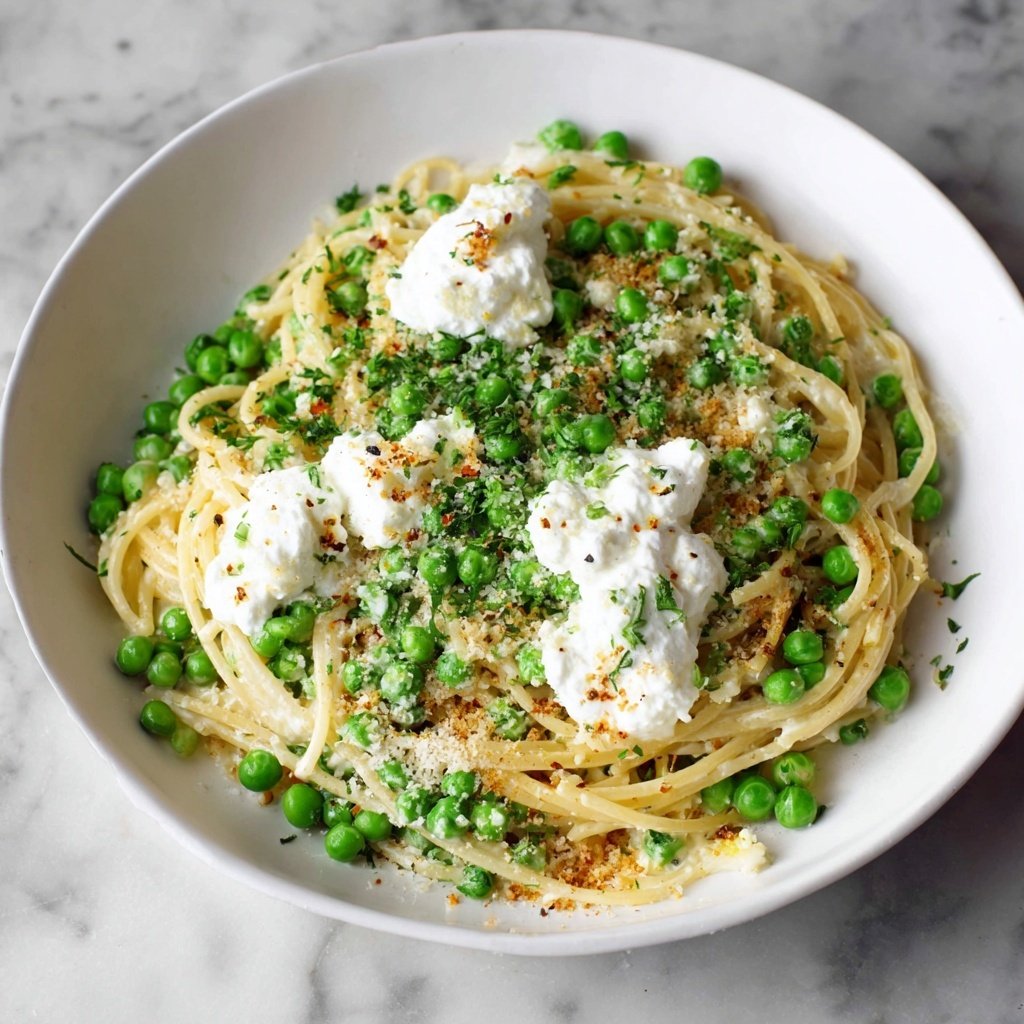
Why Spring Peas Work Perfectly with Ricotta
- Natural Sweetness: Spring peas offer a subtle sweetness that cuts through ricotta’s creamy richness.
- Texture Contrast: Peas provide a tender pop alongside smooth, velvety cheese.
- Seasonal Freshness: Using in-season peas enhances flavor depth and nutrition.
- Color Appeal: Peas brighten the dish visually, making it more appetizing and Instagram-worthy.
Explore more fresh pasta ideas with seasonal produce in my recipes archives.
Tips for Creamiest Ricotta Pasta Sauce
- Use whole-milk ricotta for a richer texture.
- Warm the ricotta slightly before adding to the skillet for better melting and creaminess.
- Adjust consistency with reserved pasta water gradually.
- Finish with a drizzle of good quality extra virgin olive oil for silkiness.
- Optionally mix in grated Parmesan for a nutty depth.
How to Add Protein or Make it a Full Meal
- Toss in cooked chicken breast or sautéed shrimp for extra protein.
- Add toasted pine nuts or walnuts for crunch and nutrition.
- Serve alongside crusty bread to soak up creamy sauce.
- For a plant-based boost, include grilled tofu or chickpeas.
For more balanced weeknight meals with simple ingredients, check out this Sweet Potato Skillet with BBQ Chicken & Cheese.
Common Mistakes to Avoid
Mistake: Overcooking the peas until mushy.
Fix: Cook peas just until tender and vibrant green for best texture and flavor.
Mistake: Adding ricotta directly to a very hot pan causing curdling.
Fix: Stir ricotta in off heat or over low heat to maintain creamy consistency.
Mistake: Not reserving pasta water before draining.
Fix: Reserve some pasta water to loosen sauce and help it cling to pasta evenly.
FAQ
Q: Can I use frozen peas instead of fresh spring peas?
A: Yes, frozen peas are a convenient alternative. Thaw them before sautéing to avoid excess moisture. Fresh peas offer more vibrant flavor, but frozen are perfectly fine.
Q: How do I store leftovers?
A: Store in an airtight container in the fridge for up to 2 days. Reheat gently on the stove or microwave, adding a splash of pasta water or olive oil to restore creaminess.
Q: Can I make this dish vegan-friendly?
A: Yes, substitute ricotta with a vegan cheese alternative or blended tofu. Nutritional yeast can add cheesy flavor. For more kitchen hacks like this, see why are my brownies too cake-like and how to fix it.
Nutritional Snapshot
| Nutrient | Amount per Serving |
|---|---|
| Calories | 380 kcal |
| Protein | 14 g |
| Fat | 12 g |
| Net Carbs | 48 g |
| Fiber | 5 g |
| Sugar | 6 g |
Conclusion
Spring pea & ricotta pasta balances creamy, sweet, and fresh flavors in a simple, speedy meal. It’s perfect for showcasing spring’s best produce without fuss. For more helpful kitchen tips and delicious recipes, visit Meaty Delights.
Try this recipe, share your variations in the comments, and subscribe for fresh, home-friendly cooking inspiration.
How to Make Spring Pea & Ricotta Pasta for a Fresh, Light Dinner
Ingredients
- 12 oz pasta (spaghetti, linguine, or preferred type)
- 1 cup fresh or thawed spring peas
- 1 cup whole-milk ricotta cheese
- 2 garlic cloves, minced
- 1 lemon, zested and juiced
- 2 tbsp olive oil
- Salt and freshly ground black pepper to taste
- Fresh herbs (basil or mint), optional for garnish