
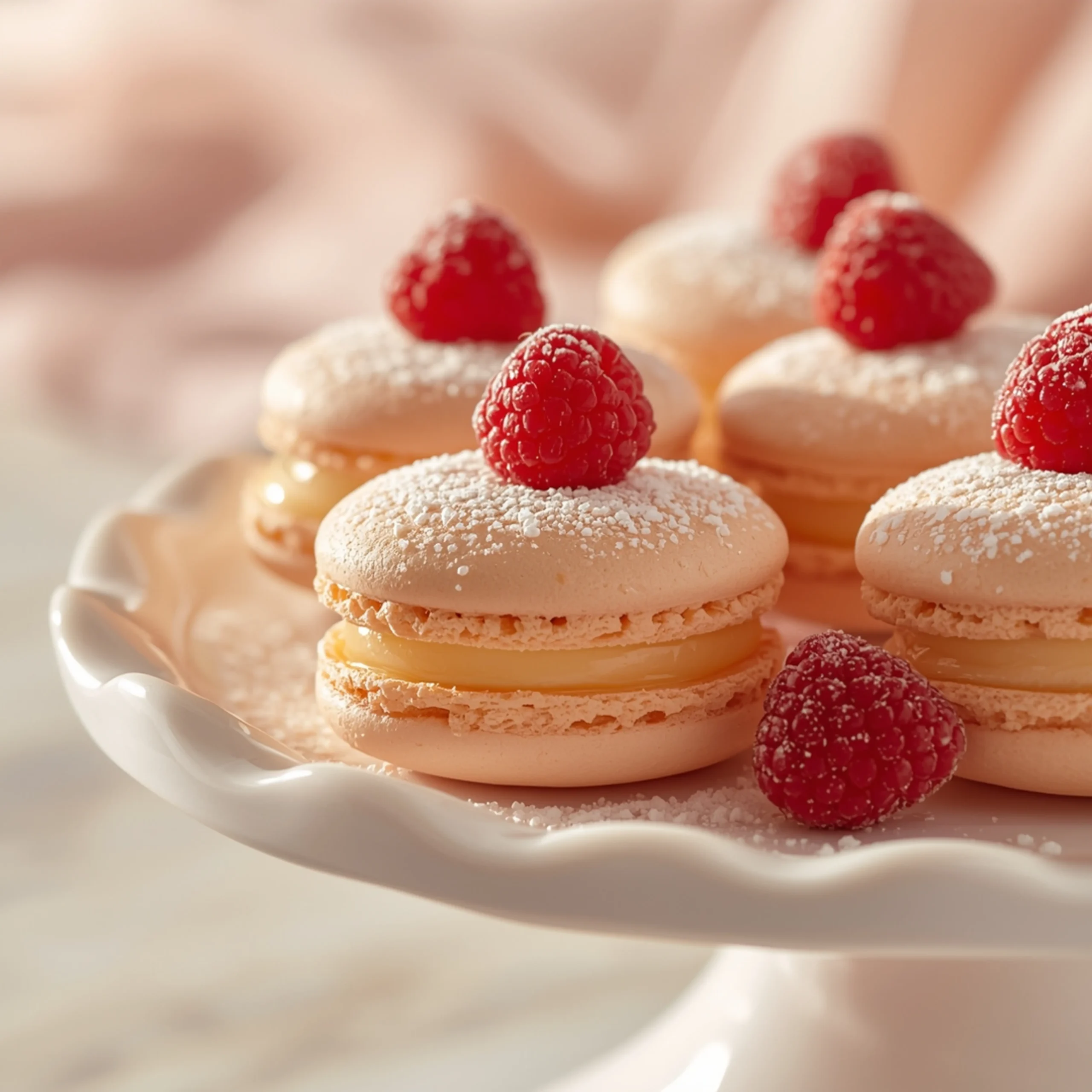
How to Make Perfect Champagne Infused Macarons
Elevate your baking with these delicate Champagne Infused Macarons. The crisp shell gives way to a chewy interior and a silky, bubbly buttercream, making them a stunning addition to any celebration. This recipe is one of my favorite special-occasion desserts, designed for a perfect, professional finish at home.
Essential Equipment for Precision
Macarons are a science. The right tools are not suggestions; they are requirements for repeatable success.
- Digital Kitchen Scale: Volume measurements (cups) are too imprecise for macarons. Everything must be weighed.
- Sieve or Sifter: Absolutely critical for achieving a smooth, lump-free shell.
- Stand Mixer (or Hand Mixer): Essential for whipping the meringue to stiff, glossy peaks without fatiguing your arm.
- Silicone Baking Mats or Parchment Paper: A non-stick surface is non-negotiable. Mats with pre-printed circles are excellent for beginners.
- Piping Bag with a Round Tip: A ½-inch (like a Wilton 1A) round tip provides the best control for uniform shells.
- Flat, Heavy-Duty Baking Sheets: Flimsy pans can warp in the heat, leading to cracked or lopsided macarons.
The Champagne: Selection & Reduction
The key to infusing real flavor is to concentrate the champagne. Simply adding it to the buttercream will make it watery and cause it to split.
- Choose a Brut: Use a dry champagne or sparkling wine (Brut). A sweet variety (Doux) will make the filling cloyingly sweet.
- The Reduction Process: Pour about ¾ cup of champagne into a small saucepan. Simmer over medium-low heat until it has reduced to 2-3 tablespoons of a syrupy liquid. This process boils off the alcohol and water, leaving behind concentrated flavor.
- Cool Completely: The reduction must be at room temperature before you add it to your buttercream. Warm liquid will melt the butter.
STEP-BY-STEP INSTRUCTIONS
This process is divided into three key phases: shells, filling, and assembly. Read all steps before beginning.
Phase 1: The Macaron Shells
- Prep Your Ingredients: Weigh the almond flour, powdered sugar, and egg whites precisely. Ensure your mixing bowl is completely clean and free of any fat or grease.
- Sift Dry Ingredients: In a medium bowl, sift the almond flour and powdered sugar together. Sift them a second time to ensure the mixture is exceptionally fine. This is the secret to a smooth shell. Discard any large almond bits left in the sifter.
- Whip the Meringue: In the clean bowl of a stand mixer fitted with the whisk attachment, beat the egg whites on medium-low speed until foamy. Add the cream of tartar. Increase the speed to medium and slowly sprinkle in the granulated sugar.
- Stiff Peaks: Once all sugar is added, increase the speed to medium-high. Beat until the meringue is glossy and forms very stiff peaks. When you lift the whisk, the peak should stand straight up without curling. This can take 5-8 minutes.
- Add Color (Optional): If using gel food coloring, add it now and whisk for another 15-20 seconds to incorporate.
- The Macaronage: Add one-third of the dry ingredients to the meringue. Gently fold it in with a spatula. Add the remaining dry ingredients and continue to fold. The goal is to press the air out of the meringue against the side of the bowl.
- Lava-like Consistency: The batter is ready when it flows off the spatula in a thick, continuous ribbon. You should be able to draw a “figure 8” with the ribbon of batter without it breaking.
- Piping: Transfer the batter to a piping bag with a round tip. Pipe 1.5-inch circles onto your prepared baking sheets, leaving about 1 inch of space between them.
- Slam the Pan: Firmly tap the baking sheet on the counter 4-5 times. This forces air bubbles to the surface. Use a toothpick to pop any remaining bubbles.
- Rest the Shells: Let the piped macarons rest at room temperature for 30-60 minutes, or until they form a dry skin. When you gently touch one, it should not be sticky. This step is critical for developing “feet” (the ruffled bottom).
- Bake: Preheat your oven to 300°F (150°C). Bake one sheet at a time for 15-18 minutes, rotating halfway through. The macarons are done when the feet are set and the tops don’t wiggle when nudged.
- Cool: Let the macarons cool completely on the baking sheet before attempting to remove them.
Phase 2: The Champagne Buttercream
- Cream the Butter: In a mixer bowl, beat the room-temperature butter until it’s light and fluffy, about 3-4 minutes.
- Add Sugar: Gradually add the powdered sugar, mixing on low speed until incorporated, then on high speed until smooth.
- Infuse with Champagne: Add the completely cooled champagne reduction and vanilla extract. Beat on medium-high speed for another 2-3 minutes until the buttercream is light and airy.
Phase 3: Assembly & Maturation
- Pair Shells: Match up your cooled macaron shells by size.
- Fill: Pipe or spoon a small dollop of champagne buttercream onto the flat side of one shell. Gently press another shell on top to create a sandwich.
- Mature: Place the filled macarons in an airtight container in the refrigerator for at least 24 hours. This “maturation” process is essential. It allows the filling to soften the inside of the shell, creating the signature chewy texture.
- Serve: Bring the macarons to room temperature for about 20-30 minutes before serving for the best flavor and texture.
Flavor Pairing & Elevation
While incredible on their own, these macarons pair beautifully with other flavors. Finding the perfect combination is one of the most rewarding parts of baking, a principle I apply to all my recipes.
- Fruit Core: Add a tiny dot of raspberry or strawberry jam in the center of the buttercream ring before sandwiching the shells.
- White Chocolate: Drizzle the finished macarons with melted white chocolate for added sweetness and a visual pop.
- Edible Gold: For a truly luxurious finish, brush the tops with edible gold leaf or luster dust.
- Menu Planning: For a celebratory dinner party, the light, elegant flavor of these macarons makes a perfect finale. To precede it, a comforting yet sophisticated main like a stuffed bell pepper soup with ground turkey can provide a wonderful savory contrast.
COMMON MISTAKES TO AVOID
- Mistake: Hollow or Cracked Shells.
Fix: This is usually caused by an under-whipped meringue or over-mixed batter (macaronage). Ensure your meringue is beaten to very stiff peaks. Fold the batter just until it reaches the lava-like ribbon stage and no further. - Mistake: No “Feet” on the Macarons.
Fix: The shells were not rested long enough. The “skin” that forms during resting traps air, forcing it down and out to create the ruffled feet during baking. Be patient and wait until the shells are dry to the touch. - Mistake: Bumpy or Gritty Shells.
Fix: You did not sift the almond flour and powdered sugar enough. A double-sift is non-negotiable for a silky-smooth finish. Use a fine-mesh sieve.
FAQ
Q: Can I use Prosecco or another sparkling wine?
A: Yes, absolutely. Any dry (Brut) sparkling wine will work well. The key is the reduction step to concentrate the flavor.
Q: Why do my macarons need to “mature” for 24 hours?
A: This crucial step allows the moisture from the buttercream filling to seep into the crisp inner shell, creating the signature soft, chewy texture that contrasts with the delicate exterior. Skipping this results in a crunchy, less flavorful cookie.
Q: What’s a good savory dish to serve before these macarons?
A: To balance the sweetness, a light yet flavorful main works beautifully. Consider something bright and fresh, like this excellent recipe for garlic shrimp and zucchini noodles.
After mastering this technical bake, you might enjoy tackling another elegant dish for a complete meal. A perfectly cooked honey garlic glazed salmon is a fantastic savory project to try next.
NUTRITIONAL SNAPSHOT
*Based on an estimate of 24 macarons*
| Nutrient | Amount per Serving (1 macaron) |
|---|---|
| Calories | 95 kcal |
| Protein | 1.2g |
| Fat | 5.5g |
| Net Carbs | 10g |
| Fiber | 0.5g |
| Sugar | 9.5g |
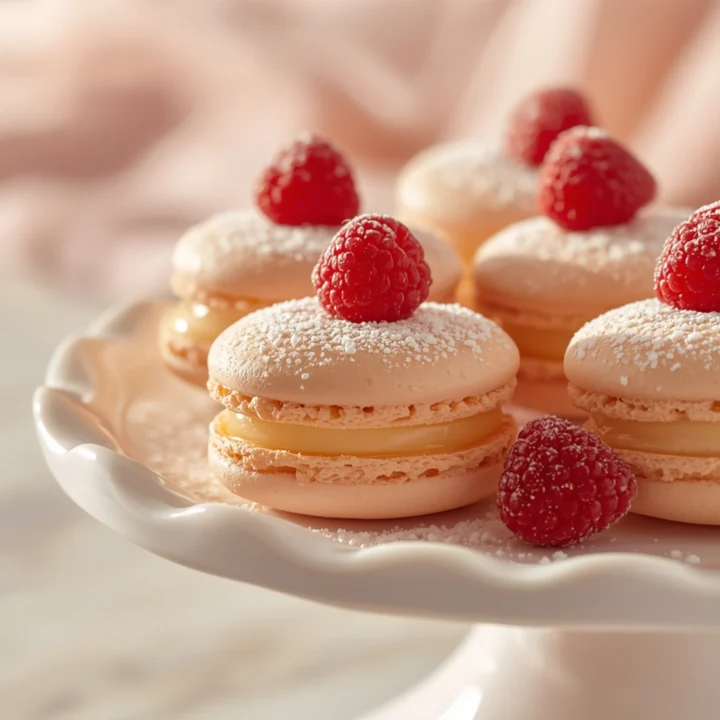
How to Make Perfect Champagne Infused Macarons
Elevate your baking with these delicate Champagne Infused Macarons. The crisp shell gives way to a chewy interior and a silky, bubbly buttercream, making them a stunning addition to any celebration. This recipe is one of my favorite special-occasion desserts, designed for a perfect, professional finish at home.
Ingredients
- 125g Almond Flour, finely ground
- 125g Powdered Sugar
- 100g Egg Whites, aged (about 3 large eggs)
- 100g Granulated Sugar
- ¼ tsp Cream of Tartar
- Optional: 1-2 drops of ivory or champagne-colored gel food coloring
- ¾ cup (180ml) Brut Champagne or dry sparkling wine
- 1 cup (226g) Unsalted Butter, at room temperature
- 2 cups (240g) Powdered Sugar, sifted
- ½ tsp Vanilla Extract
Instructions
- Weigh the almond flour, powdered sugar, and egg whites precisely. Ensure your mixing bowl is completely clean and free of any fat or grease.
- In a medium bowl, sift the almond flour and powdered sugar together. Sift them a second time to ensure the mixture is exceptionally fine. Discard any large almond bits left in the sifter.
- In the clean bowl of a stand mixer fitted with the whisk attachment, beat the egg whites on medium-low speed until foamy. Add the cream of tartar. Increase the speed to medium and slowly sprinkle in the granulated sugar.
- Once all sugar is added, increase the speed to medium-high. Beat until the meringue is glossy and forms very stiff peaks. When you lift the whisk, the peak should stand straight up without curling.
- If using gel food coloring, add it now and whisk for another 15-20 seconds to incorporate.
- Add one-third of the dry ingredients to the meringue. Gently fold it in with a spatula. Add the remaining dry ingredients and continue to fold. The goal is to press the air out of the meringue against the side of the bowl.
- The batter is ready when it flows off the spatula in a thick, continuous ribbon. You should be able to draw a "figure 8" with the ribbon of batter without it breaking.
- Transfer the batter to a piping bag with a round tip. Pipe 1.5-inch circles onto your prepared baking sheets, leaving about 1 inch of space between them.
- Firmly tap the baking sheet on the counter 4-5 times. This forces air bubbles to the surface. Use a toothpick to pop any remaining bubbles.
- Let the piped macarons rest at room temperature for 30-60 minutes, or until they form a dry skin. When you gently touch one, it should not be sticky.
- Preheat your oven to 300°F (150°C). Bake one sheet at a time for 15-18 minutes, rotating halfway through. The macarons are done when the feet are set and the tops don't wiggle when nudged.
- Let the macarons cool completely on the baking sheet before attempting to remove them.
- In a mixer bowl, beat the room-temperature butter until it's light and fluffy, about 3-4 minutes.
- Gradually add the powdered sugar, mixing on low speed until incorporated, then on high speed until smooth.
- Add the completely cooled champagne reduction and vanilla extract. Beat on medium-high speed for another 2-3 minutes until the buttercream is light and airy.
- Match up your cooled macaron shells by size.
- Pipe or spoon a small dollop of champagne buttercream onto the flat side of one shell. Gently press another shell on top to create a sandwich.
- Place the filled macarons in an airtight container in the refrigerator for at least 24 hours.
- Bring the macarons to room temperature for about 20-30 minutes before serving for the best flavor and texture.