
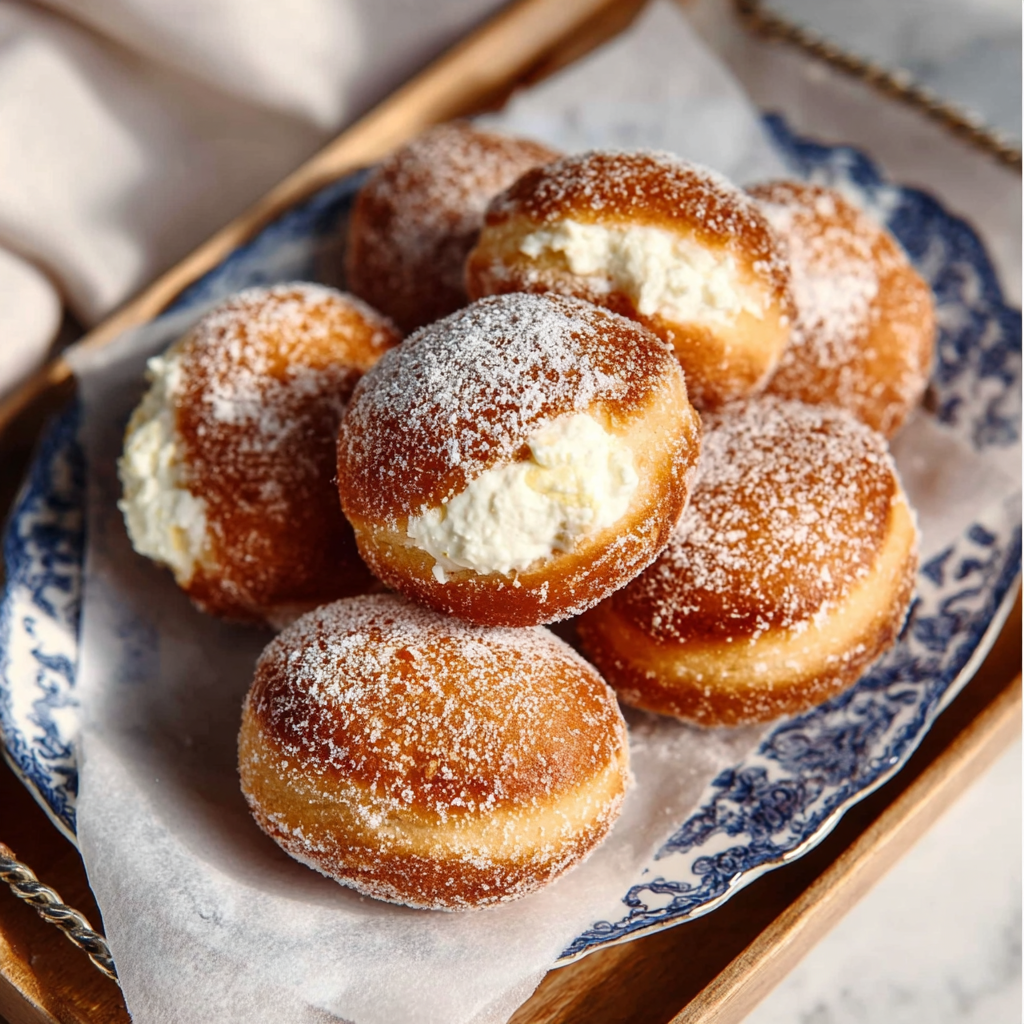
How to Make Bakery-Style Bavarian Cream Donuts
These are the real deal: unbelievably light, pillowy yeast donuts filled with a rich, cool vanilla Bavarian cream. This recipe breaks down the process into simple, manageable stages, guaranteeing a perfect, professional-quality result right from your own kitchen. If you love classic desserts, try these incredible No-Bake Coconut Pecan Praline Cookies next.
Anatomy of the Perfect Bavarian Cream Donut
To engineer the perfect filled donut, you need to master its two core components. Understanding how they work together is the key to success.
- The Dough: This is a rich, yeasted dough, similar to a brioche. It contains milk, eggs, and butter, which creates a soft, tender crumb and a beautiful golden-brown crust when fried. The key is developing enough gluten for structure without making it tough.
- The Filling: True Bavarian cream is a delicate balance. It starts with a classic pastry cream (crème pâtissière) made from milk, egg yolks, and sugar, then stabilized with gelatin. Once cooled, it’s lightened by folding in freshly whipped cream. This creates a filling that is rich and custardy, yet incredibly light and airy.
Mastering the Bavarian Cream Filling
The filling is the star, and getting it right is crucial. It’s a simple process, but technique matters. Focus on these key points for a smooth, stable, and delicious cream.
- Tempering is Non-Negotiable: This is the process of slowly introducing the hot milk mixture to your egg yolks. If you add it too fast, the eggs will scramble. Whisk the yolks constantly while drizzling in the hot liquid to gently raise their temperature.
- Strain for Perfection: Always pour your cooked custard through a fine-mesh sieve. This is your insurance policy against any tiny bits of cooked egg, ensuring a flawlessly smooth texture.
- Chill Completely: The custard base must be completely cold before you fold in the whipped cream. If it’s even slightly warm, it will melt the whipped cream, resulting in a soupy, unset filling. After mastering this rich dessert, you might crave something savory like these easy Street Corn Chicken Rice Bowls for dinner.
- The Gentle Fold: Use a spatula to gently fold the whipped cream into the cold custard base. Cut down the middle and scrape up from the bottom. This technique incorporates the cream without deflating all the air you just whipped into it.
Frying Fundamentals: Temperature is Everything
The difference between a light, golden donut and a heavy, greasy one is almost entirely due to oil temperature. This is the most critical stage of the cooking process.
- The Magic Number: Aim for a consistent oil temperature between 350-360°F (175-180°C). Use a candy or deep-fry thermometer for accuracy.
- Why It Matters:
- Too Hot: The outside of the donut will burn before the inside is cooked through.
- Too Cool: The dough will absorb excess oil as it cooks, leading to a heavy, greasy result.
- Best Oils for Frying: Use a neutral oil with a high smoke point. Canola, vegetable, shortening, or peanut oil are all excellent choices.
- Don’t Crowd the Pot: Fry only 2-3 donuts at a time. Adding too many at once will cause the oil temperature to drop significantly. For another recipe where temperature control is key to a perfect result, check out this fantastic Sweet and Savory Roasted Orange Chicken.
Step-by-Step Instructions
Part 1: Make the Donut Dough
- Activate Yeast: In the bowl of a stand mixer, combine the warm milk, 1 tsp of sugar, and the active dry yeast. Let it sit for 5-10 minutes until it becomes foamy.
- Combine Ingredients: Add the remaining sugar, egg, egg yolk, vanilla, and salt to the yeast mixture. Whisk briefly to combine.
- Mix the Dough: Attach the dough hook. Add the flour to the bowl and mix on low speed until a shaggy dough forms.
- Knead in Butter: Increase the speed to medium-low. Add the softened butter, one tablespoon at a time, waiting until each piece is incorporated before adding the next.
- Knead to Smoothness: Continue to knead for 8-10 minutes until the dough is smooth, elastic, and pulls away from the sides of the bowl. It will be slightly sticky.
- First Rise: Transfer the dough to a lightly oiled bowl, cover it with plastic wrap, and let it rise in a warm place for 1-1.5 hours, or until doubled in size.
Part 2: Prepare the Bavarian Cream Filling
- Bloom Gelatin: Sprinkle the gelatin over the cold water in a small bowl and set aside to soften.
- Heat Milk: In a medium saucepan, heat the milk over medium heat until it is steaming and small bubbles form around the edge. Do not boil.
- Whisk Yolks: In a separate medium bowl, whisk the egg yolks and sugar together until pale and slightly thickened. Whisk in the cornstarch and salt until smooth.
- Temper Eggs: While whisking constantly, slowly pour about half of the hot milk into the egg yolk mixture.
- Cook Custard: Pour the tempered egg mixture back into the saucepan with the remaining milk. Cook over medium heat, whisking constantly, until the custard thickens and comes to a gentle boil. Cook for 1 more minute.
- Finish Custard: Remove from heat. Whisk in the bloomed gelatin until dissolved, then whisk in the butter and vanilla extract.
- Chill: Pour the custard through a fine-mesh sieve into a clean bowl. Press a piece of plastic wrap directly onto the surface to prevent a skin from forming. Refrigerate for at least 4 hours, or until completely cold and set.
- Lighten with Cream: Once the custard is cold, whip the heavy cream to stiff peaks in a separate bowl. Gently fold the whipped cream into the cold custard in two additions until fully combined. Transfer the finished Bavarian cream to a piping bag fitted with a small round or bismarck tip. Refrigerate until ready to use.
Part 3: Shape, Fry, and Fill the Donuts
- Roll and Cut: Punch down the risen dough and turn it out onto a lightly floured surface. Roll it out to ½-inch thickness. Use a 3-inch round cutter to cut out the donuts.
- Second Rise: Place the cut donuts on a parchment-lined baking sheet, leaving space between them. Cover loosely with plastic wrap and let them rise for another 30-45 minutes until puffy.
- Heat Oil: While the donuts are rising, heat 2-3 inches of oil in a heavy-bottomed pot or Dutch oven to 360°F (180°C).
- Fry Donuts: Carefully place 2-3 donuts into the hot oil. Fry for 60-90 seconds per side, until deep golden brown.
- Cool: Use a spider or slotted spoon to remove the donuts and place them on a wire rack to cool completely.
- Fill and Garnish: Once cool, use a skewer or the piping tip to poke a hole in the side of each donut. Pipe the Bavarian cream into the center until the donut feels heavy and full.
- Finish: Dust generously with powdered sugar just before serving.
COMMON MISTAKES TO AVOID
- Mistake: Greasy, heavy donuts.
- Fix: Your oil temperature was too low. The dough absorbed oil instead of instantly searing. Use a thermometer and allow the oil to come back up to temperature between batches.
- Mistake: The Bavarian cream is runny.
- Fix: You either didn’t cook the custard long enough to thicken, or you folded the whipped cream in while the custard was still warm. Ensure the custard base is fully chilled and set before proceeding.
- Mistake: The yeast didn’t activate.
- Fix: Your milk was likely too hot (which kills yeast) or too cold. It should be lukewarm, about 110°F (43°C). If your yeast mixture doesn’t get foamy after 10 minutes, start over with a new packet of yeast.
FAQ
Q: Can I make these donuts ahead of time?
A: They are absolutely best the day they are made. However, you can make the Bavarian cream filling up to 2 days in advance and keep it refrigerated. You can also let the dough complete its first rise in the refrigerator overnight for easier morning prep.
Q: Can I bake these instead of frying them?
A: For this specific recipe, frying is essential to achieve the classic light, airy texture and golden crust. Baking them will result in a texture that is more like a dense bread roll.
Q: What’s the best way to store leftovers?
A: Store any leftover filled donuts in an airtight container in the refrigerator for up to 2 days. The dough will lose some of its softness over time. For more decadent dessert ideas you can prepare ahead, you’ll love the challenge of this beautiful Chocolate Yule Log (Bûche de Noël) recipe.
NUTRITIONAL SNAPSHOT
| Nutrient | Amount per Serving |
|---|---|
| Calories | 410 kcal |
| Protein | 6g |
| Fat | 22g |
| Net Carbs | 45g |
| Fiber | 1g |
| Sugar | 21g |
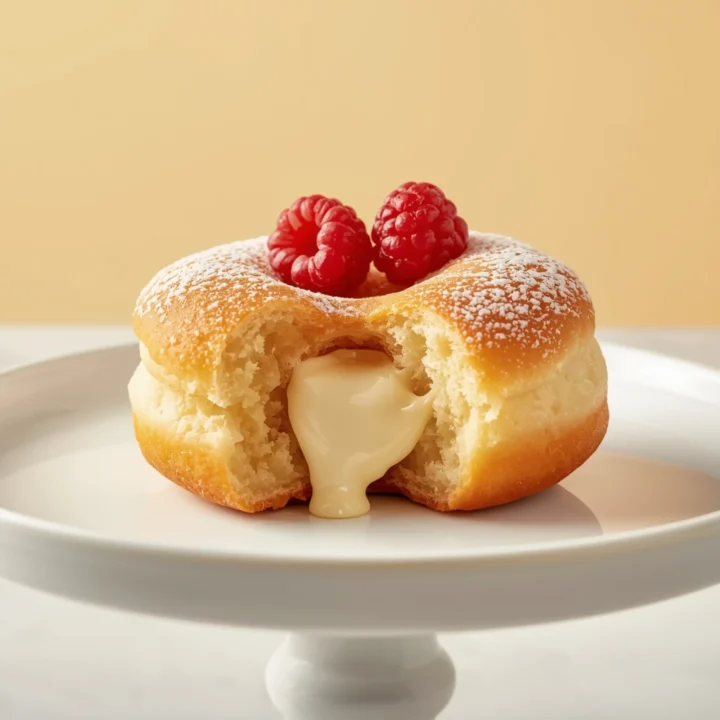
How to Make Bakery-Style Bavarian Cream Donuts
These are unbelievably light, pillowy yeast donuts filled with a rich, cool vanilla Bavarian cream. This recipe breaks down the process into simple, manageable stages, guaranteeing a perfect, professional-quality result right from your own kitchen.
Ingredients
- 1 cup whole milk, warmed to 110°F (43°C)
- 2 ½ tsp (1 packet) active dry yeast
- ¼ cup granulated sugar, plus 1 tsp
- 1 large egg, at room temperature
- 1 large egg yolk, at room temperature
- 1 tsp vanilla extract
- ½ tsp salt
- 3 ¼ cups all-purpose flour
- 6 tbsp unsalted butter, softened
- Vegetable or canola oil, for frying
- Powdered sugar, for dusting
- 1 tsp unflavored gelatin
- 2 tbsp cold water
- 1 ½ cups whole milk
- 4 large egg yolks
- ½ cup granulated sugar
- 3 tbsp cornstarch
- Pinch of salt
- 2 tbsp unsalted butter, cold
- 1 tsp vanilla extract
- ¾ cup heavy whipping cream, cold
Instructions
- In the bowl of a stand mixer, combine the warm milk, 1 tsp of sugar, and the active dry yeast. Let it sit for 5-10 minutes until it becomes foamy.
- Add the remaining sugar, egg, egg yolk, vanilla, and salt to the yeast mixture. Whisk briefly to combine.
- Attach the dough hook. Add the flour to the bowl and mix on low speed until a shaggy dough forms.
- Increase the speed to medium-low. Add the softened butter, one tablespoon at a time, waiting until each piece is incorporated before adding the next.
- Continue to knead for 8-10 minutes until the dough is smooth, elastic, and pulls away from the sides of the bowl. It will be slightly sticky.
- Transfer the dough to a lightly oiled bowl, cover it with plastic wrap, and let it rise in a warm place for 1-1.5 hours, or until doubled in size.
- Sprinkle the gelatin over the cold water in a small bowl and set aside to soften.
- In a medium saucepan, heat the milk over medium heat until it is steaming and small bubbles form around the edge. Do not boil.
- In a separate medium bowl, whisk the egg yolks and sugar together until pale and slightly thickened. Whisk in the cornstarch and salt until smooth.
- While whisking constantly, slowly pour about half of the hot milk into the egg yolk mixture.
- Pour the tempered egg mixture back into the saucepan with the remaining milk. Cook over medium heat, whisking constantly, until the custard thickens and comes to a gentle boil. Cook for 1 more minute.
- Remove from heat. Whisk in the bloomed gelatin until dissolved, then whisk in the butter and vanilla extract.
- Pour the custard through a fine-mesh sieve into a clean bowl. Press a piece of plastic wrap directly onto the surface to prevent a skin from forming. Refrigerate for at least 4 hours, or until completely cold and set.
- Once the custard is cold, whip the heavy cream to stiff peaks in a separate bowl. Gently fold the whipped cream into the cold custard in two additions until fully combined. Transfer the finished Bavarian cream to a piping bag fitted with a small round or bismarck tip. Refrigerate until ready to use.
- Punch down the risen dough and turn it out onto a lightly floured surface. Roll it out to ½-inch thickness. Use a 3-inch round cutter to cut out the donuts.
- Place the cut donuts on a parchment-lined baking sheet, leaving space between them. Cover loosely with plastic wrap and let them rise for another 30-45 minutes until puffy.
- While the donuts are rising, heat 2-3 inches of oil in a heavy-bottomed pot or Dutch oven to 360°F (180°C).
- Carefully place 2-3 donuts into the hot oil. Fry for 60-90 seconds per side, until deep golden brown.
- Use a spider or slotted spoon to remove the donuts and place them on a wire rack to cool completely.
- Once cool, use a skewer or the piping tip to poke a hole in the side of each donut. Pipe the Bavarian cream into the center until the donut feels heavy and full.
- Dust generously with powdered sugar just before serving.