
Easy Miso-Glazed Salmon Bowl with Edamame
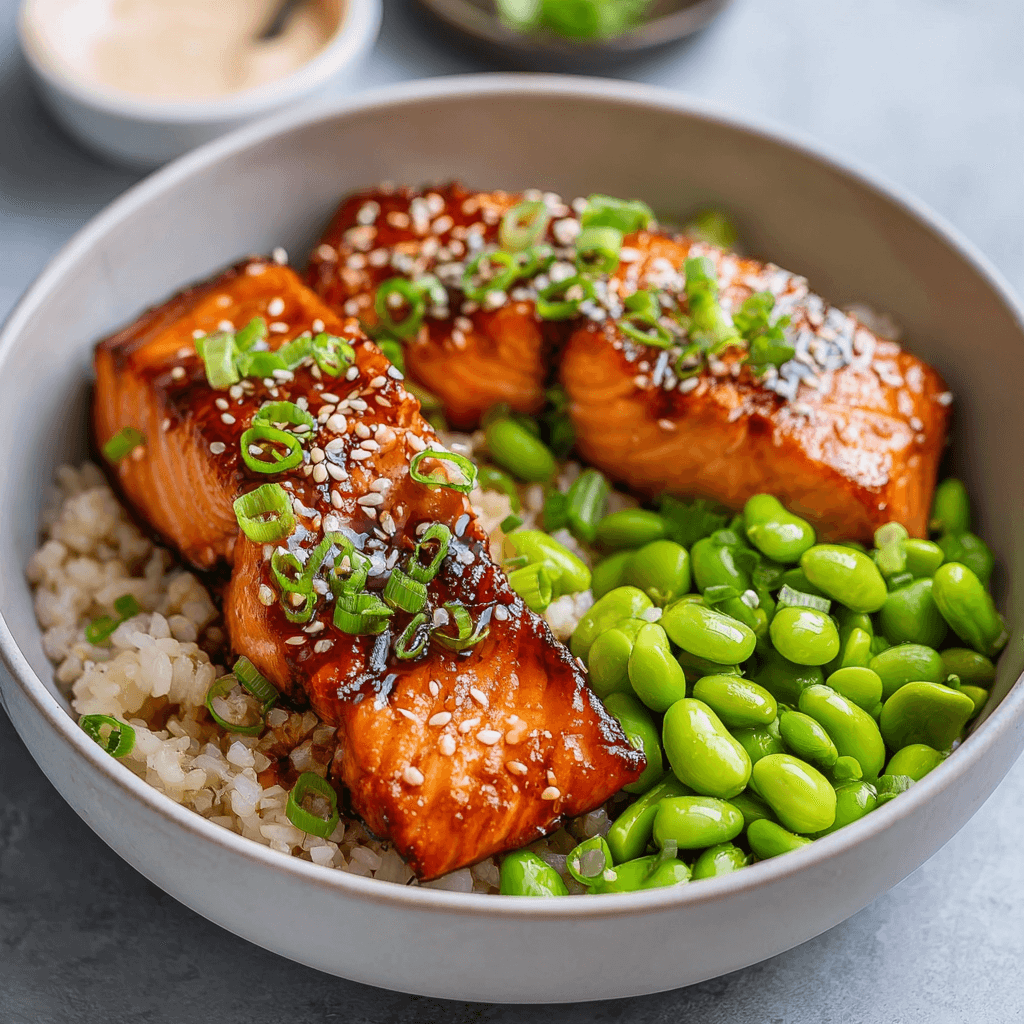
This Miso-Glazed Salmon Bowl delivers an incredible depth of savory, sweet, and umami flavor in under 30 minutes. It’s a perfect weeknight system for a nutritious, restaurant-quality meal at home and a prime example of the satisfying dinner recipes we love. Get ready for tender, flaky salmon with a perfectly caramelized glaze over a bed of fluffy rice and vibrant edamame.
The Anatomy of a Perfect Miso Glaze
The magic of this dish is the glaze. It’s a simple combination, but each component plays a critical role in creating a balanced, deeply flavorful sauce. Understanding the “why” helps you master the recipe.
- White Miso (Shiro Miso): The foundation. It’s fermented soybean paste that provides a complex, salty, and savory (umami) flavor. White miso is milder and sweeter than red miso, making it perfect for delicate fish.
- Mirin: A sweet Japanese rice wine. It adds a subtle sweetness that balances the saltiness of the miso and soy sauce. It also contains sugars that help the glaze caramelize beautifully under heat.
- Soy Sauce (or Tamari): Adds another layer of salt and umami. Use low-sodium to better control the final salt level. Tamari is a great gluten-free alternative.
- Fresh Ginger & Garlic: These are the aromatics. They provide a pungent, spicy kick that cuts through the richness and brightens the entire flavor profile. Grate them finely for the best distribution.
Pro-Tips for Flawless Salmon
Cooking salmon can be intimidating, but these techniques guarantee a perfect result every time. The goal is a flaky, moist interior with a beautifully burnished top.
- Pat the Salmon Dry: Before applying the glaze, use a paper towel to pat the salmon fillets completely dry. A dry surface allows for better browning and helps the glaze adhere properly.
- Don’t Over-Marinate: Miso is salty and can “cure” the fish if left on too long, changing its texture. A short 15-20 minute marinade is all you need for the flavor to penetrate.
- Use the Broiler: The broiler is your best tool for this recipe. High, direct heat cooks the salmon quickly while perfectly caramelizing the sugars in the glaze. Place the oven rack about 6-8 inches from the heat source.
- Watch It Closely: Glazes with sugar (from the mirin) can go from caramelized to burnt in seconds. Keep a close eye on the salmon during the last 2-3 minutes of broiling.
- Check for Doneness: The salmon is done when it flakes easily with a fork. You can also use an instant-read thermometer; aim for an internal temperature of 130-135°F (54-57°C) in the thickest part for a moist, medium finish.
Engineering Your Bowl: Component Prep
A great bowl is all about balanced components. Prep these elements while the salmon marinates for maximum efficiency. Getting everything ready is a core principle we apply across all our best recipes.
- The Base (Rice):
- Use short-grain sushi rice or jasmine rice.
- Rinse the rice until the water runs clear to remove excess starch.
- Cook according to package directions. For extra flavor, you can season the cooked rice with a splash of rice vinegar.
- The Protein (Edamame):
- Use frozen, shelled edamame (mukimame).
- Boil or steam for 3-4 minutes until tender-crisp. Drain and lightly salt.
- The Fresh Crunch (Veggies):
- Cucumber: Thinly slice or dice. Persian cucumbers are ideal for their thin skin and minimal seeds.
- Avocado: Slice or cube just before serving to prevent browning.
- The Garnish (Toppings):
- Scallions: Thinly slice the green parts for a mild oniony bite.
- Sesame Seeds: Toasted sesame seeds add a nutty flavor and texture.
- Furikake or Nori: Furikake is a Japanese seasoning with seaweed, sesame, and salt. Alternatively, you can thinly slice a sheet of roasted nori.
STEP-BY-STEP INSTRUCTIONS
- Prepare the Glaze: In a small bowl, whisk together the white miso, soy sauce, mirin, grated ginger, and grated garlic until smooth.
- Marinate the Salmon: Place the salmon fillets in a shallow dish. Pour about two-thirds of the miso glaze over the salmon, reserving the rest for later. Gently rub the glaze to coat all sides. Let it marinate at room temperature for 15-20 minutes.
- Cook the Rice: While the salmon marinates, cook your rice according to the package instructions.
- Preheat the Broiler: Position an oven rack 6-8 inches from the broiler element and turn the broiler on high. Line a baking sheet with parchment paper or foil for easy cleanup.
- Prep the Bowl Components: Cook the edamame and slice the cucumber, avocado, and scallions. Set them aside.
- Broil the Salmon: Place the marinated salmon fillets on the prepared baking sheet, skin-side down. Broil for 6-8 minutes, depending on thickness. The top should be deeply caramelized and bubbling, and the fish should flake easily.
- Assemble the Bowls: Divide the cooked rice among two bowls. Place a salmon fillet in each. Arrange the edamame, cucumber, and avocado around the salmon.
- Garnish and Serve: Drizzle the reserved miso glaze over the bowls. Garnish with sliced scallions, toasted sesame seeds, and furikake or nori, if using. Serve immediately.
Customization & Flavor Swaps
This bowl is a fantastic template. Feel free to modify it based on what you have on hand. The concept of a versatile, one-bowl meal is incredibly efficient. If you enjoy this style of cooking, you might also appreciate the assembly of a hearty sun-dried tomato chicken orzo skillet recipe.
- Base Swap: Use quinoa, brown rice, or even soba noodles instead of white rice.
- Add More Veggies: Add shredded carrots, pickled radish, or blanched broccoli.
- Make it Spicy: Whisk a teaspoon of sriracha or a pinch of red pepper flakes into the miso glaze.
- Different Protein: This glaze also works beautifully on black cod (sablefish), chicken thighs, or firm tofu. Adjust cooking times accordingly.
COMMON MISTAKES TO AVOID
Mistake: The glaze burns before the salmon is cooked.
Fix: Your oven rack is too close to the broiler. Move it to a lower position (around 8 inches from the heat source) for more gentle, even cooking.
Mistake: The salmon is dry and tough.
Fix: You overcooked it. Salmon cooks very quickly. Start checking for doneness at the 6-minute mark. Remember it will continue to cook slightly from residual heat after you remove it from the oven.
Mistake: The glaze is clumpy and won’t mix smoothly.
Fix: Your miso paste may be very thick. Add the liquid ingredients (soy sauce, mirin) first, then whisk in the miso paste a little at a time to create a smooth emulsion.
FAQ
Q: What type of miso should I use?
A: White miso (Shiro) is best for this recipe. It’s mild, slightly sweet, and won’t overpower the delicate flavor of the salmon. Red or yellow miso will be much saltier and more pungent.
Q: Can I make this ahead of time for meal prep?
A: Yes. You can cook the salmon, rice, and edamame ahead of time. Store each component in separate airtight containers in the refrigerator for up to 2 days. Assemble the bowl and add fresh avocado and cucumber just before serving. For another excellent meal prep idea, a roasted veggie feta tart also holds up well.
Q: How do I make this gluten-free?
A: It’s very simple. Just substitute the soy sauce with an equal amount of tamari or gluten-free soy sauce. Miso paste is typically gluten-free, but always check the label to be sure. If you’re looking for a dessert to complete your gluten-free meal planning, the unique and impressive pistachio kunafa recipe is a fantastic choice to explore.
NUTRITIONAL SNAPSHOT
| Nutrient | Amount per Serving |
|---|---|
| Calories | 580 kcal |
| Protein | 42g |
| Fat | 24g |
| Net Carbs | 45g |
| Fiber | 8g |
| Sugar | 9g |
Easy Miso-Glazed Salmon Bowl with Edamame
Ingredients
- 2 (6-ounce) salmon fillets, skin-on or off
- 3 tbsp white miso paste (Shiro)
- 2 tbsp mirin
- 1 tbsp low-sodium soy sauce (or tamari)
- 1 tsp fresh ginger, grated
- 1 clove garlic, grated
- 1.5 cups cooked sushi or jasmine rice
- 1 cup frozen shelled edamame
- 1 small Persian cucumber, thinly sliced
- 1/2 avocado, sliced
- 1 scallion, thinly sliced
- 1 tsp toasted sesame seeds
- Optional: Furikake or crumbled nori for garnish