
Easy Flourless Orange & Almond Cake (Naturally Gluten-Free)
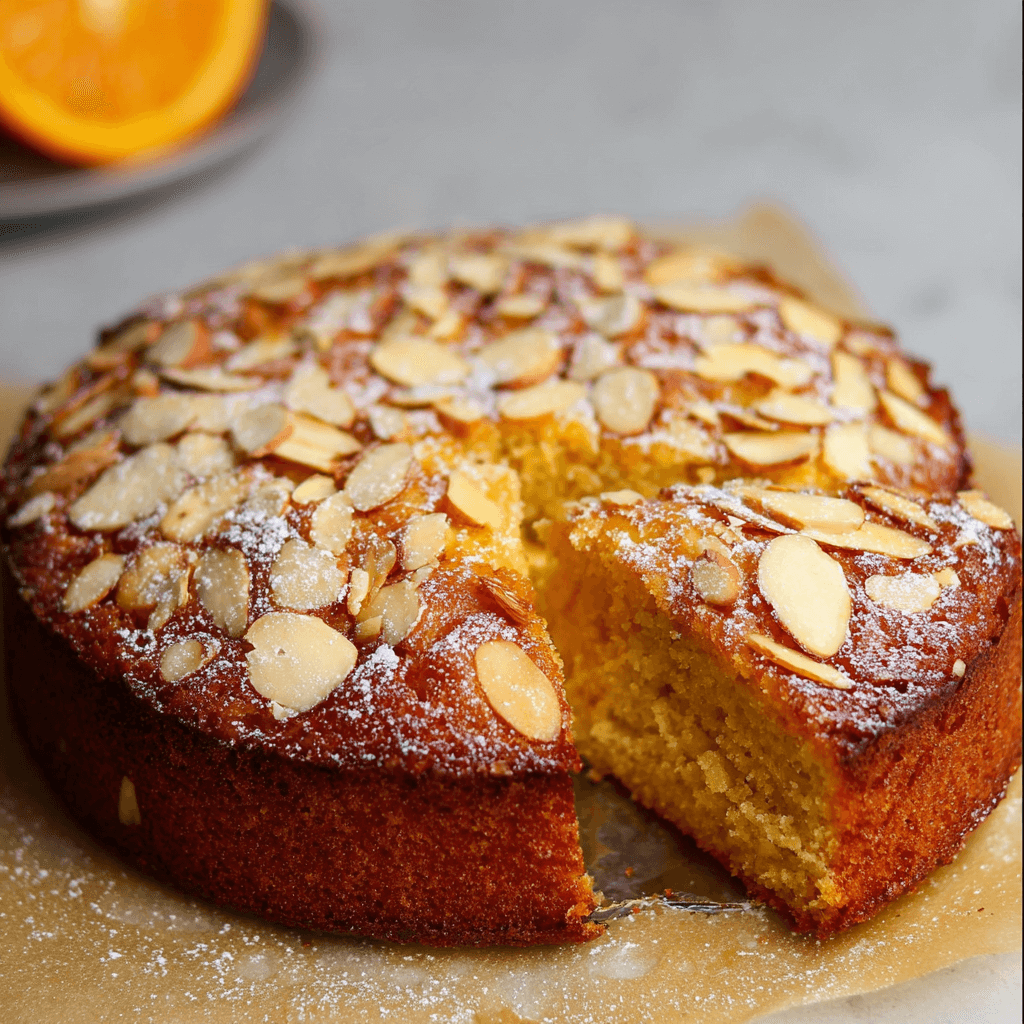
This Flourless Orange & Almond Cake delivers an incredibly moist, tender crumb and an intense citrus flavor that’s both sophisticated and comforting. It’s a standout bake, using whole boiled oranges for a unique texture and aroma that makes it one of my all-time favorite desserts. This recipe is engineered for simplicity and success.
The Engineering of a Flourless Cake
Flourless cakes are a masterclass in food science. Instead of gluten from wheat flour, this cake builds its structure on three key pillars:
- Almond Meal: Provides the bulk and a tender, moist crumb. The high protein and fat content creates a rich texture that flour cannot replicate.
- Whole Boiled Oranges: The cooked, puréed oranges provide moisture, intense flavor, and natural pectin, which acts as a binding agent. Boiling softens the entire fruit, rind and all, eliminating bitterness.
- Whipped Eggs: The primary leavening agent. Beating the eggs with sugar incorporates air, creating a foam that expands in the oven and gives the cake its lift.
Key Ingredient Breakdown
Success hinges on understanding your core components. This cake is simple, so ingredient quality is paramount.
- Oranges: Use thin-skinned oranges like Navel or Valencia. Thick-skinned varieties can introduce bitterness. The key is to boil them until they are completely soft, which can take 1-2 hours.
- Almond Meal (or Almond Flour):
- Almond Meal: Made from raw, unpeeled almonds. Results in a slightly coarser, more rustic crumb.
- Almond Flour: Made from blanched, peeled almonds. Creates a finer, more delicate cake. Both work exceptionally well here.
- Eggs: Use large, room-temperature eggs. Cold eggs will not whip to their full volume, resulting in a denser cake. This is a critical step for lift.
For a full library of ingredient-focused guides, check out all my recipes.
Pro-Tips for a Perfect Texture
- Don’t Rush the Boil: The oranges must be completely tender. If they are even slightly firm, the purée will be chunky and potentially bitter. Pierce one with a knife; it should slide in with no resistance.
- Achieve the “Ribbon Stage”: When beating the eggs and sugar, you must continue until the mixture is pale, thick, and tripled in volume. When you lift the whisk, the batter should fall back in a thick “ribbon” that sits on the surface for a few seconds. This traps the maximum amount of air.
- Gentle Folding is Key: Once you have the airy egg base, switch to a spatula. Fold the almond meal and orange purée in gently, using a “cut and fold” motion to deflate the batter as little as possible. Over-mixing will give you a dense, heavy cake. While this cake relies on delicate folding, other bakes like these fluffy chocolate chip muffins require a different mixing technique to develop structure.
Serving & Storage Blueprint
This cake is incredibly versatile and stores beautifully, with its flavor deepening over time.
Serving Suggestions:
- Simple: A light dusting of powdered sugar is all it needs.
- Creamy: Serve with a dollop of Greek yogurt, crème fraîche, or unsweetened whipped cream to balance the sweetness.
- Fruity: Fresh berries or a simple fruit compote complement the citrus notes.
- Syrup: A light orange syrup (made from orange juice and a little sugar) can be drizzled over the top for extra moisture and shine.
Storage Instructions:
- Countertop: Store in an airtight container at room temperature for up to 3 days.
- Refrigerator: The cake will last for up to a week in the fridge. The texture becomes denser when chilled; allow it to come to room temperature for 20-30 minutes before serving.
Step-by-Step Instructions
Prep Time: 20 minutes (+2 hours for boiling oranges)
Cook Time: 50-60 minutes
Yields: 10-12 servings
- Boil the Oranges: Place two whole, unpeeled oranges in a medium pot and cover with cold water. Bring to a boil, then reduce to a simmer. Cook for 2 hours, topping up the water as needed to keep the oranges submerged. They should be completely soft.
- Preheat and Prep Pan: Preheat your oven to 350°F (175°C). Grease a 9-inch (23cm) springform pan and line the bottom with parchment paper.
- Purée the Oranges: Drain the oranges and let them cool slightly. Cut them in half and remove any obvious, large seeds. Place the entire orange halves (pith, peel, and all) into a food processor and blend until you have a smooth, slightly textured purée.
- Whip the Eggs: In a large mixing bowl, use an electric mixer to beat the 6 large eggs and 225g of caster sugar on high speed. Continue for 5-7 minutes, until the mixture is pale, very thick, and has tripled in volume (the “ribbon stage”).
- Combine Dry Ingredients: In a separate bowl, whisk together the 250g almond meal, 1 tsp baking powder, and ½ tsp salt.
- Fold the Batter: Gently fold the orange purée into the whipped egg mixture with a spatula until just combined. Be careful not to deflate the eggs.
- Finish Folding: Add the almond meal mixture to the wet ingredients and fold again, just until no dry streaks remain. The batter will be thick.
- Bake: Pour the batter into your prepared pan and smooth the top. Bake for 50-60 minutes, or until a skewer inserted into the center comes out with moist crumbs attached. The cake will be dark golden brown.
- Cool Completely: Let the cake cool completely in the pan on a wire rack. This is crucial—it is very delicate while warm and will fall apart if you try to move it. Once cool, gently run a knife around the edge before releasing the springform ring.
COMMON MISTAKES TO AVOID
- Mistake: The cake tastes bitter.
Fix: This is almost always caused by under-boiled oranges or using a thick-skinned variety. Ensure the oranges are boiled until completely soft to mellow out the pith’s bitterness. - Mistake: The cake is dense and heavy, not light.
Fix: You likely under-whipped the eggs or over-mixed the batter. Beat the eggs and sugar until they reach the “ribbon stage” for maximum aeration, and fold the final ingredients in gently until just combined. - Mistake: The cake sank dramatically in the middle after baking.
Fix: The cake was underbaked. The center had not set enough to support its own weight. Test with a skewer; it should come out with moist crumbs, not wet batter. If it browns too quickly, tent it loosely with foil for the remainder of the bake time.
FAQ
Q: Can I use a different type of nut meal?
A: Yes, finely ground hazelnuts or pistachios would work well, but they will change the flavor profile significantly. Almond meal provides the most classic, neutral base.
Q: Can this cake be made ahead of time?
A: Absolutely. In fact, its flavor and texture improve on the second day as the moisture settles. Store it in an airtight container at room temperature.
Q: Why don’t you peel the oranges?
A: The peel and pith contain essential oils and pectin that are key to this cake’s signature intense flavor and moist structure. Boiling them for two hours completely transforms their texture and tames any bitterness.
For more kitchen projects, you might be interested in savory dishes like Cheesy Broccoli Stuffed Potatoes or these flavorful Sweet Soy Glazed Tofu Bowls.
NUTRITIONAL SNAPSHOT
| Nutrient | Amount per Serving |
|---|---|
| Calories | 295 kcal |
| Protein | 9g |
| Fat | 19g |
| Net Carbs | 20g |
| Fiber | 4g |
| Sugar | 21g |
Easy Flourless Orange & Almond Cake (Naturally Gluten-Free)
Ingredients
- 2 medium thin-skinned oranges (like Navel or Valencia)
- 6 large eggs, at room temperature
- 225g (1 cup + 2 tbsp) caster sugar
- 250g (2 ½ cups) almond meal or fine almond flour
- 1 tsp baking powder
- ½ tsp salt
- Powdered sugar, for dusting (optional)