
How to Bake a Flawless Classic Victoria Sponge
A perfect Victoria Sponge is the cornerstone of home baking—impossibly light, tender, and simple. This guide skips the fluff and gives you the direct blueprint for a classic cake that works every time, making it one of the most rewarding bakes in our entire desserts collection. Get ready for a foolproof recipe that defines simple elegance.
The All-in-One Method vs. The Traditional Creaming Method
Two primary methods exist for making a Victoria Sponge. Understanding the difference is key to controlling your cake’s final texture.
- The All-in-One Method (Fast & Simple): This involves adding all cake ingredients to the bowl at once and mixing until just combined.
- Pros: Extremely fast, fewer steps, minimal cleanup. Ideal for beginners or when you’re short on time.
- Cons: Can result in a slightly denser, less airy crumb. Higher risk of over-mixing if you’re not careful.
- The Traditional Creaming Method (Our Recommendation): This method, detailed below, involves creaming butter and sugar together first before gradually adding eggs and flour.
- Pros: Creates a superior, lighter, and more tender crumb by incorporating more air into the batter. More stable and reliable.
- Cons: Takes a few extra minutes and requires more attention to the process.
For a truly classic, melt-in-your-mouth texture, we use the creaming method. The small time investment pays off significantly in the final product.
Ingredient Temperature: The Non-Negotiable Rule
If you only follow one piece of advice, let it be this: all your ingredients must be at room temperature. This isn’t a suggestion; it’s a structural requirement for the cake.
- Butter: Cold butter won’t cream properly with sugar. It needs to be soft enough for a finger to leave an indent easily, but not greasy or melted. This allows it to trap maximum air.
- Eggs: Cold eggs will cause the creamed butter to curdle and break the emulsion. A broken batter leads to a coarse, dense cake.
- Quick Fix: If your eggs are cold, place them in a bowl of warm (not hot) water for 5-10 minutes.
Essential Gear for a Perfect Sponge
You don’t need a professional kitchen, but a few key tools make the process much smoother and more reliable.
- Digital Kitchen Scale: Volume (cups) is inaccurate. Weight (grams) is precise. For baking, precision is everything.
- Electric Mixer: A stand mixer or a hand mixer is crucial for properly creaming the butter and sugar to aerate the batter.
- Two 8-inch (20cm) Round Cake Tins: Using two separate tins is better than slicing one large cake in half. It ensures even baking and a professional look.
- Parchment Paper: Guarantees your cakes will release from the tins without any sticking.
Step-by-Step Instructions
Prep Time: 15 mins
Cook Time: 20-25 mins
Yields: 8 servings
Ingredients:
- 225g Unsalted Butter, softened to room temperature
- 225g Caster (Superfine) Sugar
- 4 Large Eggs, at room temperature, lightly beaten
- 225g Self-Raising Flour
- 1 tsp Baking Powder
- 1-2 tbsp Milk, at room temperature (if needed)
- 1/2 tsp Vanilla Extract
For the Filling:
- 150ml Double (Heavy) Cream
- 1 tbsp Icing (Powdered) Sugar
- 4-5 tbsp Good-Quality Raspberry Jam
Instructions:
- Pre-Flight Check: Preheat your oven to 180°C (160°C Fan / 350°F / Gas Mark 4). Grease two 8-inch (20cm) round cake tins and line the bases with parchment paper.
- Cream Butter & Sugar: In a large bowl using an electric mixer, beat the softened butter and caster sugar together on medium-high speed for 4-5 minutes. The mixture should become very pale, light, and fluffy. This step is critical for incorporating air.
- Incorporate Eggs: Turn the mixer down to low speed. Add the beaten eggs a little at a time, waiting for each addition to be fully incorporated before adding the next. If the mixture starts to look curdled, add a tablespoon of your measured flour to stabilize it.
- Fold in Dry Ingredients: Sift the self-raising flour and baking powder into the bowl. Using a large metal spoon or spatula, gently fold the flour into the wet ingredients until just combined. Do not over-mix. Scrape down the sides and bottom of the bowl to ensure no flour pockets remain.
- Adjust Consistency: The batter should be a “dropping consistency,” meaning it falls easily from a spoon. If it feels too stiff, fold in 1-2 tablespoons of milk until it loosens slightly. Stir in the vanilla extract.
- Bake the Cakes: Divide the batter evenly between the two prepared tins and gently level the tops. Bake for 20-25 minutes, or until the sponges are golden brown, well-risen, and a skewer inserted into the center comes out clean.
- Cool Completely: Let the cakes cool in their tins for 10 minutes before carefully turning them out onto a wire rack. Peel off the parchment paper and allow them to cool completely. This is essential before adding the filling.
- Assemble the Cake: While the cakes cool, whip the double cream and icing sugar until soft peaks form. Once cool, place one cake layer on your serving plate. Spread it evenly with the raspberry jam, then top with the whipped cream. Place the second cake layer on top and gently press down. Dust the top with a final sprinkle of icing sugar before serving.
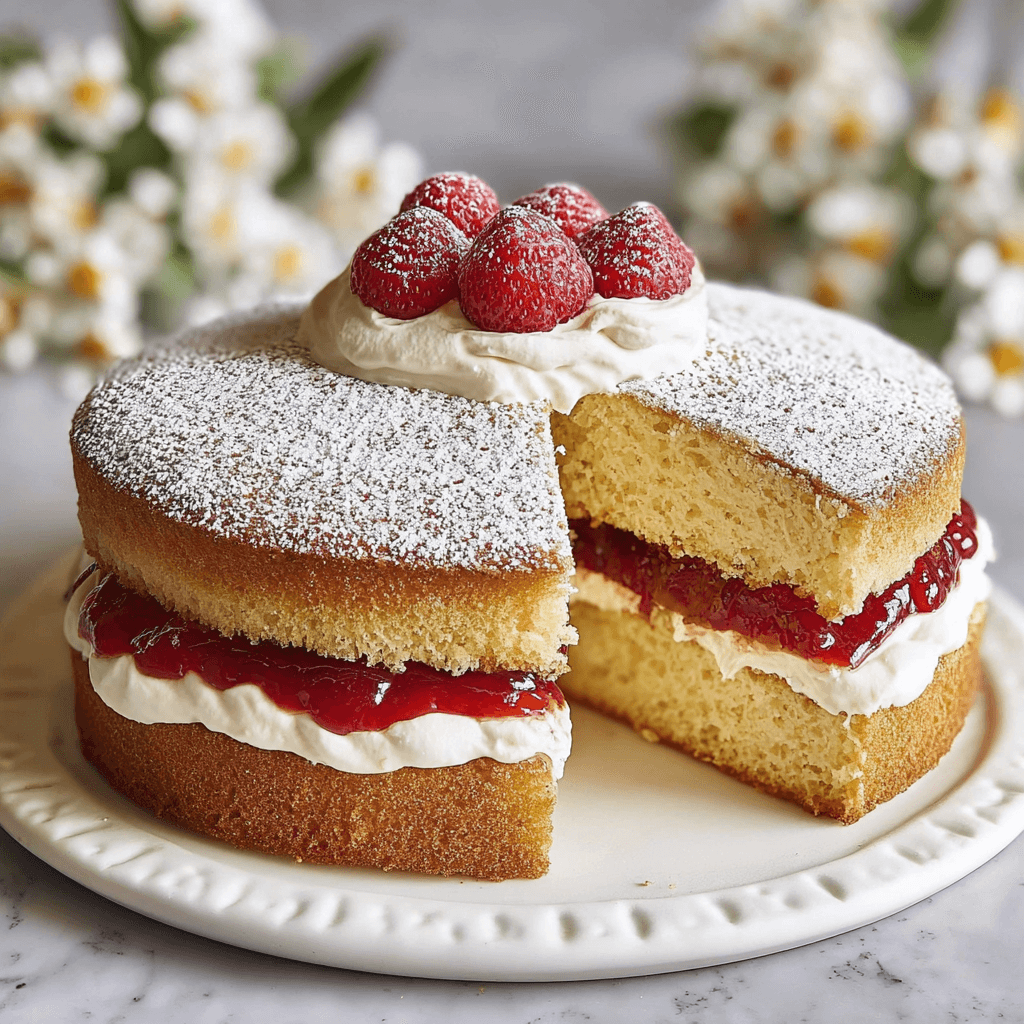
Filling & Finishing Variations
The classic raspberry jam and cream is iconic, but this cake is a perfect canvas. Our archive of easy-to-follow recipes shows how a simple base can be adapted.
- Lemon & Elderflower: Add the zest of 1 lemon to the cake batter. Fill with lemon curd and an elderflower-infused whipped cream.
- Strawberry & Mascarpone: Swap the jam for fresh, sliced strawberries and use a sweetened mascarpone cream for a richer filling.
- Chocolate Hazelnut: Fill with a generous layer of chocolate hazelnut spread and vanilla-whipped cream.
- Advanced Baking: The beauty of a Victoria Sponge is its simplicity. For those looking to master a more complex, yeasted bake, a braided chocolate babka offers a rewarding challenge with a stunning visual result.
COMMON MISTAKES TO AVOID
- Mistake: The cake is dense and heavy.
- Fix: You likely used cold ingredients or under-creamed the butter and sugar. Ensure everything is at room temperature and beat the butter/sugar until it is visibly pale and fluffy (at least 4-5 minutes).
- Mistake: The cake has sunk in the middle.
- Fix: This is usually caused by opening the oven door too early, which lets cold air in and stops the rise. It can also be a sign of over-mixing the batter after adding the flour, which develops gluten and knocks out air. Fold flour in gently and only until it disappears.
- Mistake: The batter curdled after adding the eggs.
- Fix: Your eggs were too cold or you added them too quickly. Bring eggs to room temp and add them one at a time, beating well in between. Adding a spoonful of flour with the last egg can help prevent splitting.
FAQ
Q: How do I store a Victoria Sponge?
A: Due to the fresh cream filling, it must be stored in the refrigerator. Store in an airtight container for up to 3 days. Let it sit at room temperature for 20 minutes before serving for the best texture.
Q: Can I use all-purpose flour instead of self-raising?
A: Yes. For every 1 cup (150g) of all-purpose flour, add 2 teaspoons of baking powder and a pinch of salt. Sift them together before using.
Q: What can I serve with this cake?
A: It’s perfect on its own with a cup of tea. For a full afternoon tea experience, pair it with savory options. While many choose finger sandwiches, a truly comforting pairing like a sharp and gooey caramelized onion grilled cheese, cut into small squares, provides a delicious contrast.
NUTRITIONAL SNAPSHOT
| Nutrient | Amount per Serving |
|---|---|
| Calories | 465 kcal |
| Protein | 6g |
| Fat | 28g |
| Net Carbs | 46g |
| Fiber | 1g |
| Sugar | 35g |
How to Bake a Flawless Classic Victoria Sponge
Ingredients
- 225g Unsalted Butter
- 225g Caster Sugar
- 4 Large Eggs
- 225g Self-Raising Flour
- 1 tsp Baking Powder
- 1-2 tbsp Milk
- 1/2 tsp Vanilla Extract
- 150ml Double Cream
- 1 tbsp Icing Sugar
- 4-5 tbsp Raspberry Jam