
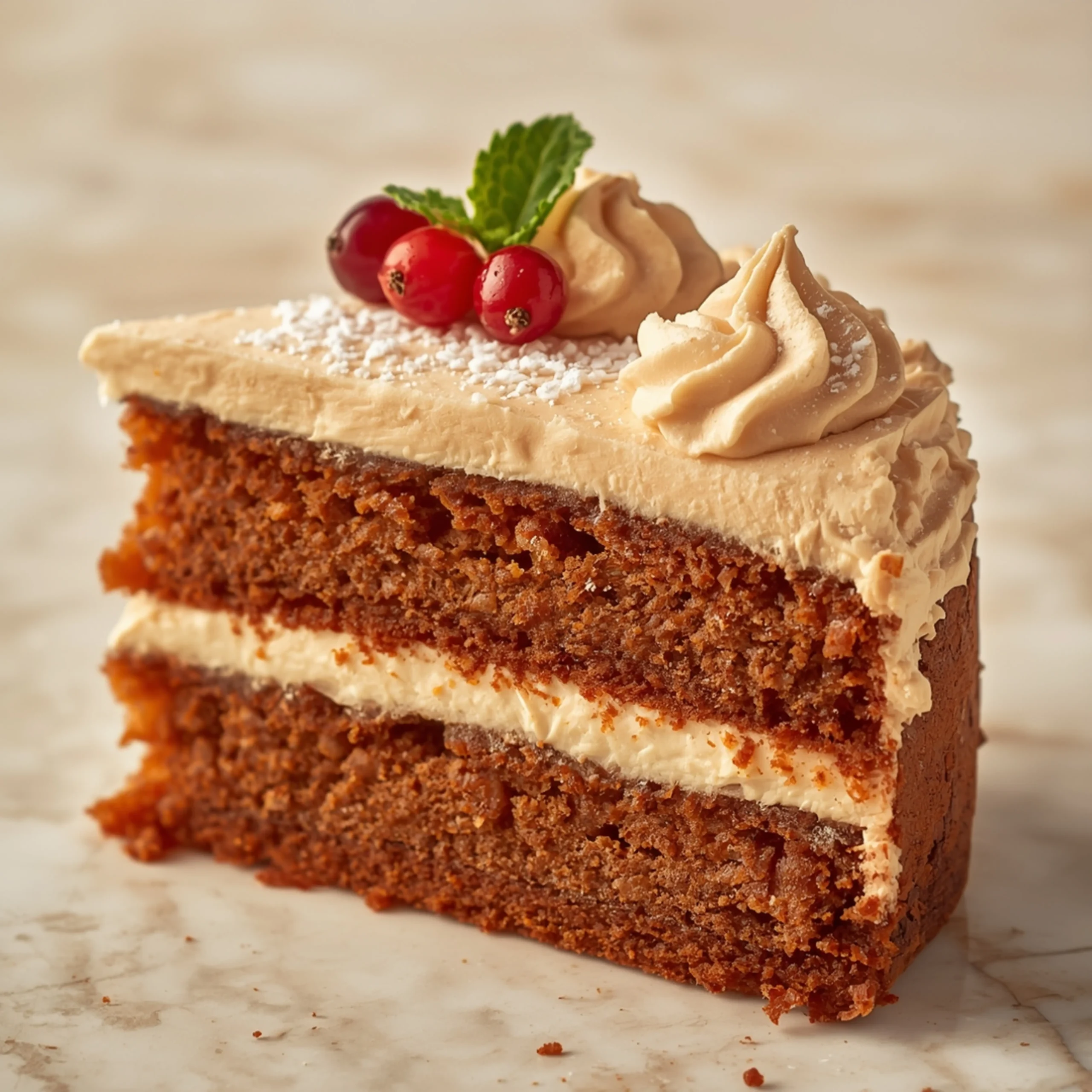
Rich Gingerbread Cake with Spiced Ermine Frosting
This gingerbread cake delivers a deeply spiced, moist crumb, perfectly balanced by a silky, not-too-sweet Ermine frosting. Unlike heavy American buttercream, this cooked flour frosting is incredibly light and smooth, allowing the warm holiday spices to shine. It’s one of those standout holiday desserts that is surprisingly straightforward to engineer.
Part 1: For the Gingerbread Cake Layers
- Pre-Flight Check: Preheat your oven to 350°F (175°C). Grease and flour two 8-inch round cake pans. Line the bottoms with parchment paper for guaranteed release.
- Combine Dry Ingredients: In a large bowl, whisk together the flour, baking soda, salt, ginger, cinnamon, cloves, and nutmeg. This ensures even spice distribution.
- Combine Wet Ingredients: In a separate medium bowl, whisk the hot water and molasses together until the molasses dissolves. Set aside to cool slightly.
- Cream Butter & Sugar: In the bowl of a stand mixer fitted with the paddle attachment (or using a hand mixer), beat the softened butter and brown sugar on medium-high speed until light and fluffy, about 3-4 minutes. Scrape down the sides of the bowl.
- Incorporate Egg & Molasses: Beat in the egg and vanilla extract until just combined. Reduce speed to low and slowly stream in the molasses-water mixture, mixing until incorporated. The mixture may look slightly curdled; this is normal.
- Combine Wet & Dry: Add the dry ingredients to the wet ingredients in two additions, mixing on low speed only until the flour streaks disappear. Do not overmix.
- Bake: Divide the batter evenly between the prepared pans. Bake for 30-35 minutes, or until a wooden skewer inserted into the center comes out with moist crumbs attached.
- Cool: Let the cakes cool in the pans for 15 minutes before inverting them onto a wire rack to cool completely. Remove the parchment paper.
Part 2: For the Spiced Ermine Frosting
- Create the Roux: In a medium saucepan, whisk the flour, sugar, and salt together. Gradually whisk in the milk until no lumps remain.
- Cook the Base: Place the saucepan over medium heat. Whisk constantly until the mixture thickens to a pudding-like consistency, about 5-8 minutes. It should be thick enough that your whisk leaves trails on the bottom of the pan.
- Cool the Base: Transfer the cooked flour paste to a shallow bowl. Press plastic wrap directly onto the surface to prevent a skin from forming. Cool completely to room temperature. You can speed this up in the refrigerator, but let it return to room temp before proceeding.
- Whip the Butter: In a stand mixer with the whisk attachment, beat the softened butter on medium-high speed for 5-7 minutes until it’s very pale, light, and doubled in volume. This step is critical for a silky texture.
- Combine: With the mixer on medium-low, add the cooled flour paste to the whipped butter one tablespoon at a time. Once incorporated, add the vanilla, ginger, and cinnamon.
- Final Whip: Increase the speed to medium-high and whip for another 2-3 minutes until the frosting is exceptionally light, fluffy, and smooth, resembling whipped cream.
The Science of Ermine Frosting
Ermine frosting (also known as cooked flour or heritage frosting) is a study in food science. Its stability and unique texture come from the initial cooked base.
The Roux:
By cooking flour and milk, you create a thick paste called a roux. The starch granules in the flour swell and gelatinize, trapping the liquid.
Sugar’s Role:
The sugar dissolves into this paste. Unlike standard buttercreams where sugar crystals provide structure (and grit), here the sugar is fully dissolved, leading to a perfectly smooth mouthfeel.
The Emulsion:
When you whip this cooled, sugar-infused paste into aerated butter, you create a highly stable emulsion. The fat from the butter and the thickened milk/flour mixture combine into a frosting that is light, pipeable, and far less sweet than its powdered-sugar counterparts.
Key Flavor Components
The success of a gingerbread cake hinges on the quality and balance of its core flavors. This is a complex profile built from a few key players.
Molasses:
This is the heart of gingerbread. Use unsulphured dark molasses for a robust, classic flavor. Blackstrap molasses is too bitter for this application.
Ground Ginger:
Provides the signature warm, pungent heat. Ensure your ground ginger is fresh; old spices lose their potency.
Warming Spices:
Cinnamon, cloves, and a hint of nutmeg round out the flavor.
- Cinnamon: Adds sweetness and warmth.
- Cloves: Provide a pungent, almost peppery note. Use a light hand, as it can be overpowering.
Brown Sugar:
Complements the molasses and adds moisture and a slight caramel note that white sugar can’t replicate.
For more inspiration on balancing rich flavors in your kitchen, you can explore our full library of recipes.
Assembly & Decoration Blueprint
A layer cake requires a clear plan of action for a professional finish.
- Level the Layers: Once the cake layers are completely cool, use a long serrated knife to carefully slice off the domed tops. This creates a flat, stable surface for stacking.
- The First Layer: Place one cake layer, cut-side up, on your cake stand or serving plate. Spread about 1 cup of the Spiced Ermine Frosting evenly over the top.
- Stack: Place the second cake layer on top, cut-side down. This ensures the flattest possible top surface for your cake.
- The Crumb Coat: Apply a very thin layer of frosting over the entire cake—top and sides. This initial layer traps any loose crumbs. Refrigerate the cake for 20-30 minutes to firm up the crumb coat. This is a non-negotiable step for a clean final coat.
- Final Coat: Apply the remaining frosting to the chilled cake, using an offset spatula to create a smooth or decorative textured finish.
- Garnish (Optional):
- Crushed gingerbread cookies around the base.
- A sprinkle of cinnamon on top.
- Small dollops of frosting piped around the top edge.
- Crystallized ginger pieces.
If you enjoy creating layered desserts, a Black Forest Trifle is another excellent project that impresses with its structured layers of flavor.
Make-Ahead & Storage Protocol
Proper storage is key to maintaining the cake’s texture and flavor.
Cake Layers:
Can be baked, cooled, and wrapped tightly in plastic wrap. Store at room temperature for up to 2 days or freeze for up to 1 month. Thaw at room temperature before frosting.
Ermine Frosting:
Can be made and stored in an airtight container in the refrigerator for up to one week. Before using, let it come to room temperature and re-whip it for 3-5 minutes to restore its light, fluffy texture.
Assembled Cake:
Because of the butter and milk in the frosting, the finished cake should be stored in the refrigerator. Let it sit at room temperature for 20-30 minutes before serving for the best flavor and texture. It will keep for up to 4 days.
COMMON MISTAKES TO AVOID
- Mistake: A gritty or lumpy frosting.
Fix: This happens if the roux isn’t cooked long enough or whisked thoroughly. Ensure the mixture is thick like pudding and that you whisk out all flour lumps before you start heating it.
- Mistake: Soupy or “broken” frosting.
Fix: You added the butter when the flour/milk base was still warm. The base must be at room temperature. If it breaks, try refrigerating the entire bowl for 20 minutes, then re-whip it.
- Mistake: The cake is dry or tough.
Fix: Overmixing the batter after adding flour develops too much gluten. Mix only until the flour streaks disappear. Also, use a skewer to test for doneness to avoid overbaking.
FAQ
Q: What is Ermine frosting and why is it special?
A: It’s a vintage frosting made with a cooked flour-and-milk base that’s whipped into butter. It’s incredibly silky, stable for decorating, and significantly less sweet than standard American buttercream, allowing the cake’s flavor to be the star.
Q: Can I make this recipe into cupcakes?
A: Absolutely. This recipe will yield about 24 cupcakes. Fill liners 2/3 full and bake for 18-22 minutes at 350°F (175°C), or until a toothpick comes out clean.
Q: I don’t have molasses. Is there a substitute?
A: Molasses is critical for the authentic gingerbread flavor and color. In a pinch, you could try dark corn syrup or maple syrup, but be aware that the final taste and texture will be very different. It will no longer be a classic gingerbread cake.
For your main course before this spectacular dessert, consider planning a meal around a classic like a Garlic Butter Beef Tenderloin, which provides a savory counterpoint to the sweet spices in the cake.
NUTRITIONAL SNAPSHOT
| Nutrient | Amount per Serving |
|---|---|
| Calories | 480 kcal |
| Protein | 5g |
| Fat | 26g |
| Net Carbs | 55g |
| Fiber | 1g |
| Sugar | 38g |
*Estimates are for one slice (1/12th of the cake).
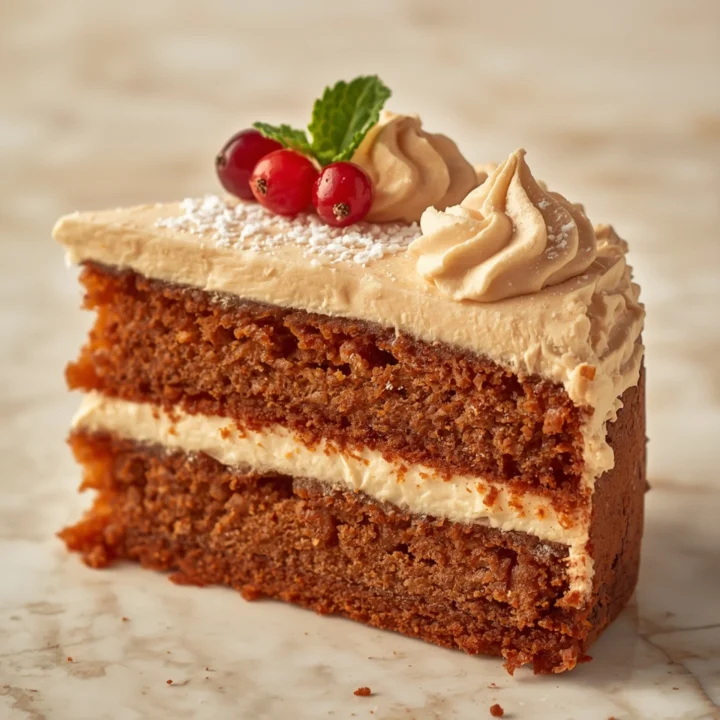
Rich Gingerbread Cake with Spiced Ermine Frosting
This gingerbread cake delivers a deeply spiced, moist crumb, perfectly balanced by a silky, not-too-sweet Ermine frosting. Unlike heavy American buttercream, this cooked flour frosting is incredibly light and smooth, allowing the warm holiday spices to shine. It's one of those standout holiday desserts that is surprisingly straightforward to engineer.
Ingredients
- 2 1/2 cups (300g) all-purpose flour
- 1 1/2 teaspoons baking soda
- 1 teaspoon salt
- 2 teaspoons ground ginger
- 1 1/2 teaspoons ground cinnamon
- 1/2 teaspoon ground cloves
- 1/4 teaspoon ground nutmeg
- 1 cup (240ml) hot water
- 1 cup (320g) dark molasses (unsulphured)
- 1/2 cup (113g) unsalted butter, softened
- 1 cup (200g) packed light brown sugar
- 1 large egg, room temperature
- 1 teaspoon vanilla extract
- 5 tablespoons (40g) all-purpose flour
- 1 cup (200g) granulated sugar
- 1/4 teaspoon salt
- 1 cup (240ml) whole milk
- 1 cup (226g) unsalted butter, softened to room temp (cool to the touch)
- 1 1/2 teaspoons vanilla extract
- 1/2 teaspoon ground ginger
- 1/2 teaspoon ground cinnamon
Instructions
- Preheat your oven to 350°F (175°C). Grease and flour two 8-inch round cake pans. Line the bottoms with parchment paper for guaranteed release.
- In a large bowl, whisk together the flour, baking soda, salt, ginger, cinnamon, cloves, and nutmeg. This ensures even spice distribution.
- In a separate medium bowl, whisk the hot water and molasses together until the molasses dissolves. Set aside to cool slightly.
- In the bowl of a stand mixer fitted with the paddle attachment (or using a hand mixer), beat the softened butter and brown sugar on medium-high speed until light and fluffy, about 3-4 minutes. Scrape down the sides of the bowl.
- Beat in the egg and vanilla extract until just combined. Reduce speed to low and slowly stream in the molasses-water mixture, mixing until incorporated. The mixture may look slightly curdled; this is normal.
- Add the dry ingredients to the wet ingredients in two additions, mixing on low speed only until the flour streaks disappear. Do not overmix.
- Divide the batter evenly between the prepared pans. Bake for 30-35 minutes, or until a wooden skewer inserted into the center comes out with moist crumbs attached.
- Let the cakes cool in the pans for 15 minutes before inverting them onto a wire rack to cool completely. Remove the parchment paper.
- In a medium saucepan, whisk the flour, sugar, and salt together. Gradually whisk in the milk until no lumps remain.
- Place the saucepan over medium heat. Whisk constantly until the mixture thickens to a pudding-like consistency, about 5-8 minutes. It should be thick enough that your whisk leaves trails on the bottom of the pan.
- Transfer the cooked flour paste to a shallow bowl. Press plastic wrap directly onto the surface to prevent a skin from forming. Cool completely to room temperature. You can speed this up in the refrigerator, but let it return to room temp before proceeding.
- In a stand mixer with the whisk attachment, beat the softened butter on medium-high speed for 5-7 minutes until it's very pale, light, and doubled in volume. This step is critical for a silky texture.
- With the mixer on medium-low, add the cooled flour paste to the whipped butter one tablespoon at a time. Once incorporated, add the vanilla, ginger, and cinnamon.
- Increase the speed to medium-high and whip for another 2-3 minutes until the frosting is exceptionally light, fluffy, and smooth, resembling whipped cream.
- Once the cake layers are completely cool, use a long serrated knife to carefully slice off the domed tops. This creates a flat, stable surface for stacking.
- Place one cake layer, cut-side up, on your cake stand or serving plate. Spread about 1 cup of the Spiced Ermine Frosting evenly over the top.
- Place the second cake layer on top, cut-side down. This ensures the flattest possible top surface for your cake.
- Apply a very thin layer of frosting over the entire cake—top and sides. This initial layer traps any loose crumbs. Refrigerate the cake for 20-30 minutes to firm up the crumb coat. This is a non-negotiable step for a clean final coat.
- Apply the remaining frosting to the chilled cake, using an offset spatula to create a smooth or decorative textured finish.