
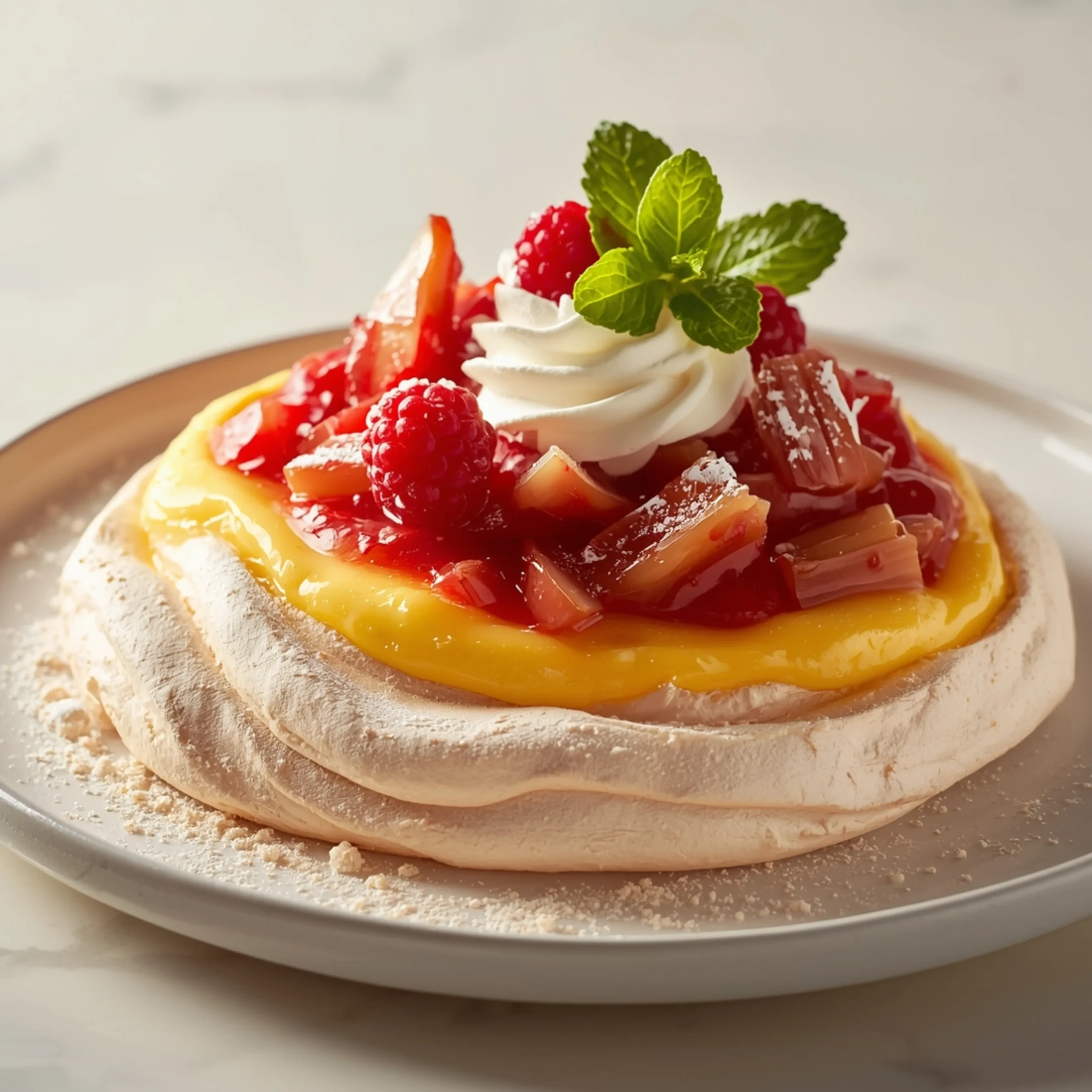
Rhubarb & Custard Pavlova: A Perfect Crisp & Chewy Meringue
This Rhubarb & Custard Pavlova is engineered for success, delivering a crisp meringue shell that gives way to a soft, marshmallowy center. Topped with a sharp rhubarb compote and a rich, creamy custard, it’s a masterclass in texture and flavor balance. For more show-stopping sweets, you can explore my complete collection of dessert recipes.
Component Breakdown: Engineering the Perfect Bite
A successful pavlova is a system of balanced components. Each element serves a critical function.
- The Meringue Base: This is the structural foundation. Its crisp exterior provides a satisfying crunch, while the chewy, mallow-like interior absorbs the toppings without becoming instantly soggy.
- The Rhubarb Compote: This is the sharp, acidic counterpoint. Rhubarb’s natural tartness cuts through the sweetness of the meringue and the richness of the cream, preventing the dessert from becoming one-dimensional.
- The Custard Cream: This is the luxurious bridge between the other elements. By folding thick custard into whipped cream, you get a topping that is both rich and light, with a velvety texture that complements the other components perfectly.
The Science of a Stable Meringue
Meringue can be intimidating, but it’s pure kitchen science. Understanding the “why” guarantees a perfect result.
- Protein Unfolding: Whisking egg whites physically denatures their proteins, causing them to unravel and trap air, creating foam.
- Sugar as a Stabilizer: Sugar dissolves into the protein structure, making it strong, glossy, and stable. It also helps create the signature chewy interior. An undersaturated meringue (not enough sugar) will be weak and prone to weeping.
- Acid for Strength: A small amount of acid (white wine vinegar or cream of tartar) helps the egg white proteins link up more effectively, creating a stronger, more stable foam that is less likely to collapse.
- Starch for Insurance: Cornflour acts as a drying agent, absorbing any excess moisture. This helps prevent weeping and ensures a soft, marshmallow-like center.
STEP-BY-STEP INSTRUCTIONS
Part 1: The Meringue Base
- Prep: Preheat your oven to 275°F (135°C). Line a large baking sheet with parchment paper. Using a pencil, draw an 8-inch (20cm) circle on the paper, then flip it over so the pencil mark is on the underside.
- Clean: Wipe the inside of a large mixing bowl (glass or metal is best) and your whisk attachment with a bit of vinegar. This removes any trace of fat, which is the enemy of meringue.
- Whisk Whites: In the clean bowl, whisk the egg whites on medium speed until they form soft peaks. The foam should hold its shape but the tips will flop over.
- Add Sugar: Begin adding the caster sugar one tablespoon at a time, whisking continuously on high speed. Wait about 30 seconds between each addition. This process is crucial and should take 8-10 minutes.
- Test for Gloss: Continue whisking until the meringue is extremely stiff, thick, and glossy. To check if the sugar has dissolved, rub a small amount between your thumb and forefinger. It should feel completely smooth, not grainy.
- Fold in Stabilizers: Sprinkle the vanilla, vinegar, and sifted cornflour over the meringue. Gently fold them in with a large spatula until just combined.
- Shape: Spoon the meringue onto the prepared parchment paper, using the circle as your guide. Use the back of a spoon to create a nest shape, with a slight dip in the center and high, dramatic sides.
- Bake & Cool: Place the pavlova in the preheated oven. Immediately reduce the temperature to 250°F (120°C). Bake for 1 hour and 15 minutes. The outside should be crisp and dry.
- Cool Down: Turn the oven off completely, prop the door open with a wooden spoon, and leave the pavlova inside to cool completely for at least 3 hours, or preferably overnight. Do not open the door before this.
Part 2: The Rhubarb Compote
- Combine: In a medium saucepan, combine the chopped rhubarb, sugar, and orange juice.
- Simmer: Cook over medium heat, stirring occasionally, for 10-15 minutes. The rhubarb should break down but still hold some of its shape. This simple fruit compote technique is a foundation for many of the recipes on my site.
- Cool: Remove from the heat and let the compote cool completely. The tartness is key here; if you enjoy this sweet-tart balance in savory dishes, you’ll love how it’s used in this cranberry-glazed roasted butternut squash.
Part 3: The Custard Cream & Assembly
- Whip Cream: In a chilled bowl, whisk the heavy cream, icing sugar, and vanilla extract until you have firm peaks.
- Combine: Gently fold the cooled, thick custard into the whipped cream until it’s just swirled through. Don’t overmix.
- Assemble: Place the cooled meringue shell on your serving plate. Spoon the custard cream into the center nest. Top generously with the cooled rhubarb compote, letting some of it drip down the sides. Serve immediately.
Pro Tips for Pavlova Perfection
- Use Room Temperature Eggs: Cold egg whites are harder to whisk and won’t achieve the same volume. Let them sit on the counter for 30 minutes before you begin.
- Age Your Egg Whites (Optional): For an even more stable meringue, separate your eggs a day in advance and let the whites sit, lightly covered, in the fridge. This allows some water to evaporate, concentrating the proteins.
- Low and Slow is Key: Baking at a low temperature dries the meringue out slowly, creating the perfect crisp shell without browning. Rushing this step leads to a cracked, weeping mess.
- Don’t Open the Oven: Temperature fluctuations are the primary cause of major cracks. Let the pavlova bake and cool undisturbed.
COMMON MISTAKES TO AVOID
- Mistake: Weeping meringue (syrup beads forming on the surface).
Fix: This is caused by undissolved sugar. Be patient when adding sugar to the egg whites, and always perform the “rub test” to ensure it’s fully dissolved before baking. - Mistake: The pavlova cracks and collapses dramatically.
Fix: The temperature change was too drastic. Always cool the meringue slowly in the turned-off oven with the door ajar. This allows it to set without a thermal shock. - Mistake: A soggy, wet base after serving.
Fix: You assembled it too early. The moisture from the cream and compote will begin to dissolve the meringue immediately. Assemble just before you plan to serve it.
FAQ
Q: Can I make the components ahead of time?
A: Yes. The meringue shell can be made up to 2 days ahead and stored in an airtight container at room temperature (never the fridge). The compote can be made 3 days ahead and refrigerated. Whip the cream and assemble just before serving.
Q: My meringue is beige, not pure white. What happened?
A: Your oven was too hot. Every oven is different, so an oven thermometer is a great tool. A higher temperature caramelizes the sugar, leading to a darker color and a stickier texture.
Q: Can I use different fruit?
A: Absolutely. This pavlova base is a perfect canvas. It works beautifully with mixed berries, passionfruit curd and mango, or roasted peaches with thyme.
Next Steps & Further Inspiration
This Rhubarb & Custard Pavlova is a fantastic centerpiece dessert. While it’s a light and airy delight, for those occasions that call for a truly decadent and rich chocolate experience, you might want to try this incredible Black Forest Trifle recipe.
NUTRITIONAL SNAPSHOT
| Nutrient | Amount per Serving |
|---|---|
| Calories | 460 |
| Protein | 5g |
| Fat | 22g |
| Net Carbs | 60g |
| Fiber | 2g |
| Sugar | 58g |
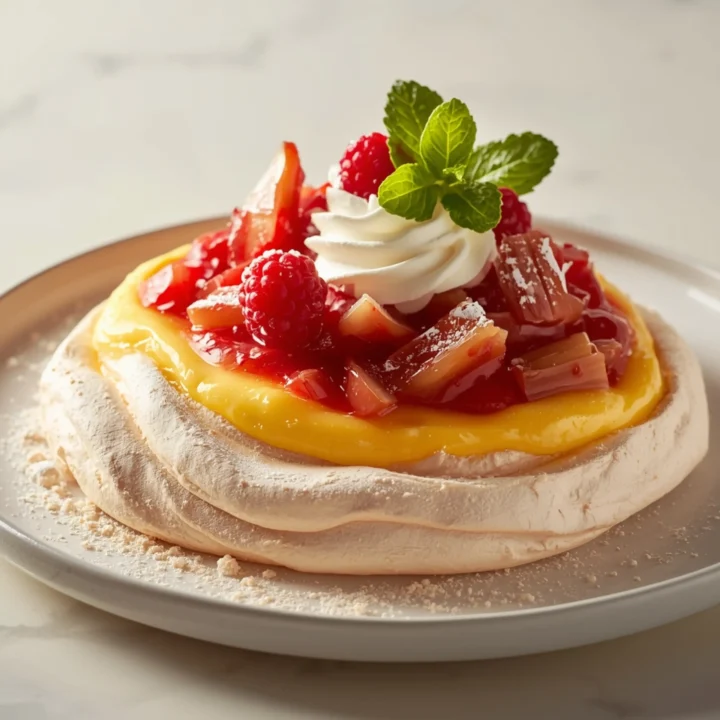
Rhubarb & Custard Pavlova: A Perfect Crisp & Chewy Meringue
This Rhubarb & Custard Pavlova is engineered for success, delivering a crisp meringue shell that gives way to a soft, marshmallowy center. Topped with a sharp rhubarb compote and a rich, creamy custard, it’s a masterclass in texture and flavor balance.
Ingredients
- 6 large egg whites, at room temperature
- 1 ½ cups (330g) caster (superfine) sugar
- 2 tsp cornflour (cornstarch)
- 1 tsp white wine vinegar
- 1 tsp vanilla extract
- 1 lb (450g) rhubarb, trimmed and chopped into 1-inch pieces
- ½ cup (100g) granulated sugar
- 2 tbsp orange juice
- 1 ½ cups (360ml) heavy whipping cream, cold
- 1 cup (250g) thick, pre-made vanilla custard, chilled
- 2 tbsp icing (powdered) sugar
- 1 tsp vanilla extract
Instructions
- Preheat your oven to 275°F (135°C). Line a large baking sheet with parchment paper. Using a pencil, draw an 8-inch (20cm) circle on the paper, then flip it over so the pencil mark is on the underside.
- Wipe the inside of a large mixing bowl (glass or metal is best) and your whisk attachment with a bit of vinegar. This removes any trace of fat, which is the enemy of meringue.
- In the clean bowl, whisk the egg whites on medium speed until they form soft peaks. The foam should hold its shape but the tips will flop over.
- Begin adding the caster sugar one tablespoon at a time, whisking continuously on high speed. Wait about 30 seconds between each addition. This process is crucial and should take 8-10 minutes.
- Continue whisking until the meringue is extremely stiff, thick, and glossy. To check if the sugar has dissolved, rub a small amount between your thumb and forefinger. It should feel completely smooth, not grainy.
- Sprinkle the vanilla, vinegar, and sifted cornflour over the meringue. Gently fold them in with a large spatula until just combined.
- Spoon the meringue onto the prepared parchment paper, using the circle as your guide. Use the back of a spoon to create a nest shape, with a slight dip in the center and high, dramatic sides.
- Place the pavlova in the preheated oven. Immediately reduce the temperature to 250°F (120°C). Bake for 1 hour and 15 minutes. The outside should be crisp and dry.
- Turn the oven off completely, prop the door open with a wooden spoon, and leave the pavlova inside to cool completely for at least 3 hours, or preferably overnight. Do not open the door before this.
- In a medium saucepan, combine the chopped rhubarb, sugar, and orange juice.
- Cook over medium heat, stirring occasionally, for 10-15 minutes. The rhubarb should break down but still hold some of its shape.
- Remove from the heat and let the compote cool completely.
- In a chilled bowl, whisk the heavy cream, icing sugar, and vanilla extract until you have firm peaks.
- Gently fold the cooled, thick custard into the whipped cream until it's just swirled through. Don't overmix.
- Place the cooled meringue shell on your serving plate. Spoon the custard cream into the center nest. Top generously with the cooled rhubarb compote, letting some of it drip down the sides. Serve immediately.