
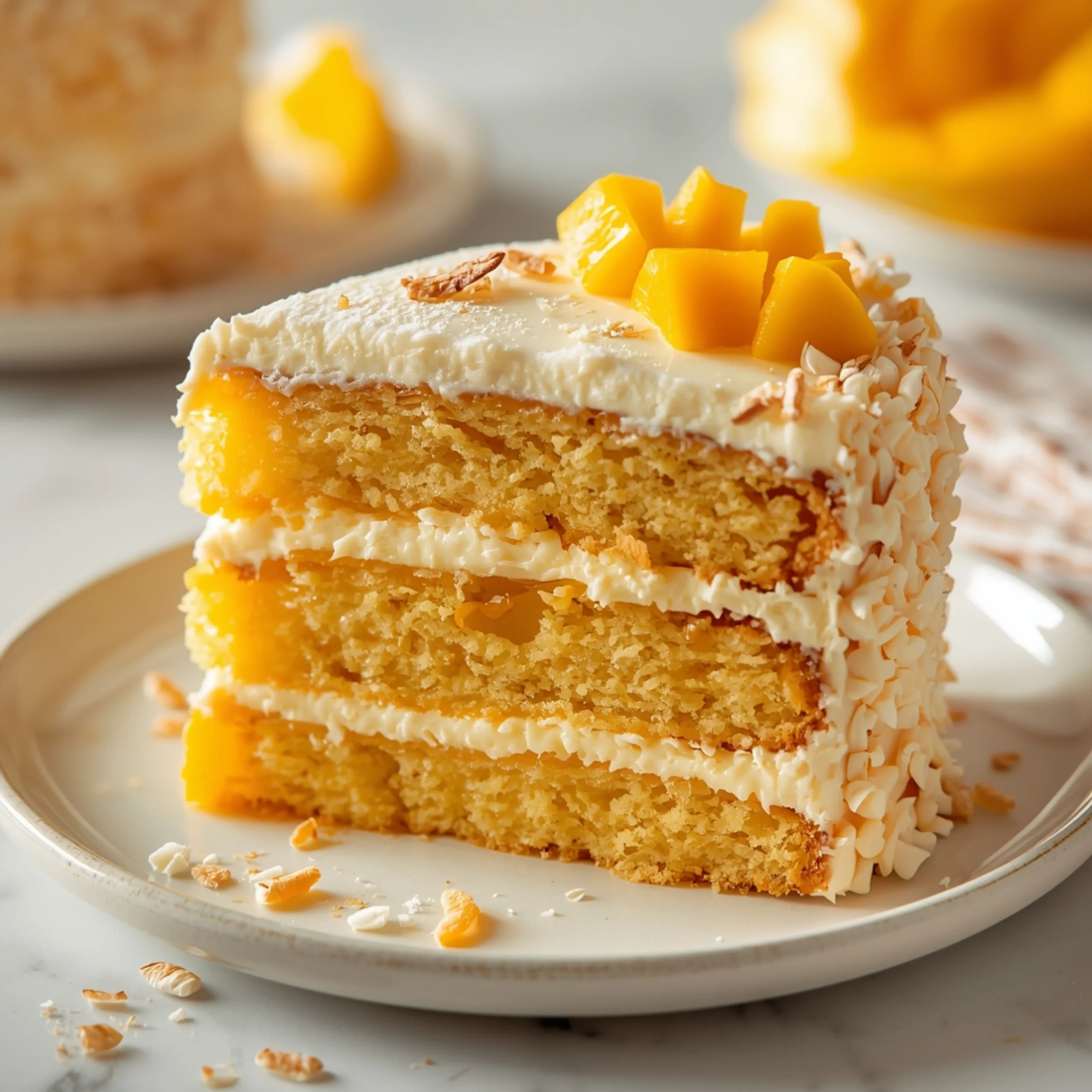
Fresh Mango Coconut Cake with a Perfect Crumb
This Mango Coconut Cake is a tropical escape on a plate, delivering an incredibly moist crumb and bright, fresh flavor. It’s the perfect centerpiece for any occasion, balancing sweet mango with rich coconut for a truly satisfying treat. If you’re exploring more delicious bakes, check out our full collection of desserts.
The Key to a Perfect Crumb: Component Breakdown
- Oil, Not Butter: While butter provides flavor, oil provides a superior, moister crumb that stays soft for days. Vegetable or canola oil is neutral, letting the mango and coconut flavors shine.
- Buttermilk: The acidity in buttermilk reacts with the baking soda for an extra-effective lift. It also tenderizes the gluten in the flour, resulting in a finer, softer texture.
- Mango Purée: This isn’t just for flavor. The natural sugars in the mango help keep the cake moist, and its viscosity adds to the rich texture. Using fresh, not canned, purée is critical for a vibrant taste.
- Room Temperature Ingredients: Using room temperature eggs and buttermilk is non-negotiable. They emulsify into the batter far more easily than cold ingredients, creating a smooth, uniform structure and preventing a dense, curdled texture.
Mango Selection & Prep: Your Success Blueprint
- Choose the Right Mango: Look for Ataulfo (honey) or Kent mangoes. They are less fibrous and have a sweeter, more concentrated flavor than other varieties. The fruit should give slightly when pressed gently.
- Ripen to Perfection: If your mangoes are firm, place them in a paper bag on the counter for a day or two. The trapped ethylene gas will speed up ripening.
- Create the Purée: Peel and dice the ripe mango. Add the chunks to a blender or food processor. Blend until completely smooth. Do not add water. You need a thick, concentrated purée.
Pro Tip: For a 1.5-cup purée requirement, start with 2-3 medium-sized ripe mangoes. It’s better to have a little extra than not enough.
Frosting Finesse: The Coconut Cream Cheese Cloud
- Start with Softened, Not Melted, Ingredients: Your cream cheese and butter must be at room temperature (around 65°F / 18°C). If they are too cold, the frosting will be lumpy. If they are too warm or melted, it will be greasy and runny.
- Sift Your Powdered Sugar: This is a crucial step to avoid a gritty texture. Sifting removes lumps and aerates the sugar, making it dissolve smoothly into the butter and cream cheese.
- Control the Consistency: Start with 3 cups of powdered sugar and add more only if needed. The mango cake is sweet, so you want a balanced frosting. Use milk or coconut milk, one tablespoon at a time, to achieve the perfect spreading consistency.
- Toast the Coconut: Spread unsweetened shredded coconut on a dry baking sheet. Bake at 350°F (175°C) for 5-7 minutes, stirring halfway through, until fragrant and golden brown. Watch it closely, as it can burn in seconds. Let it cool completely before using.
STEP-BY-STEP INSTRUCTIONS
Prep Time: 25 minutes
Cook Time: 35-40 minutes
Yields: One 2-layer 9-inch cake
For the Mango Coconut Cake
- Preheat & Prep: Preheat your oven to 350°F (175°C). Grease and flour two 9-inch round cake pans. Line the bottoms with parchment paper for easy removal.
- Combine Dry Ingredients: In a large bowl, whisk together the flour, baking powder, baking soda, and salt. Set aside.
- Combine Wet Ingredients: In a separate, larger bowl, whisk the granulated sugar, brown sugar, and vegetable oil until well combined. Add the room temperature eggs one at a time, whisking well after each addition. Stir in the vanilla extract.
- Alternate Dry & Wet: Add half of the dry ingredients to the wet ingredients and mix on low speed until just combined.
- Incorporate Purée & Buttermilk: Add the mango purée and buttermilk. Mix on low speed until the batter is smooth. Scrape down the sides of the bowl.
- Final Mix: Add the remaining dry ingredients and the shredded coconut. Mix on low speed only until no dry streaks remain. Do not overmix.
- Bake: Divide the batter evenly between the two prepared pans. Bake for 35-40 minutes, or until a wooden skewer inserted into the center comes out clean.
- Cool: Let the cakes cool in their pans for 15 minutes before inverting them onto a wire rack to cool completely.
For the Coconut Cream Cheese Frosting
- Cream Butter & Cream Cheese: In a large bowl using a hand mixer or stand mixer, beat the softened cream cheese and softened butter on medium-high speed until light and fluffy, about 2-3 minutes.
- Add Sugar & Flavor: Reduce the speed to low and gradually add the sifted powdered sugar. Once incorporated, add the coconut extract.
- Whip to Fluffy: Increase the speed to medium-high and beat for another 2-3 minutes until the frosting is very smooth and creamy. If it’s too thick, add milk one tablespoon at a time.
- Assemble: Place one cooled cake layer on your serving plate. Spread a generous layer of frosting over the top. Place the second cake layer on top. Frost the top and sides of the entire cake.
- Garnish: Gently press the toasted coconut onto the sides and sprinkle it over the top. For a clean look, you can just garnish the top border. If you’re looking for more inspiration, browse our complete archive of recipes.
Assembly & Serving Strategy
- Level Your Layers: If your cakes have domed tops, use a long serrated knife to carefully slice off the dome, creating a flat surface. This ensures a stable, even cake.
- Apply a Crumb Coat: Before the final layer of frosting, apply a very thin layer all over the cake and chill it in the refrigerator for 20-30 minutes. This traps any loose crumbs, ensuring your final coat is pristine.
- Serving Temperature: For the best flavor and texture, let the cake sit at room temperature for about 30 minutes before serving. This allows the frosting and cake to soften slightly.
- Brunch Pairing: This cake is a fantastic finish to a celebratory brunch. If you’re planning a menu, it pairs beautifully after a savory main dish. For example, some people enjoy a hearty breakfast like Skillet Huevos Rancheros before moving on to a sweet dessert.
Make-Ahead & Storage Protocol
- Cake Layers: The cake layers can be baked, cooled, and wrapped tightly in plastic wrap up to 2 days in advance. Store them at room temperature. For longer storage, freeze them for up to a month.
- Frosting: The frosting can be made up to 3 days in advance and stored in an airtight container in the refrigerator. Let it come to room temperature and re-whip it for a few minutes to restore its fluffy texture before using.
- Finished Cake: The assembled cake should be stored in the refrigerator due to the cream cheese frosting. It will keep well for up to 4 days.
- Efficiency Mindset: If you appreciate recipes that can be prepped in advance, you might also find this guide on a Make-Ahead Protein Oatmeal Bake useful for busy weekday mornings.
COMMON MISTAKES TO AVOID
- Mistake: A gummy or dense cake texture.
Fix: Do not overmix the batter after adding the flour. Mix only until the ingredients are just combined. Overmixing develops gluten, which leads to a tough cake. - Mistake: Runny, greasy frosting.
Fix: Ensure your butter and cream cheese are softened to room temperature, not warm or partially melted. If the frosting becomes too soft while you’re working, chill it in the refrigerator for 15-20 minutes to firm up. - Mistake: A bland, one-note flavor.
Fix: Use high-quality, perfectly ripe mangoes for your purée. The flavor of the fruit is the star. Also, don’t skip the salt in the cake batter—it enhances all the other flavors.
FAQ
Q: Can I use frozen mango for this recipe?
A: Yes, you can. Thaw the frozen mango chunks completely and pat them dry to remove excess moisture before blending them into a purée. This prevents adding too much water to the batter.
Q: Can I make this cake recipe into cupcakes?
A: Absolutely. Divide the batter into a lined muffin tin, filling each cup about 2/3 full. Bake at 350°F (175°C) for 18-22 minutes, or until a toothpick comes out clean. This recipe will yield approximately 24 cupcakes.
Q: My cake didn’t rise properly. What went wrong?
A: This is usually due to expired leavening agents (baking powder or baking soda) or overmixing the batter. Always check the expiration dates on your ingredients. Once you add the dry ingredients, mix on the lowest speed possible and stop as soon as they are incorporated.
NUTRITIONAL SNAPSHOT
| Nutrient | Amount per Serving |
|---|---|
| Calories | 485 kcal |
| Protein | 5g |
| Fat | 26g |
| Net Carbs | 56g |
| Fiber | 2g |
| Sugar | 42g |
*Estimates are for one slice (1/12th of the cake).*
For more savory cooking ideas to balance out your baking projects, some home cooks also enjoy exploring different side dishes, like these flavorful Roasted Potatoes in Melted Goat Cheese.
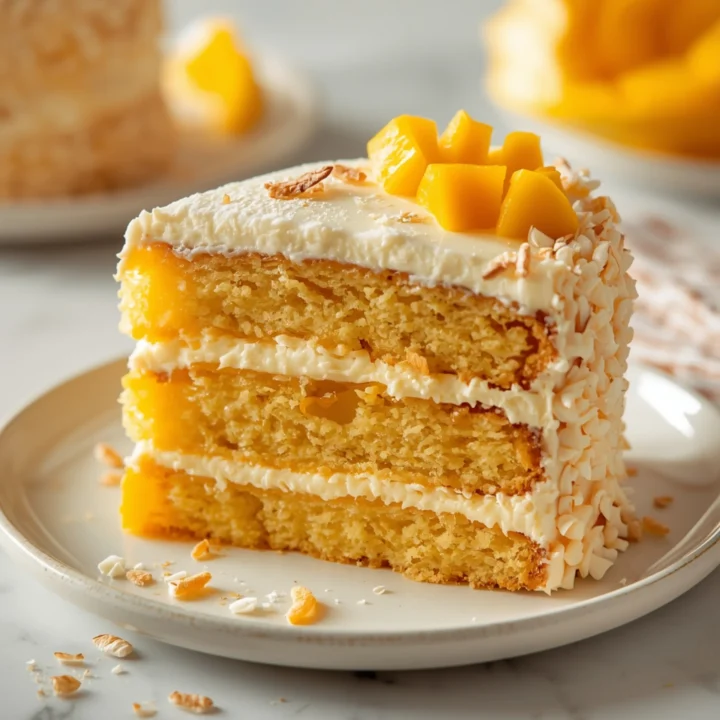
Fresh Mango Coconut Cake with a Perfect Crumb
This Mango Coconut Cake is a tropical escape on a plate, delivering an incredibly moist crumb and bright, fresh flavor. It’s the perfect centerpiece for any occasion, balancing sweet mango with rich coconut for a truly satisfying treat.
Ingredients
- 2.5 cups all-purpose flour
- 1.5 tsp baking powder
- 1 tsp baking soda
- 0.5 tsp salt
- 1 cup granulated sugar
- 0.5 cup light brown sugar
- 0.5 cup vegetable oil
- 2 large eggs
- 1 tsp vanilla extract
- 1.5 cups fresh mango puree
- 0.5 cup buttermilk
- 0.5 cup shredded unsweetened coconut
- 8 oz cream cheese
- 0.5 cup unsalted butter
- 3-4 cups powdered sugar
- 1 tsp coconut extract
- 2-3 tbsp milk or coconut milk
- 1 cup toasted shredded coconut
Instructions
- Preheat your oven to 350°F (175°C). Grease and flour two 9-inch round cake pans. Line the bottoms with parchment paper for easy removal.
- In a large bowl, whisk together the flour, baking powder, baking soda, and salt. Set aside.
- In a separate, larger bowl, whisk the granulated sugar, brown sugar, and vegetable oil until well combined. Add the room temperature eggs one at a time, whisking well after each addition. Stir in the vanilla extract.
- Add half of the dry ingredients to the wet ingredients and mix on low speed until just combined.
- Add the mango purée and buttermilk. Mix on low speed until the batter is smooth. Scrape down the sides of the bowl.
- Add the remaining dry ingredients and the shredded coconut. Mix on low speed only until no dry streaks remain. Do not overmix.
- Divide the batter evenly between the two prepared pans. Bake for 35-40 minutes, or until a wooden skewer inserted into the center comes out clean.
- Let the cakes cool in their pans for 15 minutes before inverting them onto a wire rack to cool completely.
- In a large bowl using a hand mixer or stand mixer, beat the softened cream cheese and softened butter on medium-high speed until light and fluffy, about 2-3 minutes.
- Reduce the speed to low and gradually add the sifted powdered sugar. Once incorporated, add the coconut extract.
- Increase the speed to medium-high and beat for another 2-3 minutes until the frosting is very smooth and creamy. If it’s too thick, add milk one tablespoon at a time.
- Place one cooled cake layer on your serving plate. Spread a generous layer of frosting over the top. Place the second cake layer on top. Frost the top and sides of the entire cake.
- Gently press the toasted coconut onto the sides and sprinkle it over the top. For a clean look, you can just garnish the top border.